- Category
- Journey and Power Symbols
- Domain
- Journey, warrior, courtship, solar carriage, status, boundary between home and the distant world
- Source status
- well attested
little horse, bay horse, dark bay, gray horse, warrior's horse
What does the horse mean in Lithuanian folklore?
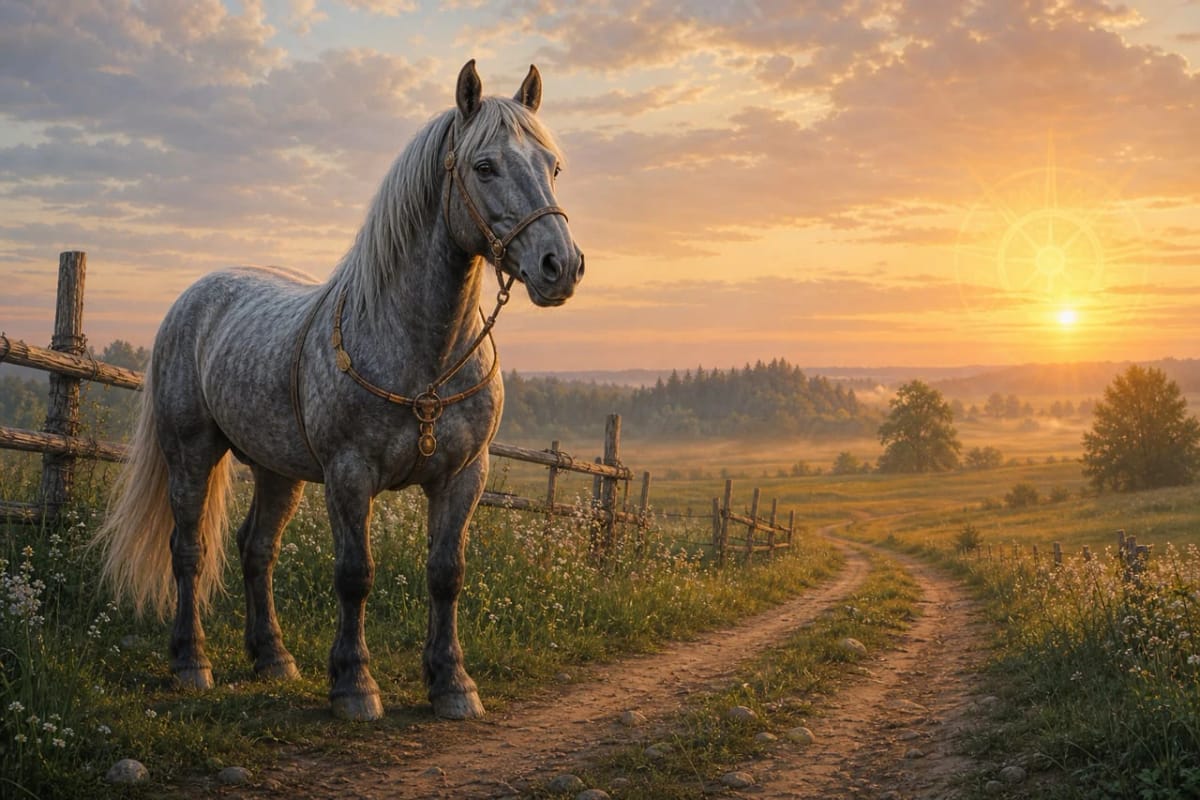
In Lithuanian songs the horse is one of the most frequent signs of youth, journey, and masculine readiness. It appears near the manor, the rue garden, the road to war, a bridge, or a high hill. The horse is therefore rarely only livestock: it marks the moment when a person leaves the safe space of home.
In songs the horse is especially close to the young man and warrior. Saddling, bridles, the bay or gray little horse all show preparation to act, travel, court, fight, or accept fate.
Courtship, war, and the empty saddle
In courtship songs the horse often rides up to the girl's garden. It means arrival, proposal, young male status, and a possible change of life. The horse can therefore be both alluring and dangerous: it brings love near, but also crosses the boundary of the girl's home.
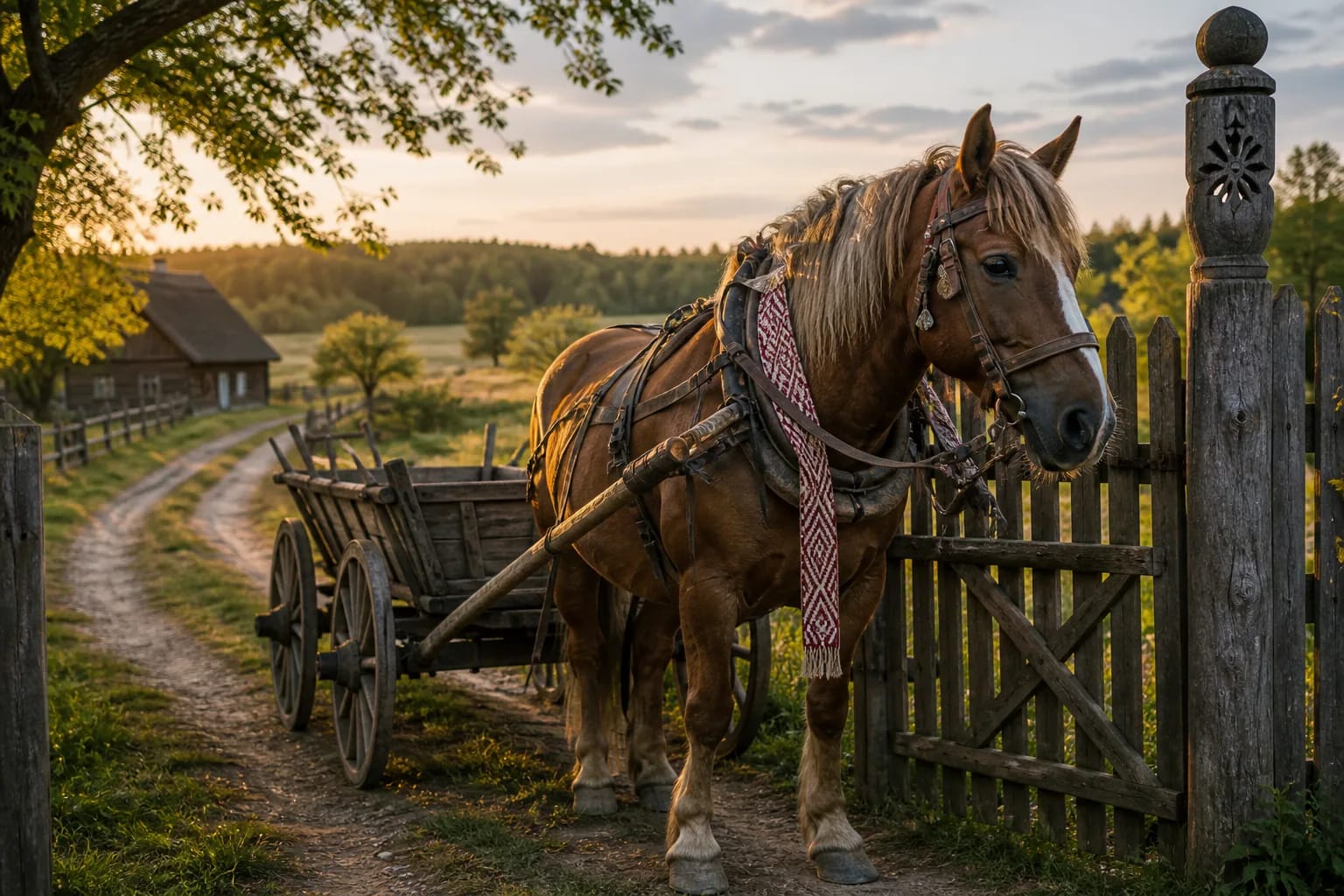
In war songs the horse gains dramatic meaning. When the horse returns without the rider or brings back an empty saddle, it becomes news of death. This is a powerful symbol because the animal returns, but the human being does not.
The horse in old graves and rites
The importance of the horse is confirmed not only by songs but also by archaeology. In Baltic lands the custom of sacrificing and burying horses was widespread: horses were sacrificed and buried beside warriors or in separate horse graves, often with rich gear. This shows that the horse was the warrior's companion not only in life but also on the journey to the afterworld.
This connection with death and journey explains why the horse so easily becomes a sign of fate and transition in folklore. An animal that accompanies a person in the most important moments of life and death gains an almost ritual status.
The horse and the heavenly journey
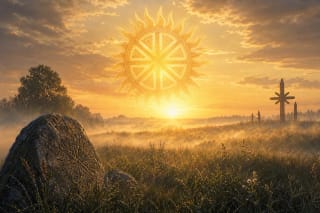
In solar imagery the horse is connected with heavenly movement, carriage, wheels, and gold. Nijolė Laurinkienė's research discusses images of the solar carriage and ship in which horses draw or accompany the heavenly light across the sky. This shows that the horse can mean not only a human journey, but also cosmic motion: the day's path, the return of light, the movement of the year's rhythm.
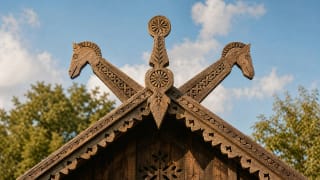
The same heavenly and protective motif appears in folk architecture: roof horses, or lėkiai, decorated roof ridges and also protected the homestead. Still, caution is needed. Not every horse in song or on a roof is a mythical solar horse, but the link between horse, wheel, and road lets us see a shared model of movement and power.
How should the horse be read today?
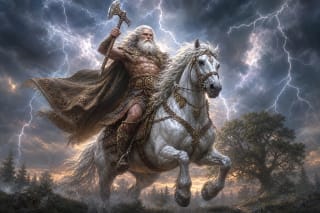
Today the horse is easily connected with statehood and the Vytis, the white rider in Lithuania's coat of arms. Folklore adds other motifs: rider, bay little horse, road, saddle, courtship, war, and the sign of return.
The horse symbol comes into focus best together with songs, roof horses, and images of the Sun's journey. It helps explain when a person leaves home, when a social boundary is crossed, and when a journey becomes fate.