- Category
- Work and Fate Symbols
- Domain
- Agriculture, flax work, spinning, weaving, maidenhood, dowry linen, thread of life
- Source status
- well attested
little flax, flax flowers, thread, linen, dowry
What does flax mean?
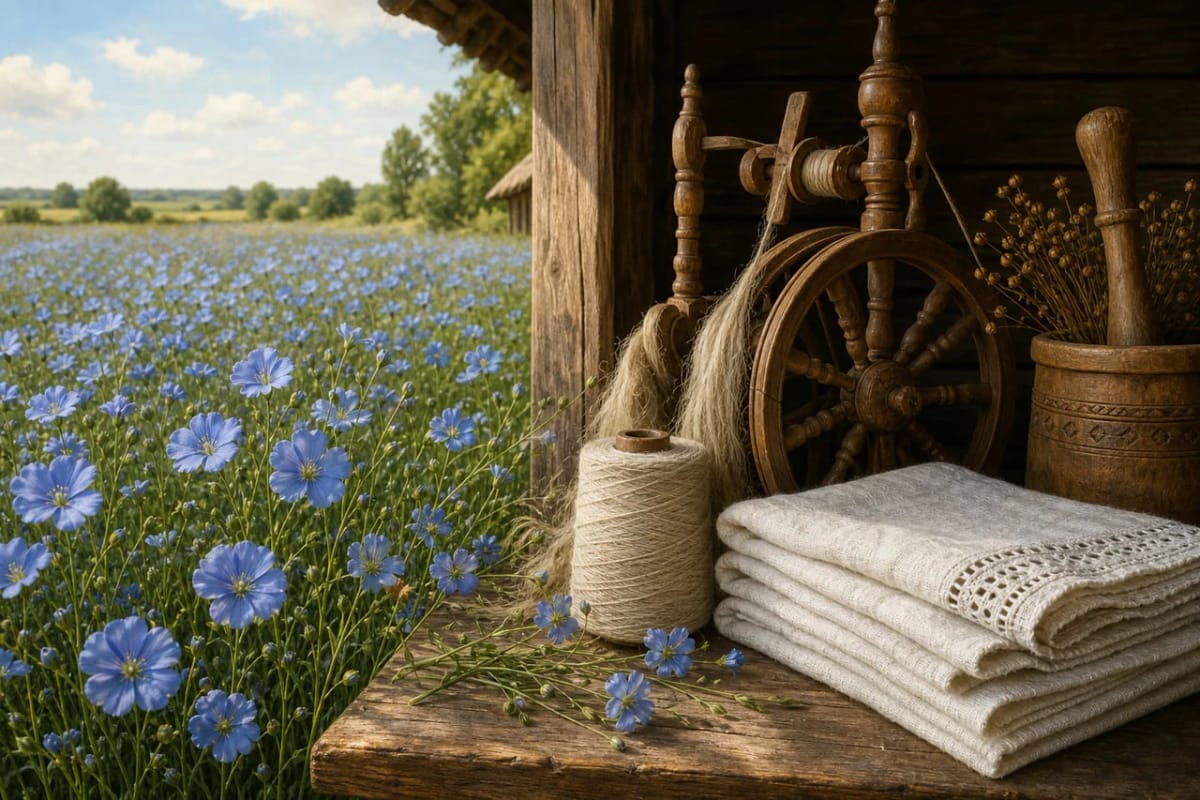
In Lithuanian culture flax is a plant, a work process, and a symbol at once. The path from sowing to linen is long, so in songs flax can tell of patience, rhythm, women's labor, and provisioning the home.
Flax is bright, blue-flowered, and difficult to process. It therefore symbolizes both beauty and diligent preparation for life.
Flax work and the sequence of songs
In work songs flax is often shown in sequence: sown, growing, flowering, pulled, broken, spun, and woven. This sequence turns flax into a model of the life cycle.
Every work stage has its rhythm. Singing helps people work together, and symbolically shows that linen is born from many small, ordered actions.
Thread, linen, and the thread of life
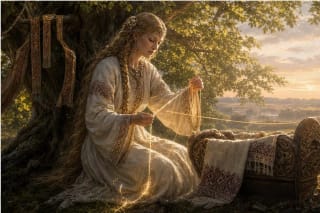
In Lithuanian symbolism thread easily connects with the thread of life, fate, and the work of women's hands. Spinning turns the plant into a line, and weaving creates cloth from lines.
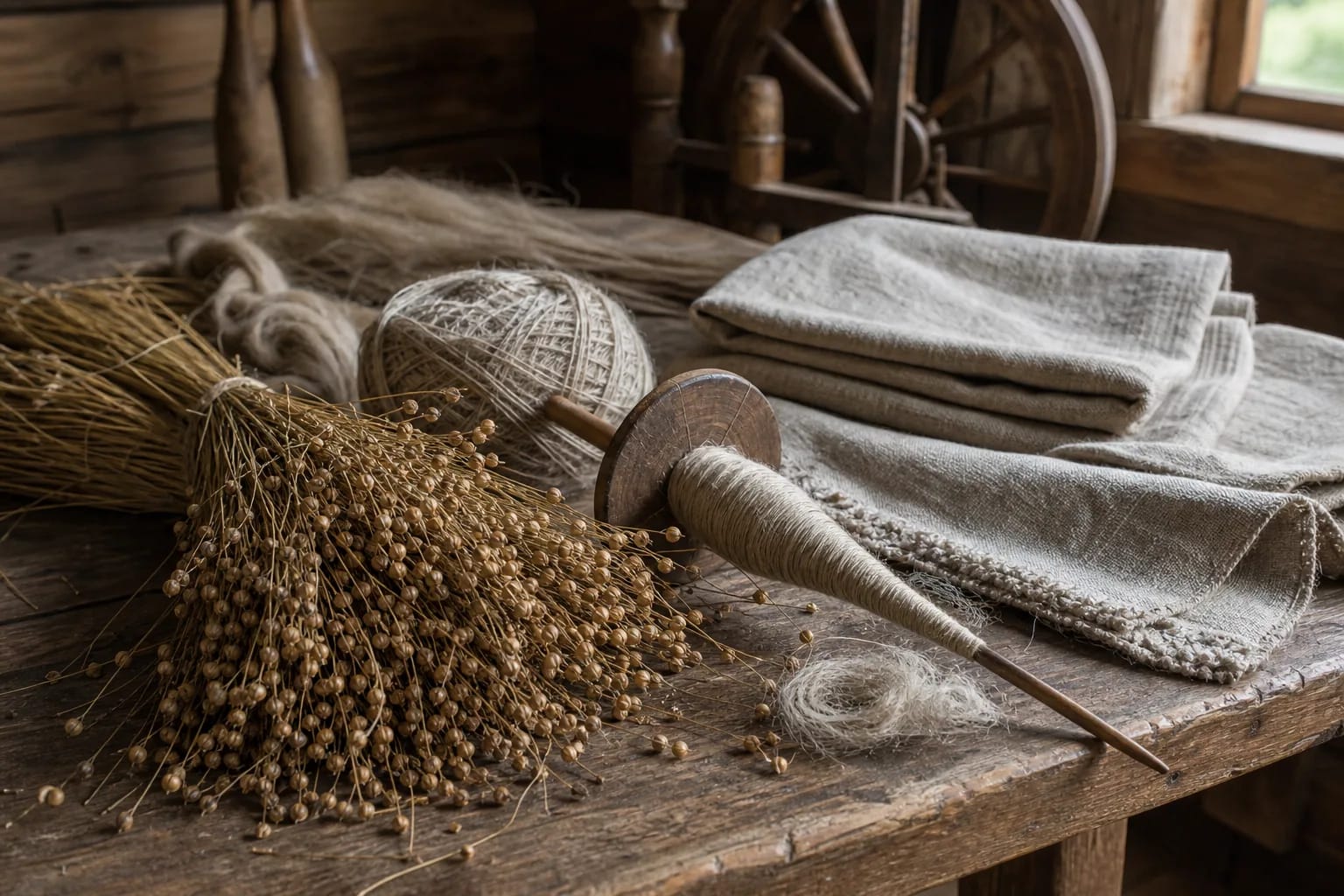
The link between thread and fate is strengthened by the idea that in Lithuanian and Baltic imagery fate goddesses, Laima and Latvian Laimas, spin and weave destiny, so life becomes a thread that is spun and woven. Linen matters as dowry, tablecloth, shirt, and towel, but it also accompanies a person in death: burial clothing and the final bed were made from linen. Flax thus spans the whole of life, from dowry to shirt and shroud.
How should this symbol be read today?
Today flax is often presented as a sign of national design or natural fabric. It also carries associations with work, song, and fate.
Flax is clearest when read with thread, linen, dowry, Laima's thread, and the sacred quality of the white tablecloth. Then it becomes not only a material but a symbol of Lithuanian order and life work.