- Category
- Chthonic Trees
- Domain
- Chthonic tree, Velnias, blood, red color, wet places, red beer
- Source status
- folkloric
black alder, grey alder, devil's tree
What does the alder mean?
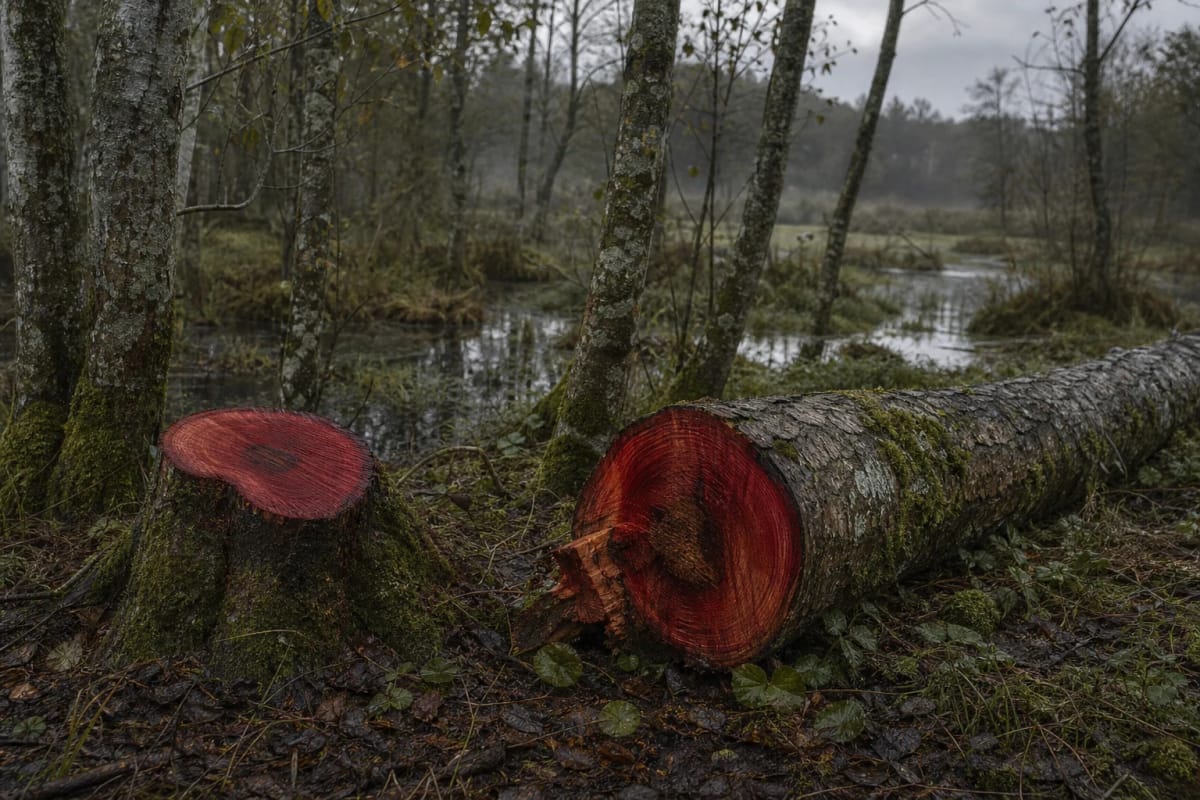
In Lithuanian folklore the alder is a chthonic tree, often linked with Velnias, blood, and wet lowland places. Its symbolism grows from a striking natural feature: freshly cut alder wood quickly turns red, as if it had begun to bleed.
Because of this color and because alder grows in marshy, wet places, folk imagination placed it at the opposite pole from bright, more skyward trees. It belongs to the low, damp side of the world, associated with death and the devil.
Botanically, two alder species grow in Lithuania, black alder and grey alder; the bark has long been used for tannins and dyes. In folklore this practical dyeing quality becomes the mythic motif of reddening.
Why does alder wood turn red?
The most distinctive feature of alder is that a cut tree reddens almost at once. The light wood quickly takes on a pink, orange, or even blood-colored shade in the air. This visible feature feeds the whole mythology of the alder.
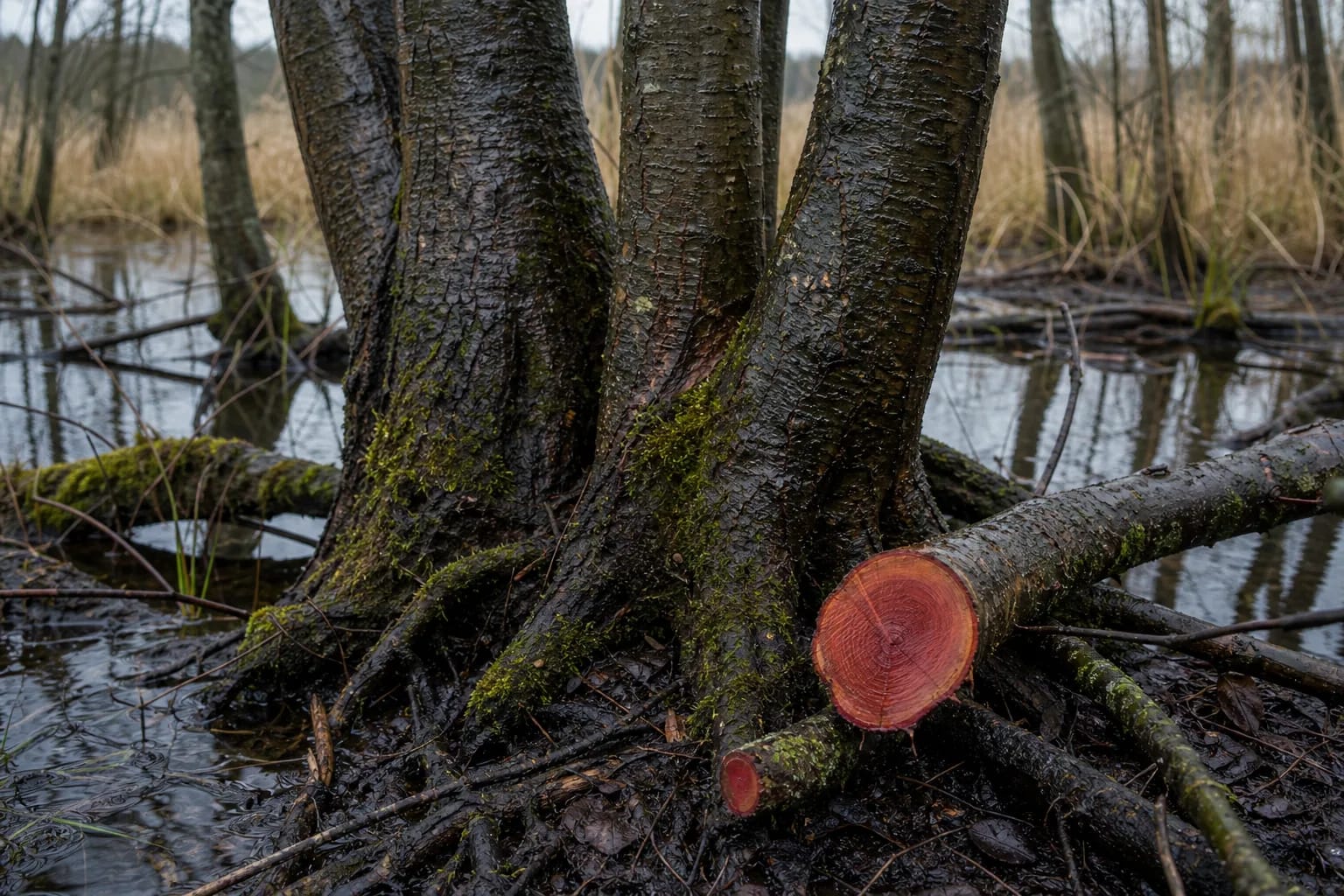
Folk explanation did not treat the reddening chemically. Instead an etiological tale arose to explain where the blood in the alder came from: the tree reddens because it was once splashed with the blood of a mythic being.
For that reason Lithuanian legends connect alder directly with blood. Folklorist Daiva Vaitkevičienė also emphasizes that alder stands out among trees because its wood reddens immediately after cutting.
The tale of Velnias, the wolf, and the alder
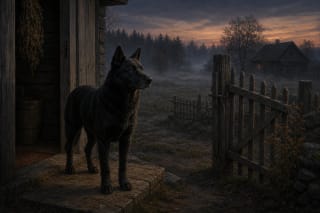
The best-known alder tale concerns God, Velnias, and the wolf. When God was shaping animals, Velnias decided to make a wolf, but he could not breathe life into it. God told him to say, Wolf, wolf, slaughter the devil, and the wolf came alive, then immediately began chasing Velnias himself.
As Velnias ran, he climbed into an alder, and the wolf followed. While Velnias climbed to the top, the wolf snapped and bit his heel. Blood from the heel flowed and splashed over the whole alder. The tale says that this is why all devils now have no heels and why alders have remained red.
In this legend the wolf acts as God's dog, an instrument of a higher will against Velnias. The alder becomes the place where opposing forces meet, and its red wood remains as the sign of that encounter.
Alder as a chthonic tree of Velnias
Norbertas Vėlius, who studied the chthonic world of Lithuanian mythology, places alder among trees connected with Velnias and the lower, wet world. Alder grows where it is damp: by rivers, in marshes, and in low places, so it belongs not to the sky but to earth and water.
This fits the nature of Velnias in Lithuanian folklore. He often lives in swamps, pools, marshes, springs, and other wet low places. Alder, growing in exactly such locations, naturally becomes his tree.
The alder should therefore not be read as a neutral forest tree only. In folklore it carries a chthonic shade: contact with death, blood, Velnias, and the dark, damp side of the world.
Alder and red beer
The alder's redness also had a practical ritual continuation in brewing. To make beer redder and mythically more valuable, brewers used alder sticks: when malt mash was strained through a filter, green alder colored the wort pinkish and darkened it.
In Baltic culture red was linked with beauty, health, life, and strength. A festive or ritual drink was therefore expected to be red, as shown by sayings about red as beautiful and by folk songs about sweet red beer.
When the two strands are joined, a mythic image emerges: if alder is red from the devil's blood, beer colored with alder sticks symbolically becomes a drink with blood, blood once shed by a mythic being. Similar blood-as-drink motifs, such as the Norse mead from Kvasir's blood, suggest a deep Indo-European layer.
How is alder different from other trees?
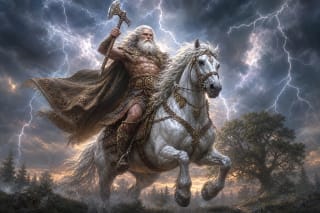
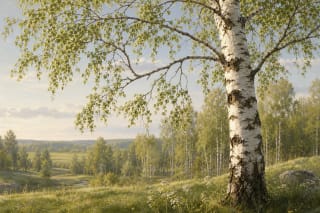
Alder belongs to the opposite pole from bright, skyward, or sacred trees. Oak is linked with Perkūnas, the sky, and strength; birch with light and life; alder with earth, dampness, Velnias, and blood. This contrast helps explain why one forest can contain both skyward and chthonic trees.
It is important not to exaggerate. Alder was not treated as dangerous or forbidden in everyday life: its bark, wood, and dyeing properties were widely used. The mythic layer works not as taboo but as a story explaining the tree's color and its place in the structure of the world.
How should alder be read today?
Today alder is best read through its reddening wood and the legend attached to it. It is a strong example of how Lithuanian etiological folklore turns a natural phenomenon into a story about Velnias, the wolf, and blood.
The best interpretation connects alder with Velnias, Perkūnas, the wolf as God's dog, and red beer. Then it becomes not merely a tree species but a living symbol of chthonic mythology, showing how the old worldview divided forest and nature into skyward and earthward sides.