- Category
- Christmas and Cosmic Cycle Symbols
- Domain
- Christmas songs, winter solstice, antlers, year, light, cosmic animal
- Source status
- folkloric
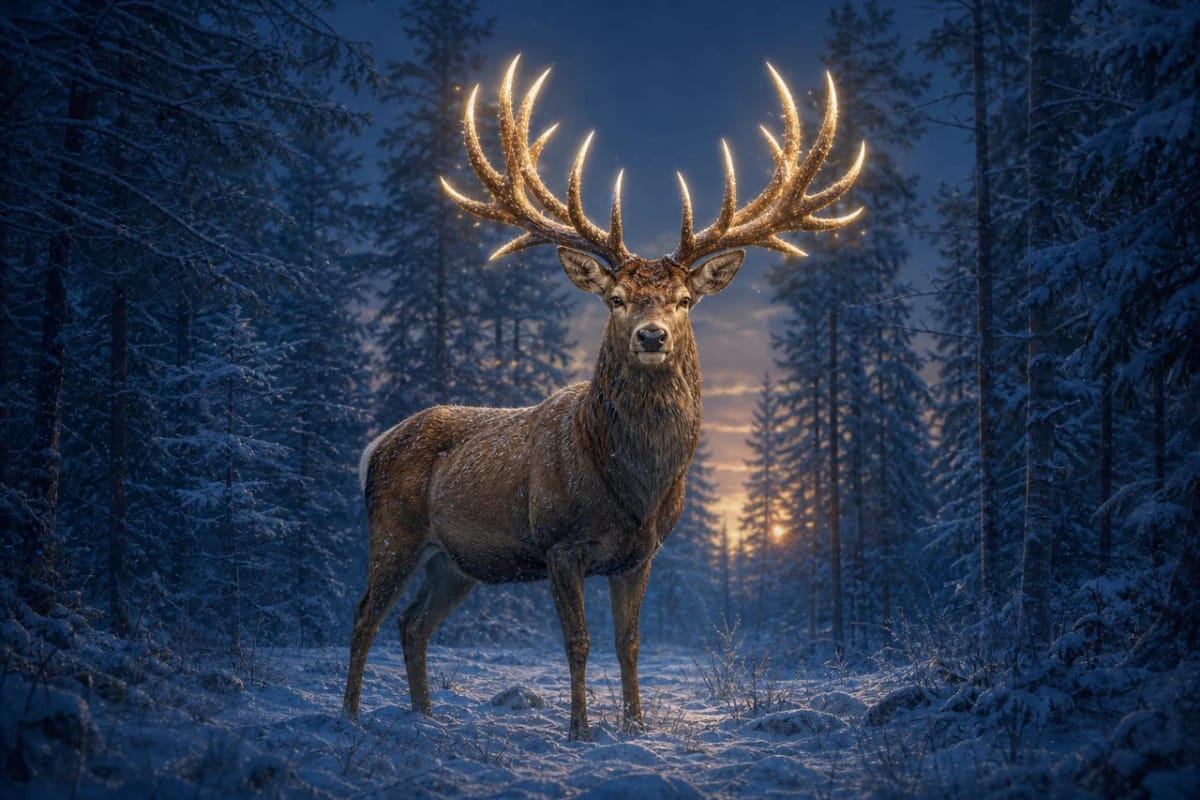
stag with nine antlers, devynragis stag, cosmic stag
Who or what is the nine-antlered stag?
The nine-antlered stag appears in Lithuanian winter calendar songs. Nijolė Laurinkienė identifies it in two types of Christmas carollers’ songs, LDK Kl 338 and 339 (“Devyniaragio elnio semantikos akcentai”, 2000, p. 31).
Variants differ. In the record LTR 2209(38), cited by Laurinkienė, smiths work in a chamber on the antlers; other examples have a small flame on an antler. These song images provide the basis for her cosmological interpretation.
Nine antlers and the cosmic animal
The number nine in folklore often creates an impression of fullness and specialness, while antlers recall branches, rays, or signs of time. For that reason the stag's antlers are compared with the world tree and cosmic axis, the structure that joins earth, sky, and time.
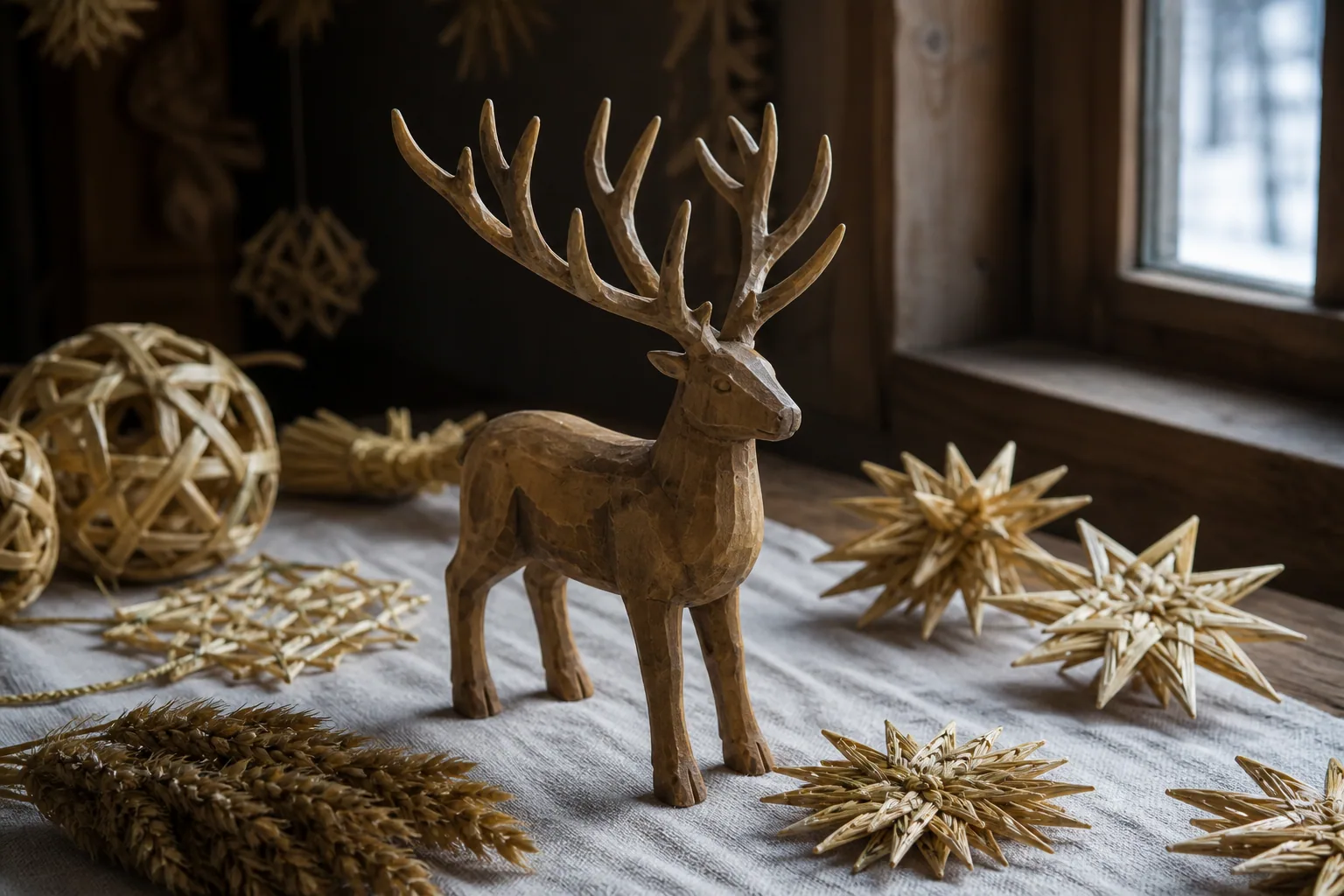
The smith carried on the antlers is especially meaningful. Smithcraft in mythology is linked with creation, even with the forging of a heavenly light, as in the myth of the divine smith Teliavelis. The nine-antlered stag can therefore be understood as an animal carrying the making of world order and light.
Christmas, winter, and the waiting for light
Waiting is central in winter-festival songs: light is weakest, but soon returns. The nine-antlered stag brings the forest, the animal, and heavenly order into this field, so it is often interpreted as a symbol of renewal. A stag's antlers grow again each year, and the yearly wheel turns back toward light after the darkest time.
Connections with the Sun, world tree, and renewal of the world are scholarly interpretations, not an explicit explanation given by the songs themselves. Laurinkienė develops these readings through comparisons with other traditions (2000, pp. 31–33).
How should this symbol be read today?
The nine-antlered stag belongs to Lithuanian winter-festival songs and their images of the forest, waiting for light, and the turning year. This song tradition differs from modern Santa Claus imagery, although both place the animal in a winter setting.
The Christmas-song setting explains the stag’s association with winter and the waiting for light. Comparisons with the Sun and world tree add possible meanings, without giving every song variant a single fixed interpretation.