- Category
- Textile and ritual-gift symbols
- Domain
- Sashes, weaving, gifts, offerings, national dress, geometric patterns, thread
- Source status
- well attested
Lithuanian sash, pattern-woven sash, tablet-woven sash, supplementary-weft sash, national sash
What is a Lithuanian sash?
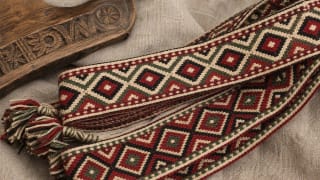
The Encyclopedia of Lithuania describes Lithuanian sashes as one of the oldest kinds of Lithuanian folk textile. They were part of traditional dress and later became a sign of national costume and heritage.
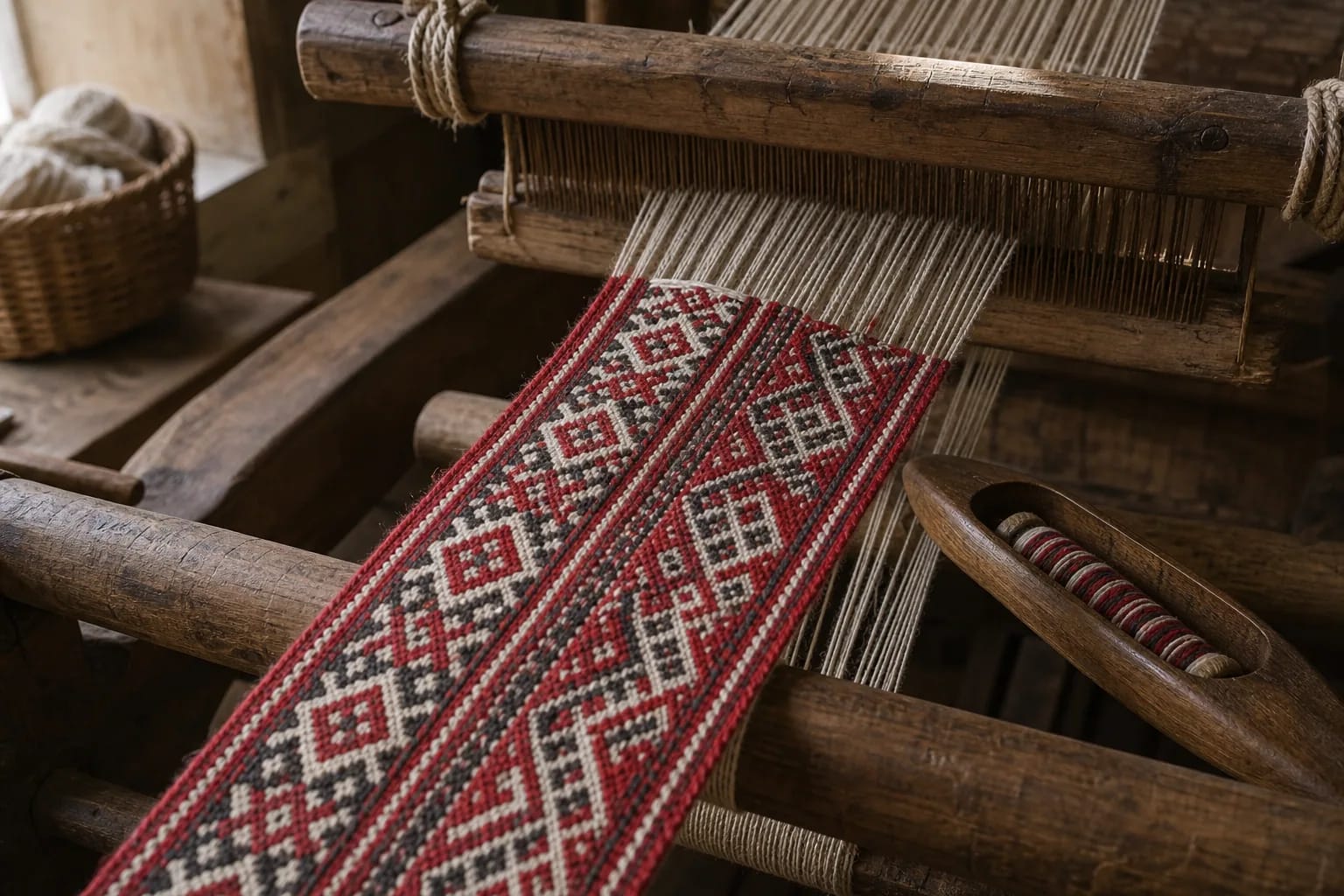
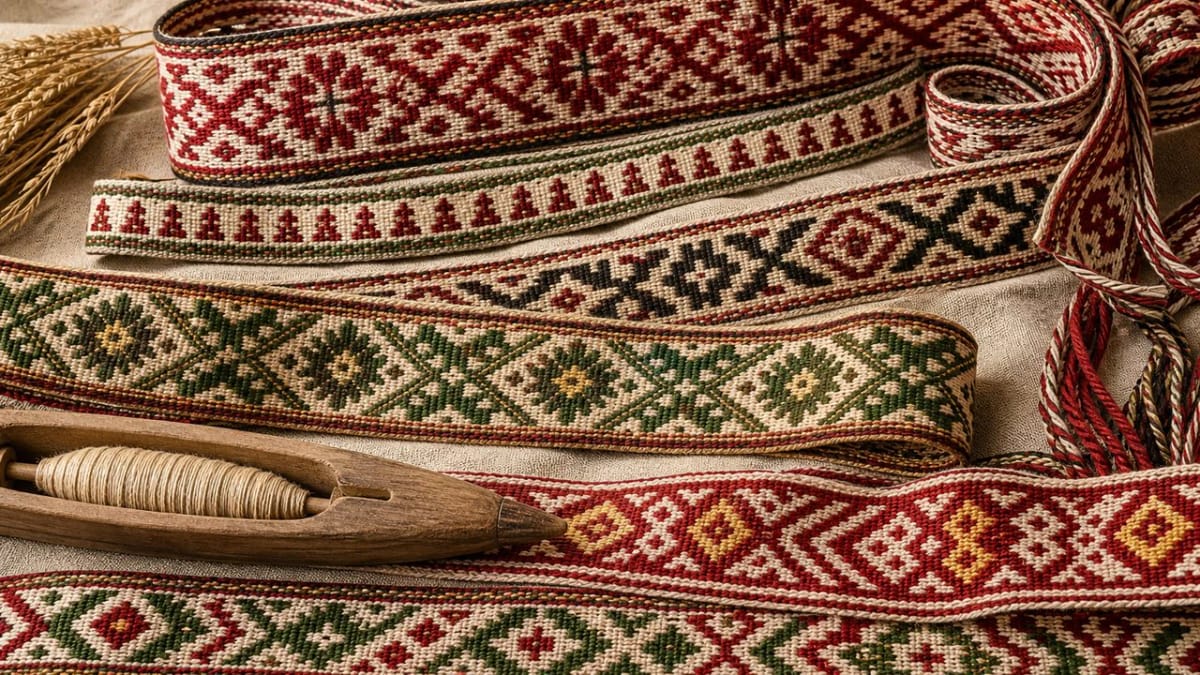
Sashes were made by several techniques: woven, plaited, tablet-woven, and knitted. Pattern-woven and supplementary-weft sashes are especially important because geometric, and sometimes plant, motifs are concentrated in them.
The sash as gift and offering
Until the early 20th century there was a custom of giving a sash as a symbolic gift or offering. This detail matters: a sash is not only a piece of clothing, but can act as a sign of bond and obligation.
A sash encircles, binds, and marks. For that reason it is naturally linked with protection, transition, wedding gifts, communal ties, and ritual respect. At weddings the bride gave her own woven sashes to the groom's relatives, the matchmaker, and the wedding matron; sashes tied hands or gifts. They were also used at life thresholds, from suspending a cradle to lowering a coffin into a grave. Wishes or names were often woven into sashes as well.
Sash patterns
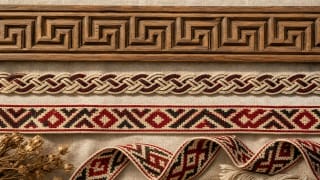
Lithuanian sashes repeat rhombuses, crosslets, sunbursts, fir-tree motifs, waves, and other signs. The separate sign matters, but so does rhythm: the sequence of signs travels along the long strip of cloth.
For that reason sash patterns are one of the best ways to learn Lithuanian ornament. They show how one sign becomes a system.
The sash today
Today a sash can be part of national costume, a gift, a ceremonial accent, or a source of design inspiration. It remains a strong sign of Lithuanian identity because it joins handwork, pattern, and symbolic encircling.
Weaving technique shapes a sash’s pattern, while local history and customs of use help explain its name and meaning.