- Category
- Sky and Fire Signs
- Domain
- Fire, rotating cross, swastika-type ornament, sun, hearth, protection
- Source status
- reconstructive
fire sign, swastika-type fire sign, rotating cross, angular cross
What is the Fire Cross?
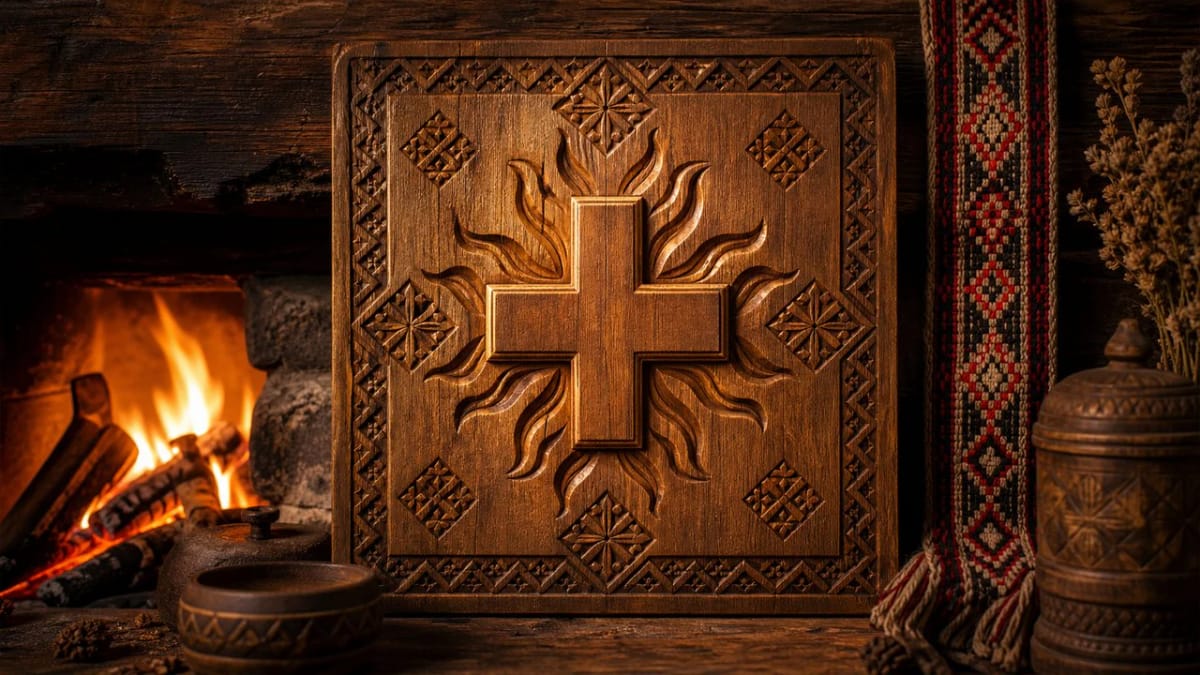
The Fire Cross is an interpretation of a rotating, swastika-type cross in which the central idea is fire, warmth, light, and movement. The graphic motif may look the same as the Perkūnas Cross, so the name has to be explained through context.
In Baltic ornament, swastika-type signs are connected with the sun, fire, Perkūnas, movement, and luck. In Lithuanian sources, the system of names is not as uniform as in some Latvian explanations, so this page deliberately marks the source status as reconstructive.
Fire, home, and protection
In Lithuanian tradition fire is not merely an element. Through the hearth and the image of Gabija, it becomes a sign of household order, cleanliness, sacredness, and safety. For that reason the Fire Cross can meaningfully be interpreted through protection, not only through flame.
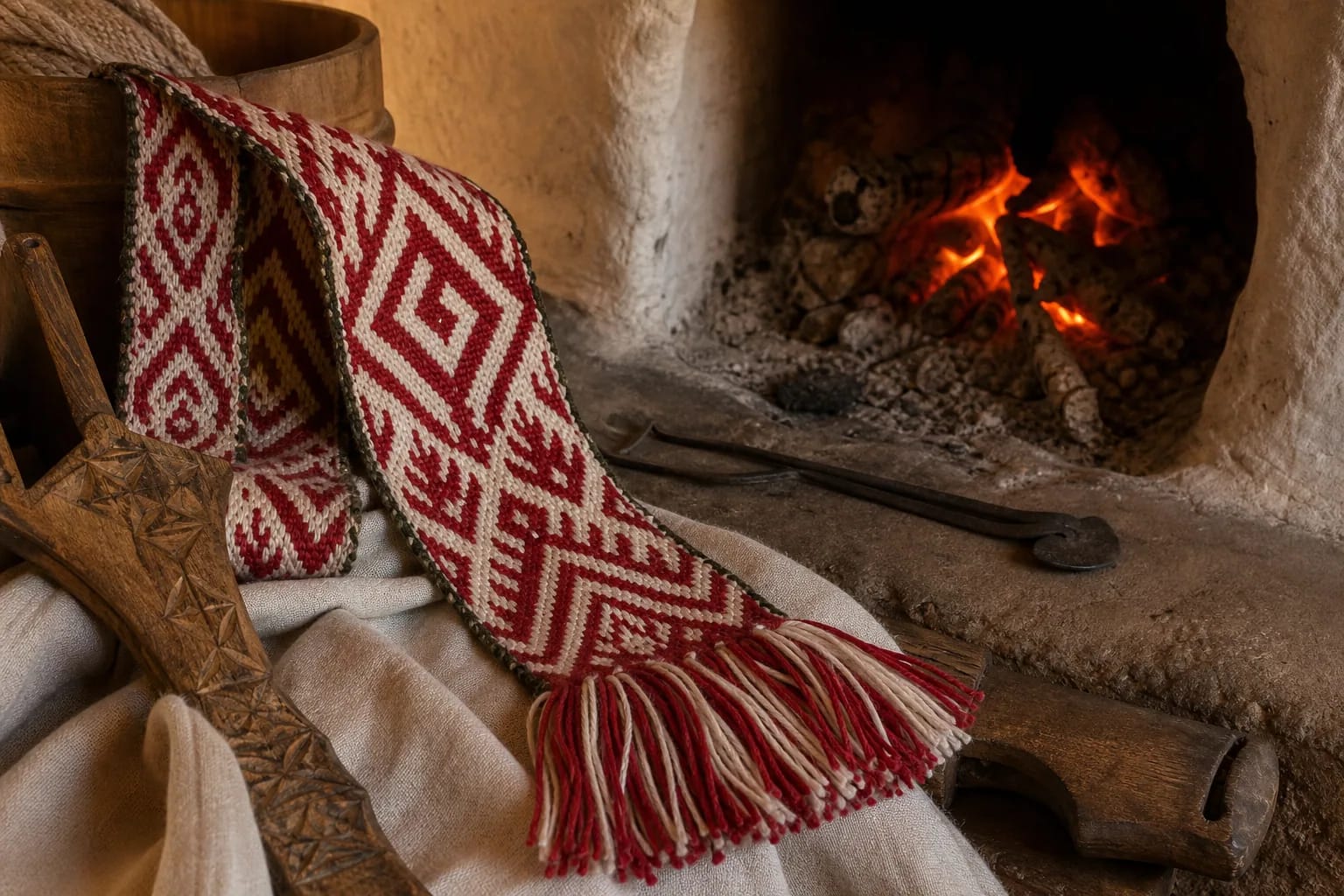
The rotating form allows the sign to be connected with energy and renewal. Still, this is a symbolic interpretation, not a directly recorded rule of the old religion.
Why is the sign sensitive?
Because the Fire Cross form belongs to swastika-type signs, today it may be misread through Nazi symbolism. The Lithuanian folk-art and archaeological context is different, but public use has to be careful.
Best practice is to show the sign on a traditional object, with a clear name, sources, and explanation that it is not a political symbol.
How is it separated from the general swastika?
The Fire Cross page does not mean that every swastika form in Lithuania was automatically called the Fire Cross. It is more precise to say that this is one possible semantic direction of the traditional rotating-cross form.
In this way the sign remains useful in a Lithuanian symbols encyclopedia while avoiding a superficial list where names are assigned without sources.