- Category
- Nature and Boundary Symbols
- Domain
- Life, cleansing, healing, boundary, journey, sacred place, depth
- Source status
- folkloric
spring, river, lake, lagoon, living water
What does water mean?
In Lithuanian symbolism, water means life, freshness, cleansing, healing, journey, and boundary. It may appear as spring water, a flowing river, lake depth, lagoon, dew, or ritual washing.
Water is neither only good nor only dangerous. It heals and nourishes, but also hides depth, separates shores, floods, misleads, or marks passage into another state. This double nature makes it a very strong mythological symbol.
Springs and sacred places
The Visuotinė Lietuvių enciklopedija article on sacred places shows that sacred sites could include not only hills, stones, and groves, but also springs, rivers, lakes, and other natural objects. This lets water be read as part of a place's sacredness.
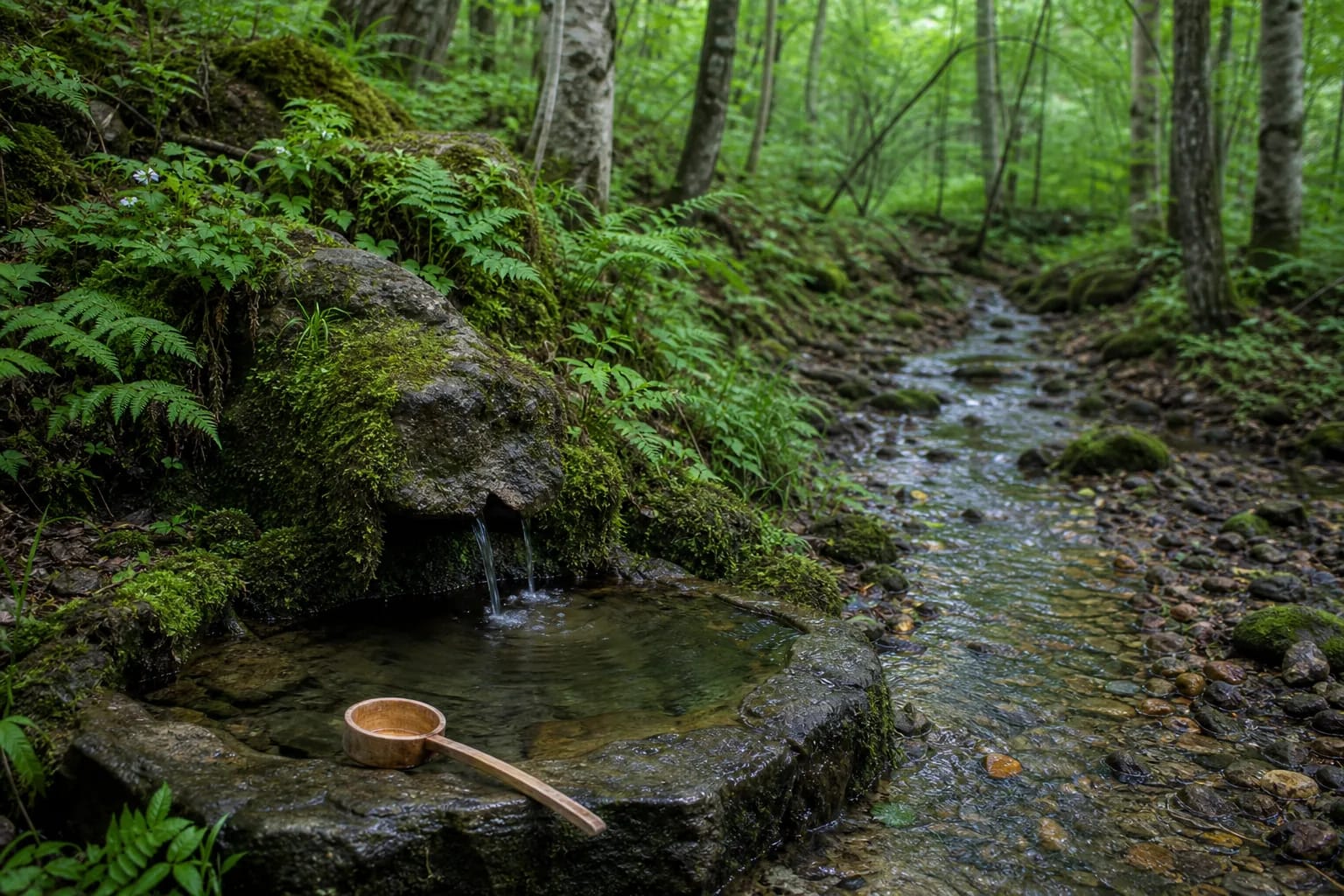
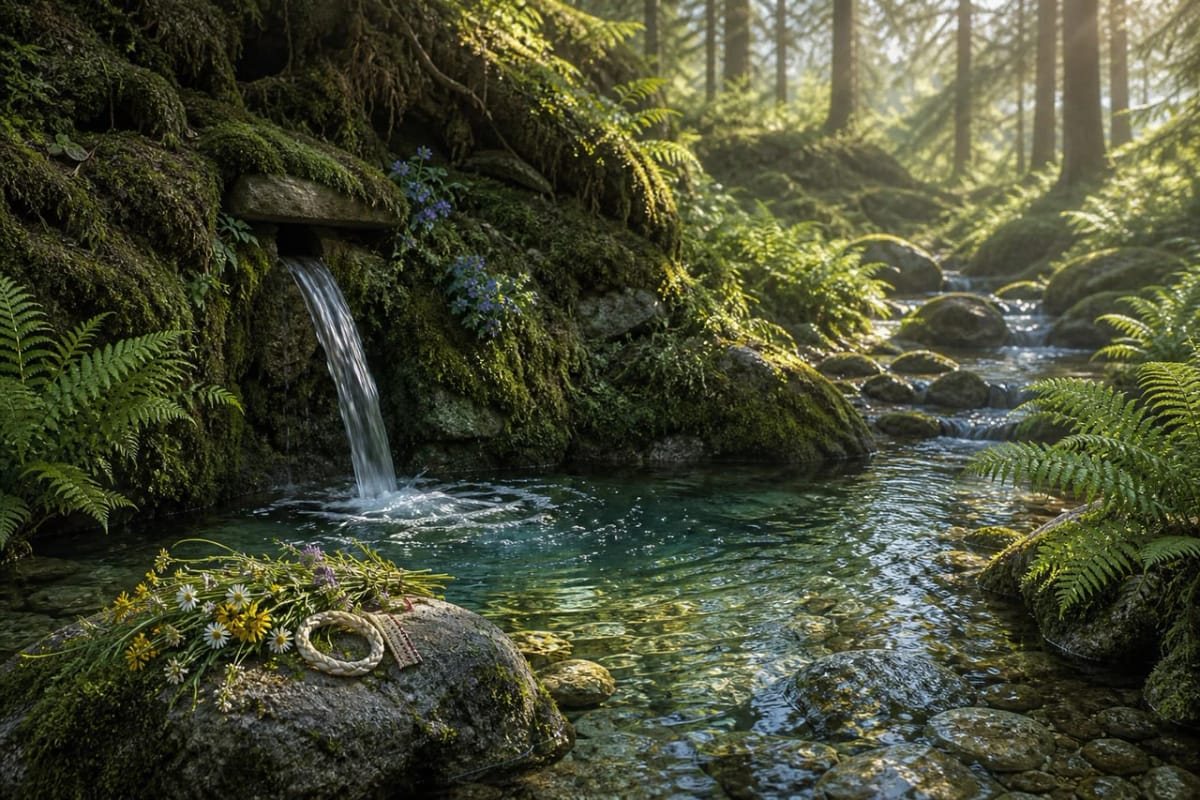
The spring is especially important because its water rises from the earth. It connects below and surface, hidden earth force and water accessible to humans. For that reason the healing and ritual symbolism of springs is very natural: many local springs were treated as healing, people went to them to wash or leave offerings, and some were Christianized as miraculous. In tales, special power is assigned to living water and dead water: one heals wounds, the other revives the dead.
The river as boundary
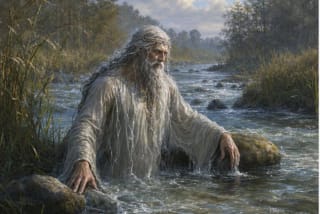
In Lithuanian songs and stories, a river often separates two shores, two states, or two people. To wade, swim, or cross water means not only physical movement but also crossing a symbolic boundary.
For that reason the river suits songs of love, courtship, war, death, journey, and return. Water becomes the place where a person is no longer quite where they were, but not yet quite where they are going.
Lake, lagoon, and depth
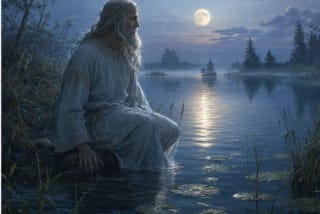
Still water has a different symbolism from a river. A lake or lagoon shows less movement, but emphasizes depth, reflection, the unknown, and dangerous mystery.
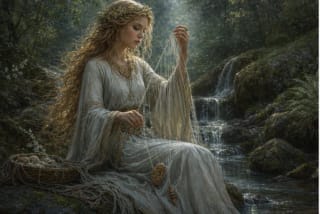
Stories set by lakes, rivers, and lagoons feature undinės, water beings, and laumės. Water can be both a source of life and a dangerous boundary leading into unfamiliar surroundings.
How should water be read today?
Today the water symbol is useful when speaking about ecology, sacred places, Rasos dew, Easter washing, healing springs, boundaries in songs, and mythological water beings.
The best approach is to explain water's meaning by form: spring, river, lake, lagoon, dew, and rain each have different symbolic directions. The common core remains the same: life, boundary, cleansing, and depth.