- Category
- Sky Symbols
- Domain
- Night, time, cycles, growth, waning, life and death
- Source status
- folkloric
Mėnuo, little moon, new moon, full moon, waning moon
What does the Moon mean in Lithuanian symbolism?
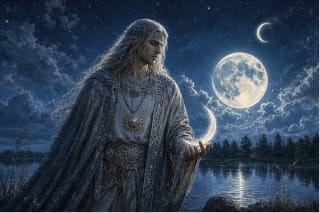
The Moon is a symbol of night light, time, and change. Unlike the Sun, which marks daytime clarity and warmth, the Moon shows a cycle: it grows, becomes full, wanes, and renews itself. For that reason lunar signs are especially useful when speaking about transformation, waiting, growth, and decline.
In Lithuanian tradition the Moon is often read together with the Sun and stars. These heavenly bodies may be imagined as a family or network of relationships, and their movement helps folklore speak about time, order, loss, fidelity, and fate.
Remnants of moon cult
The Visuotinė Lietuvių enciklopedija article on moon cult emphasizes that moon worship and moon mythology are known in many ancient religions, and that remnants of this cult survive in Lithuanian folklore. This means lunar symbolism should be interpreted carefully: we do not have one continuous cult description, but motifs, beliefs, and poetic images.
The lunar cycle is connected with vegetation, life, death, and renewal. This broad mythological logic fits an agrarian culture in which time is measured not only by a calendar but also by the rhythms of sky, plants, and work.
New moon, full moon, and waning moon
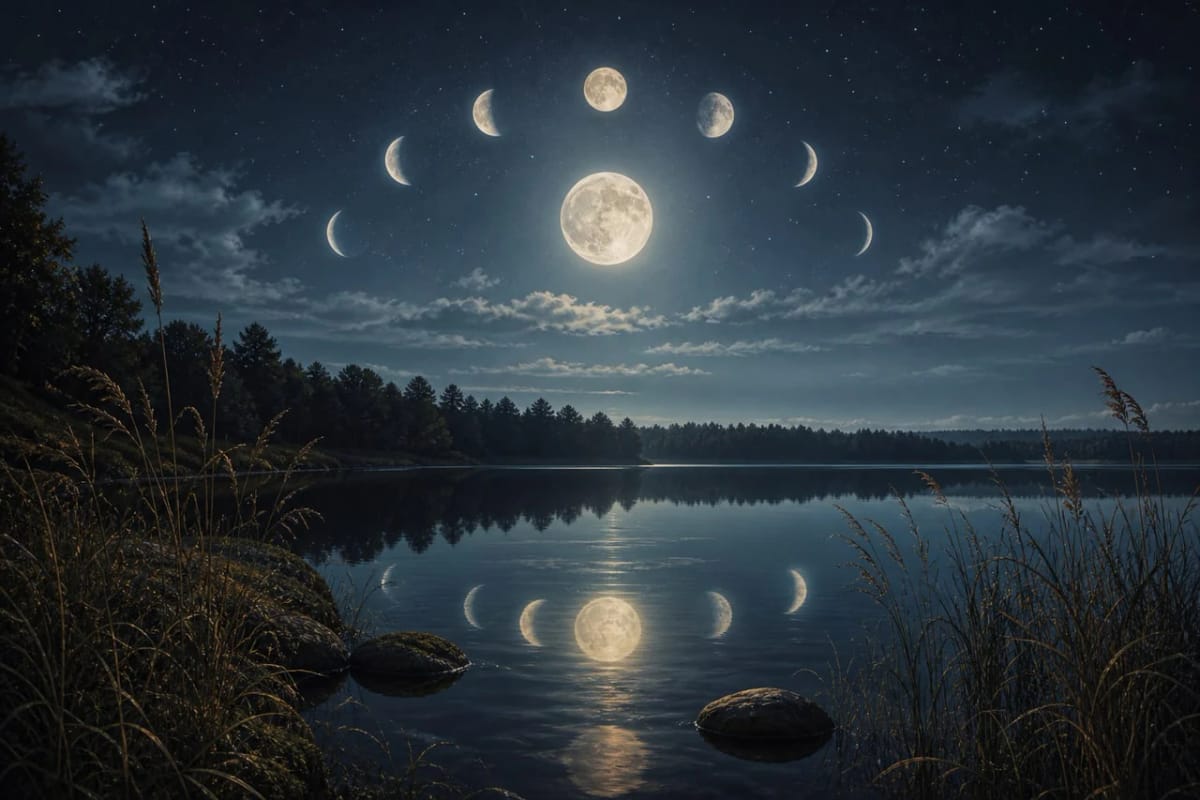
The lunar phases allow symbolic distinctions between beginning, fullness, and decline. The new moon is connected with a new start, the full moon with fullness and the strongest night light, and the waning moon with decrease, completion, or weakening. Such readings should be tied to concrete customs, not presented as one universal formula.
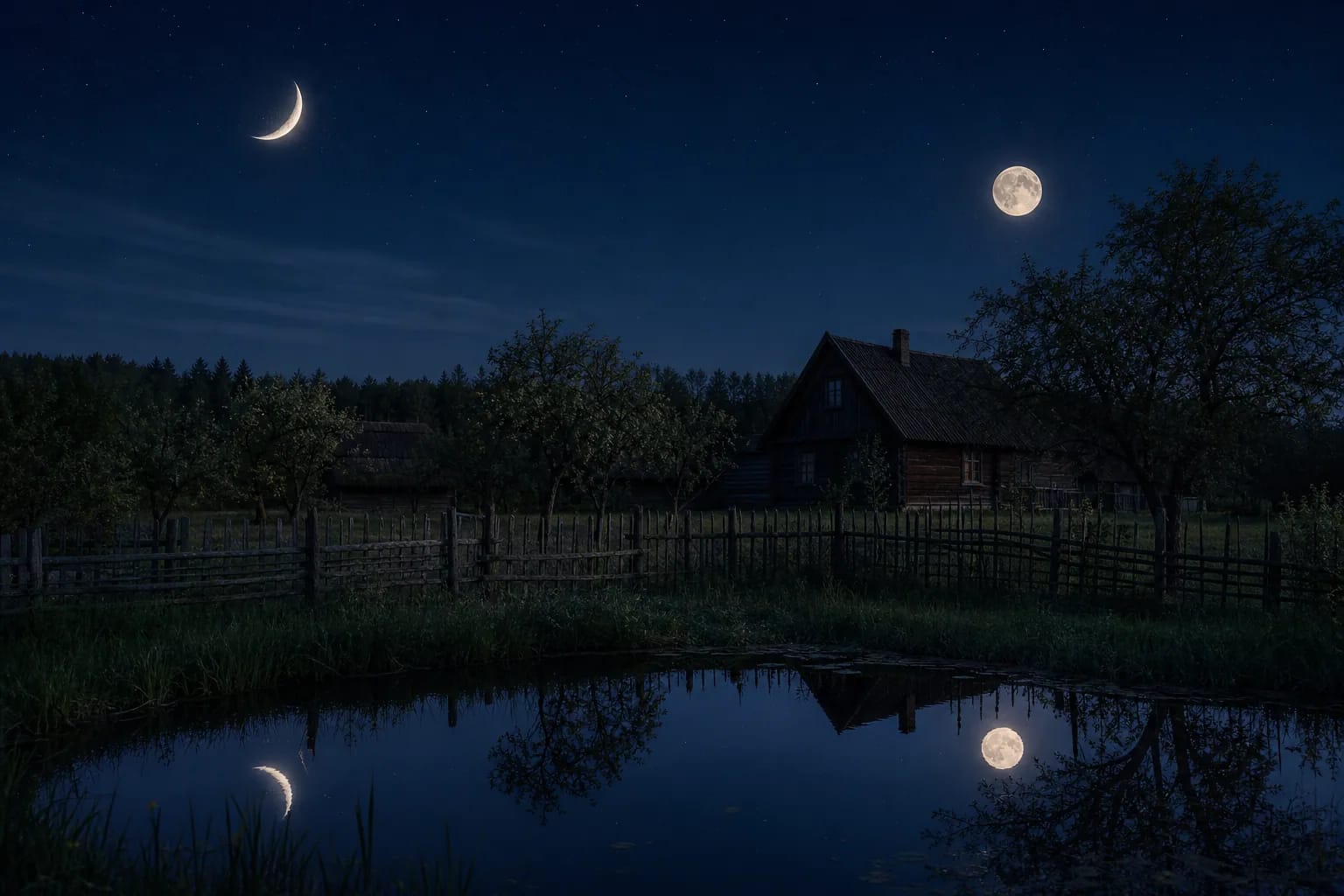
In folklore the change of phases helps explain why the Moon is seen as mobile and changeable, yet reliably returning. It shows that decline is not a final ending: after darkness, growth begins again.
This logic was also followed in daily life. When people saw the new moon, they addressed the 'young moon, young prince' and asked for health and money, showing a coin held in the hand so that money would not be lacking all month. Tasks of growth, sowing, and cutting were often aligned with the new moon, while things one wanted to reduce were done during the waning moon.
The Moon in songs and the heavenly family
In Lithuanian songs, heavenly bodies are often humanized. The Sun, Mėnuo, Aušrinė, stars, or Sietynas may act as relatives, travelers, witnesses, or signs of time. This layer matters because the Moon is not merely an astronomical object here.
The Moon's relationship with the Sun allows songs to speak about a pair, tension, rhythm, and change. There is no single canonical story, but the recurring principle of a heavenly family helps explain why the Moon is so important to the imagination of mythological songs.
How should the Moon be read today?
Today the Moon symbol is useful when speaking about cycles, time, night, divination, waiting, dreams, or changing human states. It complements the Sun without repeating it: the Sun shows the clear radiance of life, while the Moon shows moving, changing time.
It is best to avoid overly modern esoteric meanings if they are not grounded in Lithuanian sources. Lunar symbolism is strongest when based on folklore, calendar rhythms, songs, and concrete customs.