- Category
- Height and Young-Man Symbols
- Domain
- Height, flight, young man, nobility, hunting, speed, distant message
- Source status
- folkloric
little falcon, high falcon, hunting bird
What does the falcon mean?
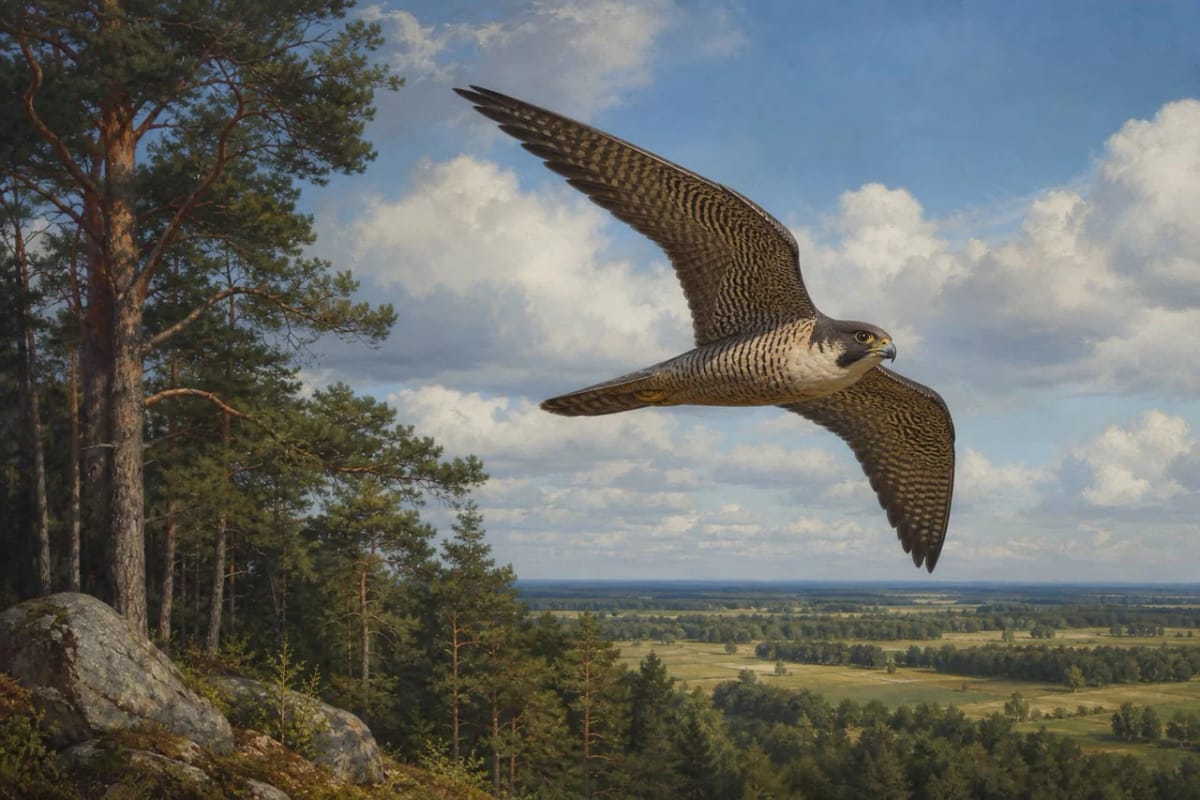
The falcon is a bird of high, swift, and noble flight. In Lithuanian songs it is often close to the young man: not literally as an animal, but as a poetic sign of a young man's strength, vigor, and distance.
Because of its high flight, the falcon immediately lifts the gaze away from the ground. It allows songs to speak about longing, message, journey, and the ability to reach what is distant from an ordinary person.
The falcon and the young man
In song language the little falcon can be a tender yet noble image of a young man. It is close to the horse: both show movement and readiness, but the horse travels along the road while the falcon rises above it.
The falcon is therefore especially suited to themes of courtship, youth, war, and departure. In wedding songs the falcon or little falcon is often an image from the bridegroom's side, flying to the maiden, swan, or little duck, so the bird pair in song becomes the newlyweds.
Height, hunting, and wild power
The falcon is a bird of prey, so symbolically it also holds wild power. Yet in Lithuanian songs this power is often softened by poetic form: the falcon becomes not a threat but a sign of nobility and resolve.
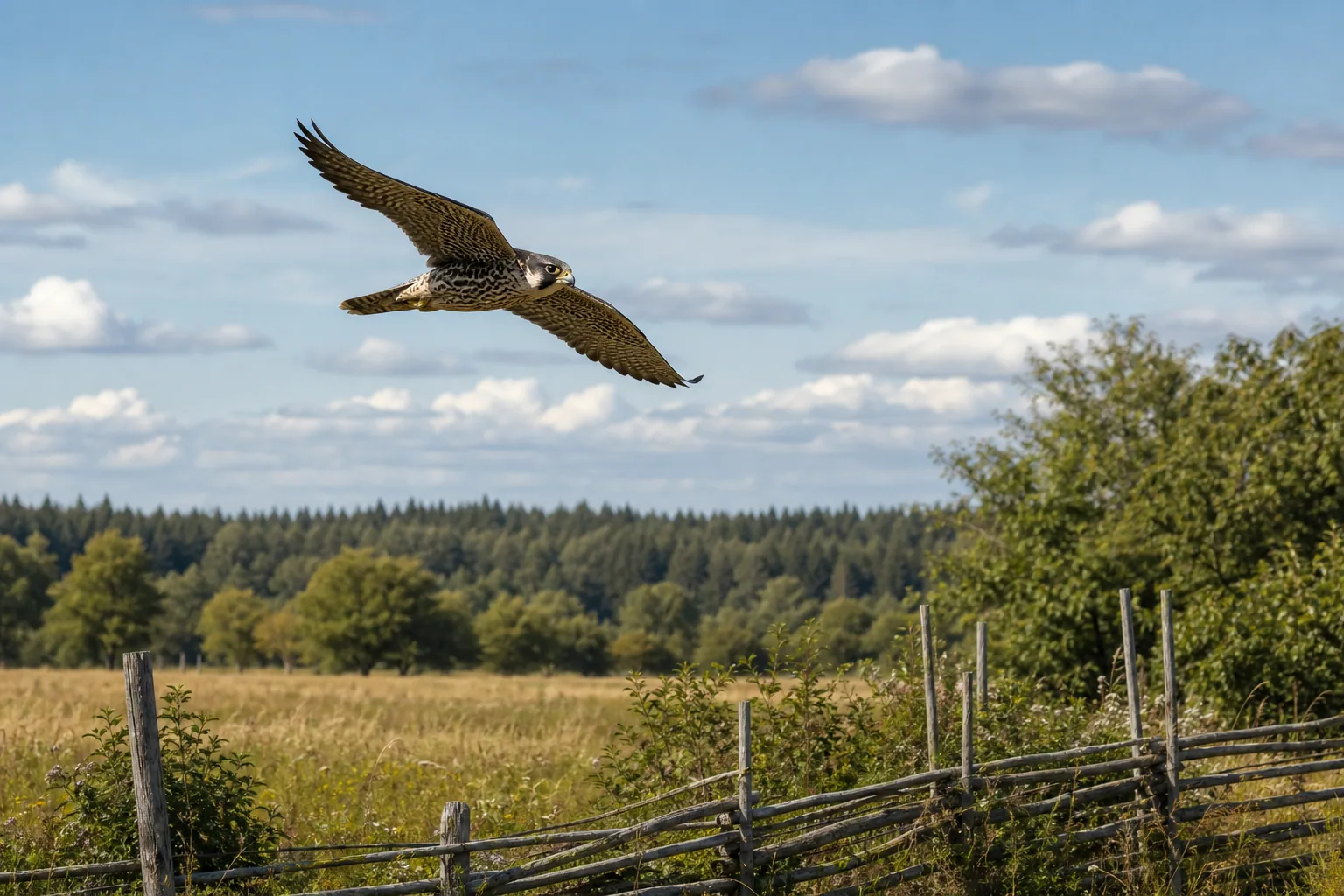
The falcon symbol is not as broadly ritual as the Sun or fire. Its strength lies in song imagery, where the bird species gives a very precise shade to a human state.
How should the falcon be read today?
Today the falcon is best presented as a folkloric symbol, not as a separate divine being. It helps explain how Lithuanian songs compare humans with figures from nature.
Its meaning is clearest together with the bird, the horse, and songs of young men: the falcon is high flight, the horse is the road, and together they show young moving force.