- Category
- Boundary and Passage Symbols
- Domain
- Journey, household boundary, wedding, death, threshold of the year, protection, liminality
- Source status
- folkloric
public road, small gate, threshold, household boundary, passage
What do the road, gate, and threshold mean?
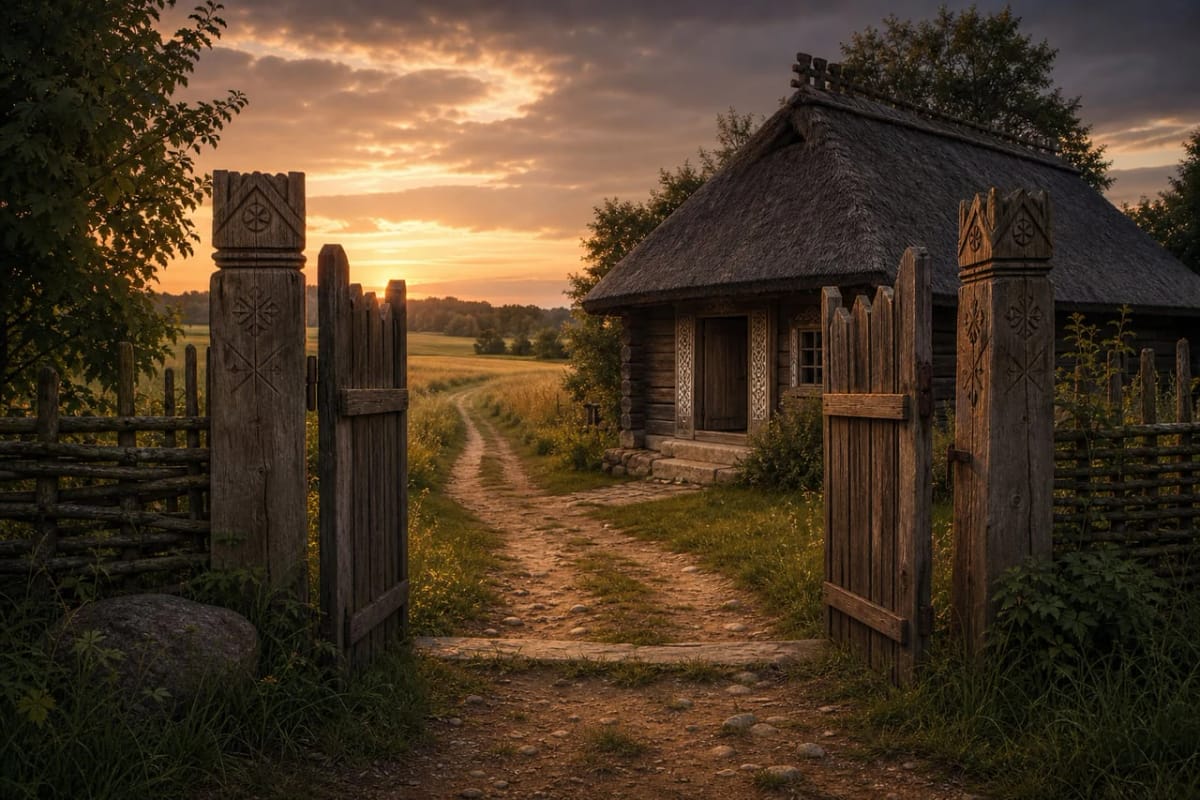
The road, gate, and threshold are boundary symbols. The road leads a person out of familiar space, the gate permits or denies entry, and the threshold marks the exact point where a person passes from one state into another.
In Lithuanian customs such boundaries matter in weddings, funerals, calendar festivals, receiving guests, and the everyday protection of the home. A boundary is never neutral: it has to be respected.
The threshold as household protection
The threshold separates the inside of the home from the outside. For that reason it may be protected and respected, and certain actions on the threshold are treated as improper. Symbolically it is the meeting point of household life and the outer world.
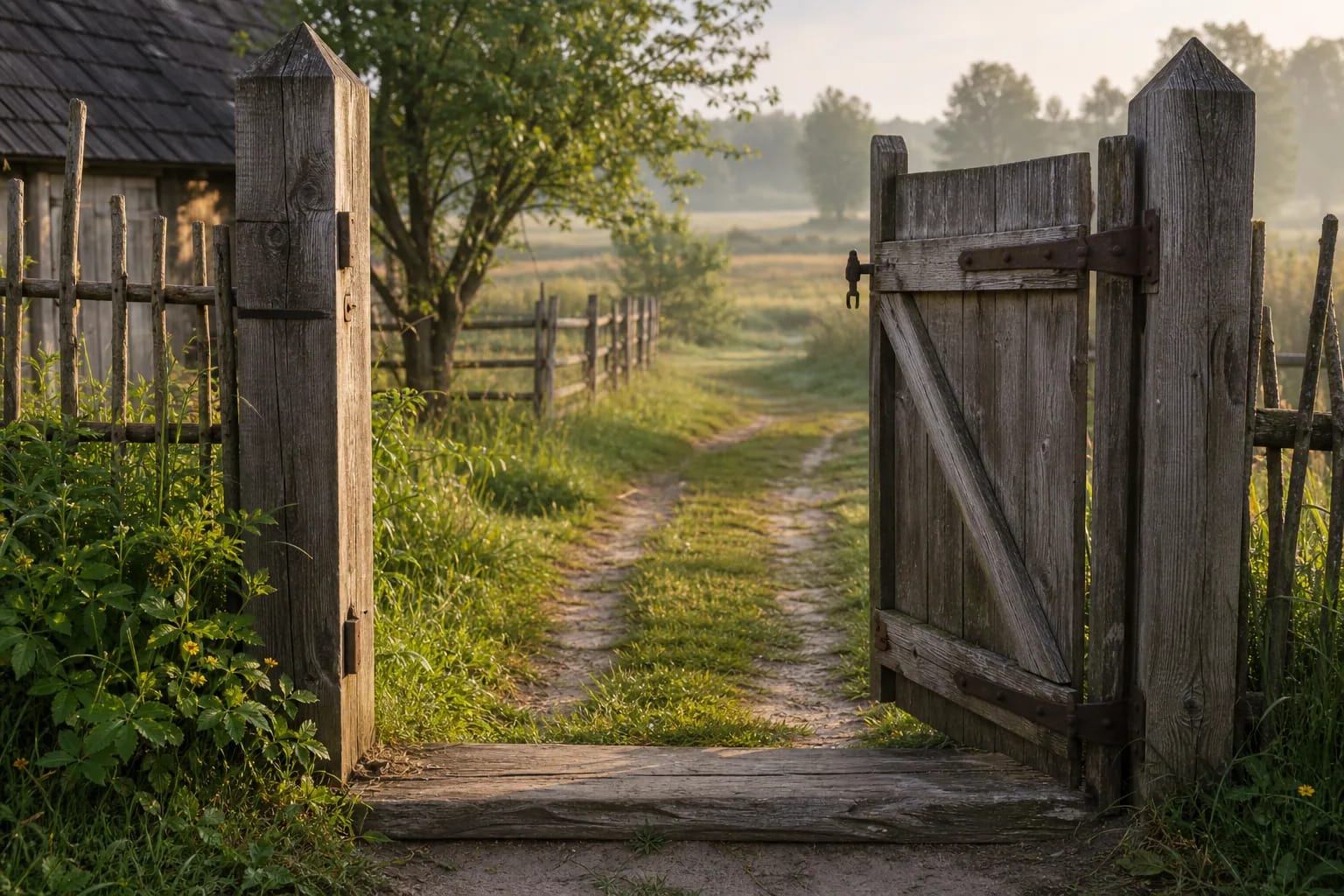
This boundary is especially strong when a new person enters the house, when the bride arrives, when a guest is received, or when the household experiences death. The threshold becomes a tiny but concentrated ritual place. In custom, people did not shake hands or pass objects across the threshold, because this was thought to bring discord; the bride was often lifted or carried over the threshold, and the dead person was carried out feet first so that they would not find the way back. It was also believed that the household žaltys lived under the threshold or that ancestral protection rested there.
Gate and road in weddings and songs
In songs the gate often marks the boundary of the homestead, the girl's flower garden, or the community's space. Through the gate come the young man, matchmakers, or guests, while departure through the gate can mean separation.
The road is a wider version of the threshold. It leads to courtship, war, market, town, or an unfamiliar land. In songs the road almost always carries an emotion: expectation, fear, longing, or resolve.
How should these symbols be read today?
Today the threshold, gate, and road may seem ordinary, but in folklore they explain an important logic of Lithuanian culture: life is understood through passages.
For that reason these symbols belong with Kūčios, weddings, Vėlinės, the horse, and the bridge. Ordinary things then become clear signs of boundary.