- Category
- Lagoon-region and identification symbols
- Domain
- Curonian Lagoon, sailing boats, weathervanes, fishers, identification, wind, colors, lagoon heritage
- Source status
- well attested
lagoon weathervanes, kurėnas boat weathervanes, sailing-boat weathervanes, fisher weathervanes
What are Curonian Lagoon weathervanes?
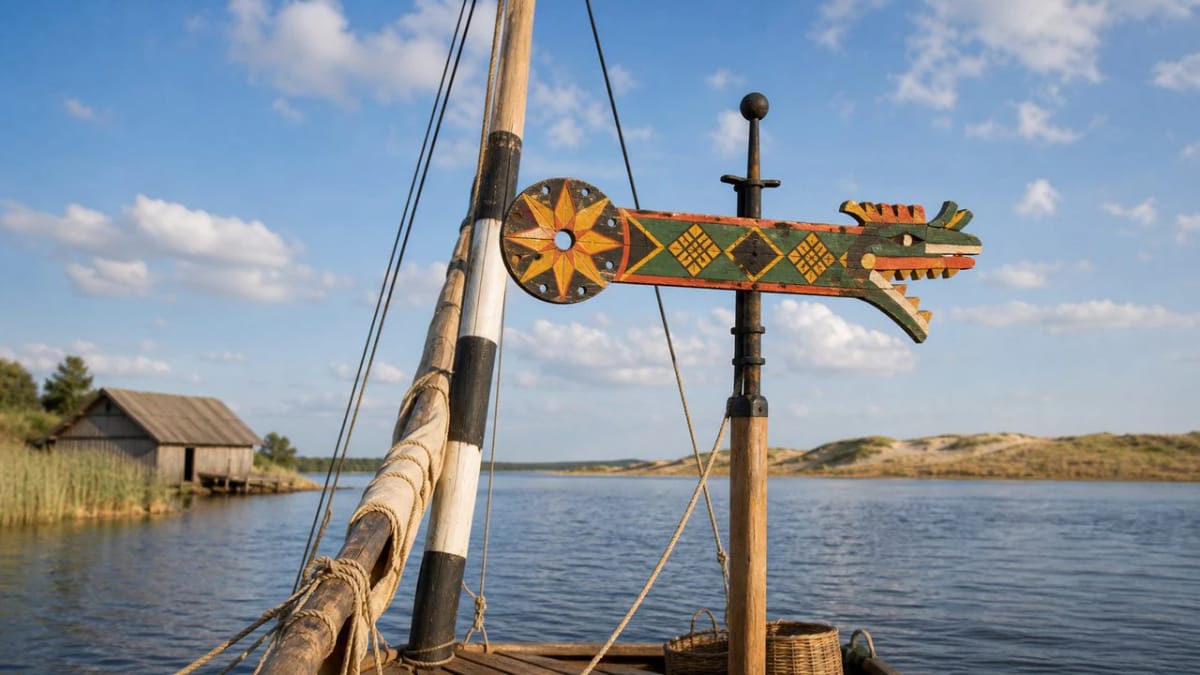
Curonian Lagoon weathervanes are ornate signs on sailing boats, associated with the culture of lagoon fishers. The LNKC inventory describes them as a unique creative phenomenon of Curonian Lagoon fishers.
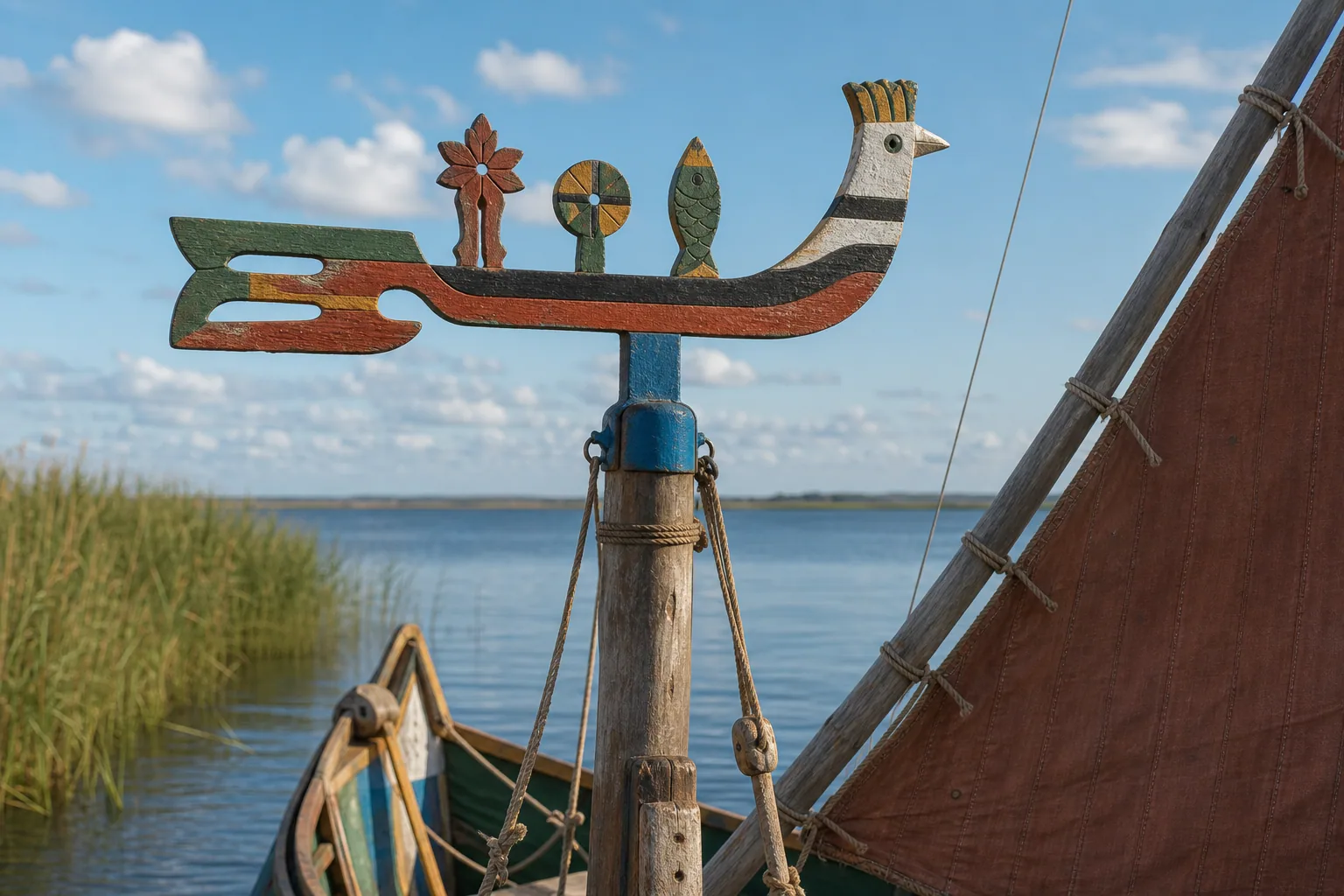
Their function was not only to show wind direction and decorate the boat. Identification was central: weathervanes helped identify fishing area, community, and belonging.
The beginning in 1844
LNKC states that lagoon sailing boats began to be marked with weathervanes in 1844. This was connected with control by the fishing inspectorate of the Kingdom of Prussia and the separation of fishing areas.
This administrative beginning later became a highly artistic and regionally recognizable tradition. Each lagoon settlement had its own weathervane sign, a combination of black and white boards by which a boat's village could be recognized from afar. Later, openwork carved figures, including birds, animals, plants, and crosses, were added, and the weathervane became a distinctive woodcarved ornament.
Wind, lagoon, and identity
A weathervane always speaks about wind and direction. In the Curonian Lagoon case it also speaks about fisher, boat, settlement, lagoon landscape, and communal memory.
Because of their colors and figures, weathervanes became one of the most vivid visual signs of Neringa and the Curonian Lagoon.
Why do weathervanes belong in the symbols section?
Although the weathervanes are not a relic of ancient mythology, they are a traditional sign of Lithuanian and Lithuania Minor heritage. They connect wind, water, boat, and identity.
For that reason they complement the mythology-symbols section as a regional, historically well attested, and visually powerful symbol.