- Category
- Thread, fate, and women's work symbols
- Domain
- Distaff, spinning, flax, wool, distaff board, gift, wedding, women's work, ornaments
- Source status
- well attested
spinning device, spinning board, distaff head, distaff board
What is a distaff?
A distaff is a spinning device made of a distaff board and a leg on which the spinner sat. A bundle of flax or wool was fastened to the board, and thread was twisted with a spindle.
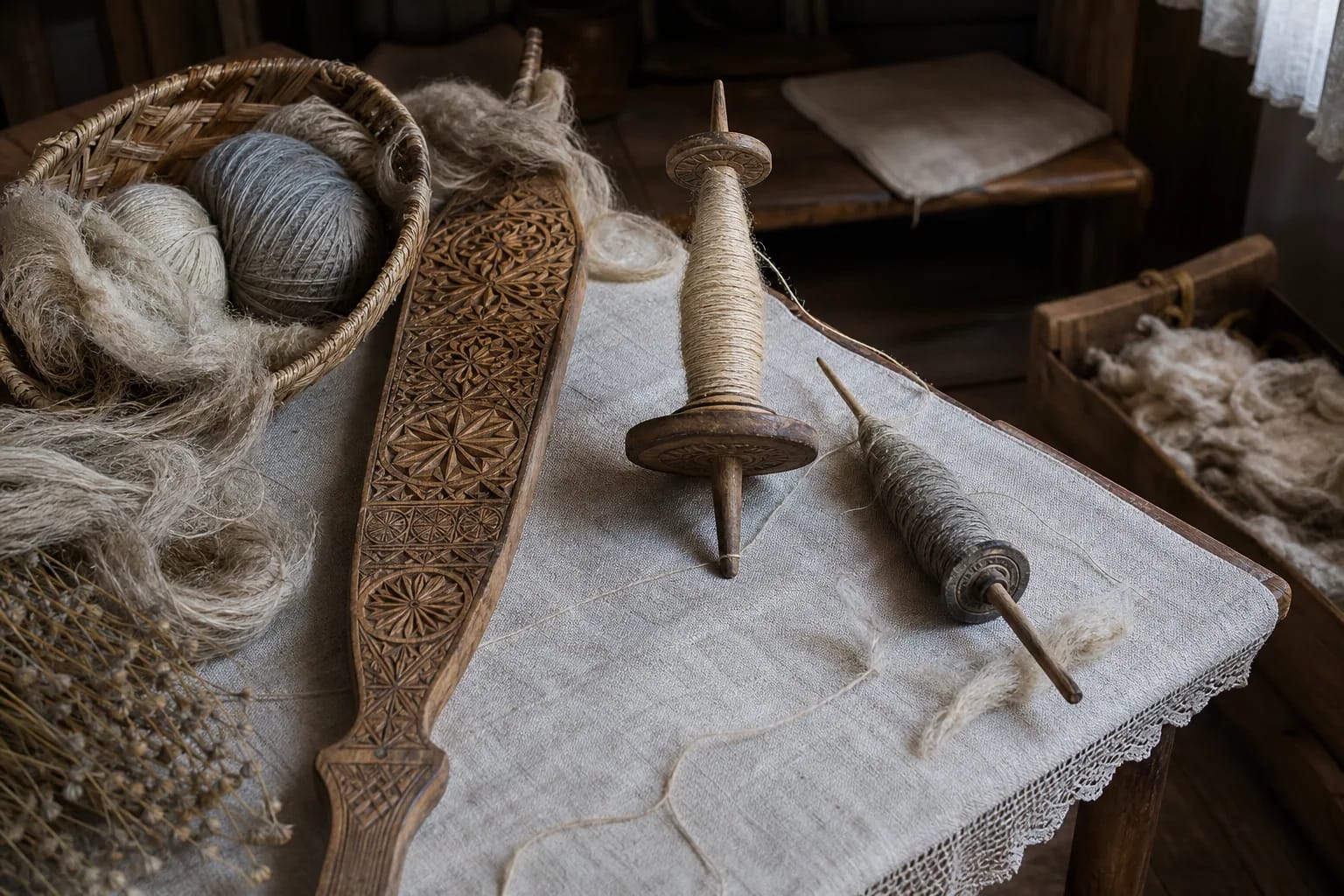
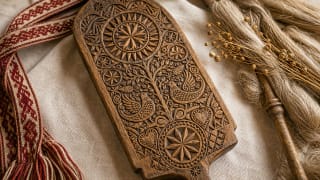
The Encyclopedia of Lithuania description shows that the distaff is both a technical and symbolic object: its head was decorated with geometric ornaments, solar signs, segmented stars, little birds, and animal motifs.
The distaff as gift
In some places a finely carved distaff was given to a girl the young man liked, and spinning with that gift meant quiet consent to marry. This gives the distaff a clear layer of love and wedding connection.
The symbolism of such a gift rests not only on beauty. A young man gives a work tool that is also an ornamented promise and a sign of relationship.
The power of ornaments and flax
The Encyclopedia of Lithuania mentions a belief in the magical power of ornaments to encourage flax growth. This is one of the strongest source statements about the effectiveness of distaff ornaments.
The distaff therefore connects handwork, agriculture, and symbolism: the signs on the object seem to return life to the flax field and to the thread.
The distaff and the beyond
In some places a distaff was placed in a dead woman's coffin. This custom shows that the object could accompany a person beyond the boundaries of everyday life.
Spinning also connects with the image of fate: in Baltic tradition, life and lot are spun by fate goddesses such as Laima and Latvian Laimas, so thread and strand become metaphors for human life. Spinning was usually done on winter evenings during communal work gatherings where people worked, sang, and socialized, so the distaff also belongs to women's community.
Verpstė and prieverpstė refer to different aspects of the spinning implement: the former concerns the whole device and its use, the latter its decorated board.