- Category
- Love and Blood Symbols
- Domain
- Flower, love, beauty, blood, grave, youth, song poetics
- Source status
- folkloric
little rose, red rose, rose blossoms, grave rose
What does rose mean?
In Lithuanian songs the rose is a strong flower symbol. It can mean beauty, love, youth, and adornment, but the red flower also lets songs speak about blood, pain, or death.
Because of this double meaning, rose is not only a love flower. It can be a sign of both the intensity of life and the remembrance of loss.
Love, beauty, and youth
In songs the rose often belongs to the world of the girl, young man, and youth. It expresses beauty indirectly, through a flower: the person is described in the language of nature.
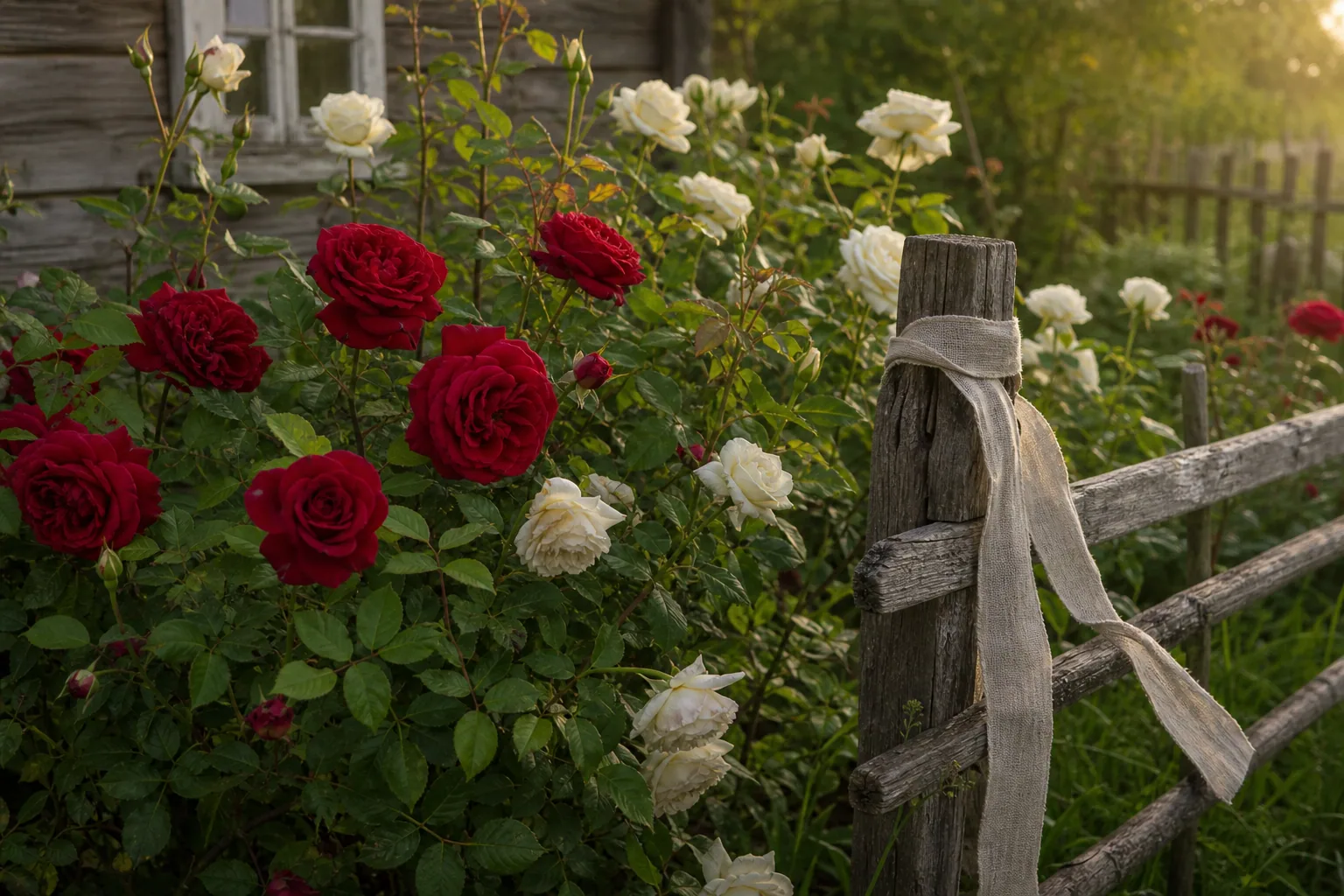
Rose is stronger than many gentle herbs because its color and form create an intense image of feeling. In the flower garden it grew beside rue, peonies, and mint, so in songs it belongs to the girl's garden world; as a relatively late cultivated flower, it differs somewhat from older field herbs.
Blood, grave, and remembrance
In war songs or ballad-like songs, roses may bloom where a body fell or blood was shed. In that case the rose softens the image of death without erasing it.
This is an important principle of Lithuanian songs: a painful event is rewritten into plant language. The rose becomes a sign that even death can turn into the flowering of remembrance.
How should rose be read today?
Today the rose is often understood universally as a love flower. In the Lithuanian folklore context it is worth adding the song shade: red color, blood, grave, flowering, and intensity of emotion.
Rose is clearest beside lily, rue, and wreath. Then it becomes one symbol in the language of flowers, not only a decorative bloom.