- Category
- Life and growth signs
- Domain
- Spiral, coil, fern shoot, growth, life, metal ornaments, wood and textile ornaments
- Source status
- well attested
coil, spiral pattern, fern shoot, winding ornament
Why is the spiral important?
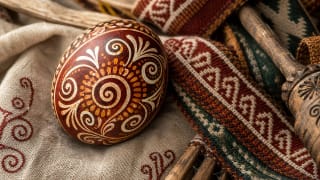
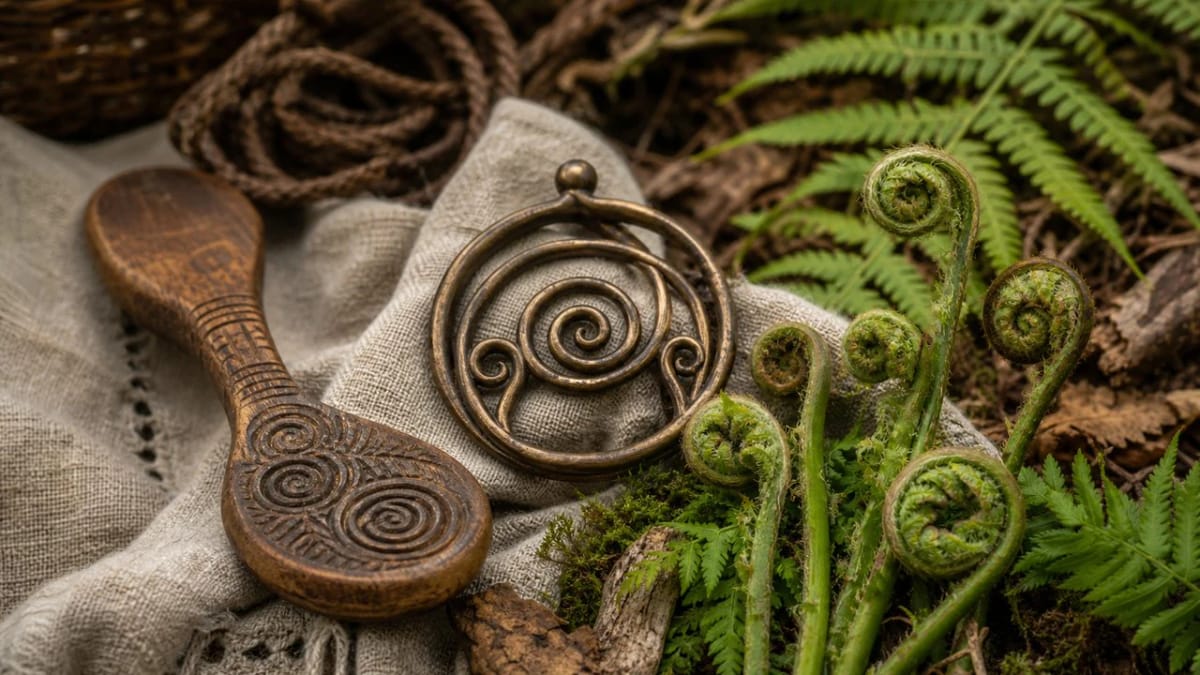
The spiral and coil are forms of movement and growth. They recall a curled plant, a winding thread, metal wire, a water or wind whirl, and life unfolding from a center.
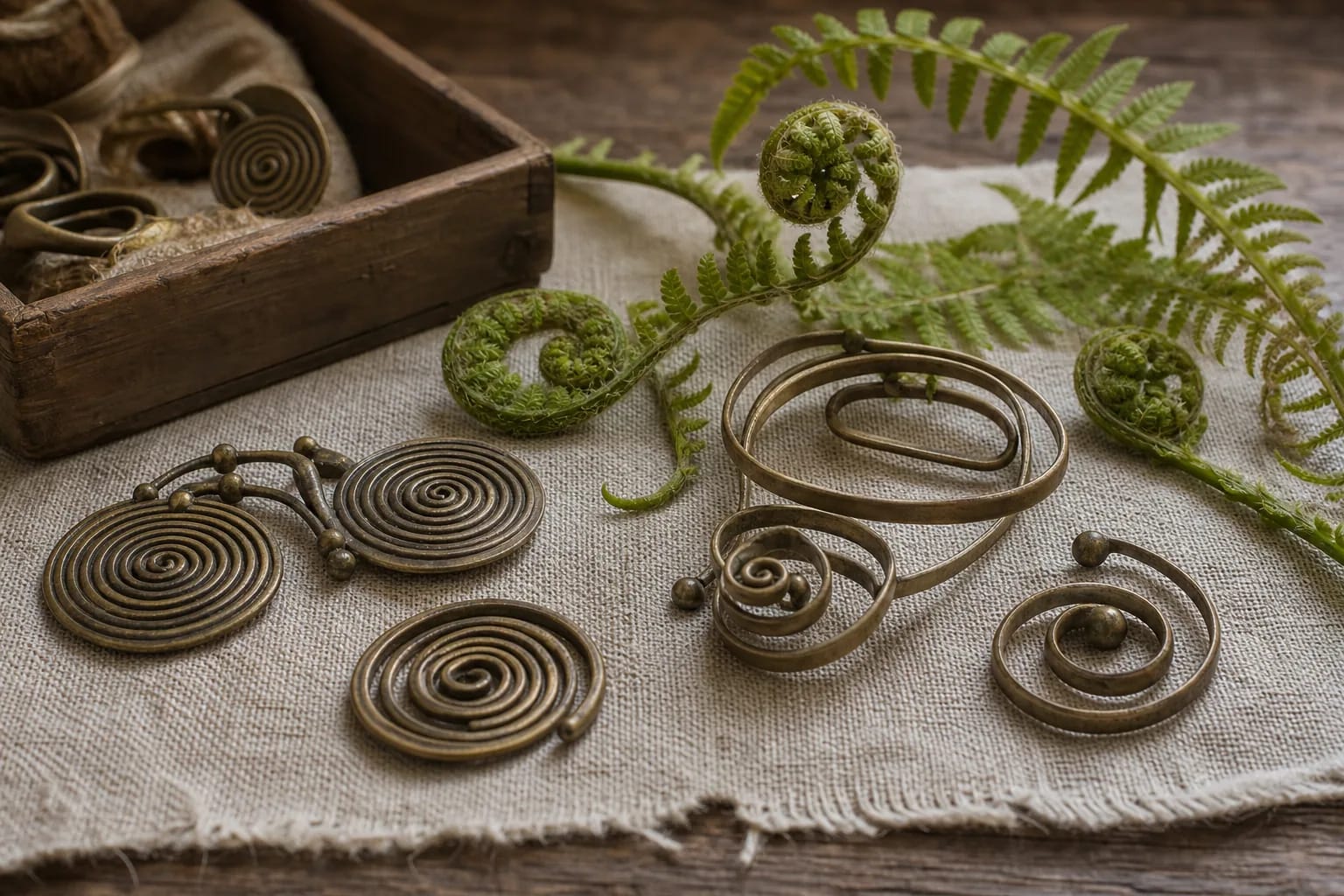
In Lithuanian archaeology and ornament, coiled forms matter not only as drawings but also as objects: coiled ornaments, metal bracelets, and rings show that the spiral is a materially embodied motif.
The coil as an old ornament principle
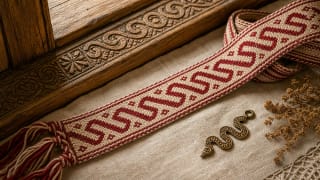
A coil means a twisted, winding form. It may appear in metal, wood, textile, or carving. This motif therefore connects ornament with craft technology.
Research on coiled ornament in Lithuanian studies shows that this is not an accidental modern association but a serious question of traditional ornament. Iron Age Baltic women decorated head coverings, collars, and clothing edges with bronze coils, so the spiral was not only a drawing but also a shining sign worn on the body, protective and status-marking.
Fern shoot
The fern shoot is a plant variant of the spiral. It is linked with unfolding life, spring growth, and hidden power, which Lithuanian folklore further intensifies through the image of the fern flower.
Unlike the fern flower, the shoot is not a miraculous night-time discovery. It is better suited to ornament: its curled form shows life just beginning to unfold.
The spiral today
In contemporary Lithuanian heritage design, the spiral can be used as a subtle sign of life and growth. It is less direct than the sunburst or cross, so it works well in educational and textile contexts.
It is important not to reduce it to one meaning. The spiral can be a form of plant, metal, movement, and time.