- Category
- Sacred-space symbols
- Domain
- Cross-crafting, roadside signs, sunbursts, roofed poles, Christian and older symbolic layers
- Source status
- well attested
roofed pole, sunburst, roadside cross, chapel-pole, cross-crafting
What is the symbolism of cross-crafting?
Lithuanian cross-crafting is not simply the making of crosses. It is the marking of place, remembrance, prayer, protection, a communal gift, and woodcraft. Because of this, a cross, roofed pole, or chapel-pole acts as a center of sacred space.
UNESCO recognition emphasizes not only the objects but also their symbolism: Lithuanian cross-crafting and its symbolism were inscribed in 2001 on UNESCO's Representative List of the Intangible Cultural Heritage of Humanity, the first Lithuanian element of that kind. The tradition includes crosses, chapel-poles, roofed poles, and small chapels; the folk masters who made them were called dievdirbiai, and one of their favorite images was the meditative Rūpintojėlis. The most impressive living monument of the tradition is the Hill of Crosses near Šiauliai.
The roofed pole as a sign of place
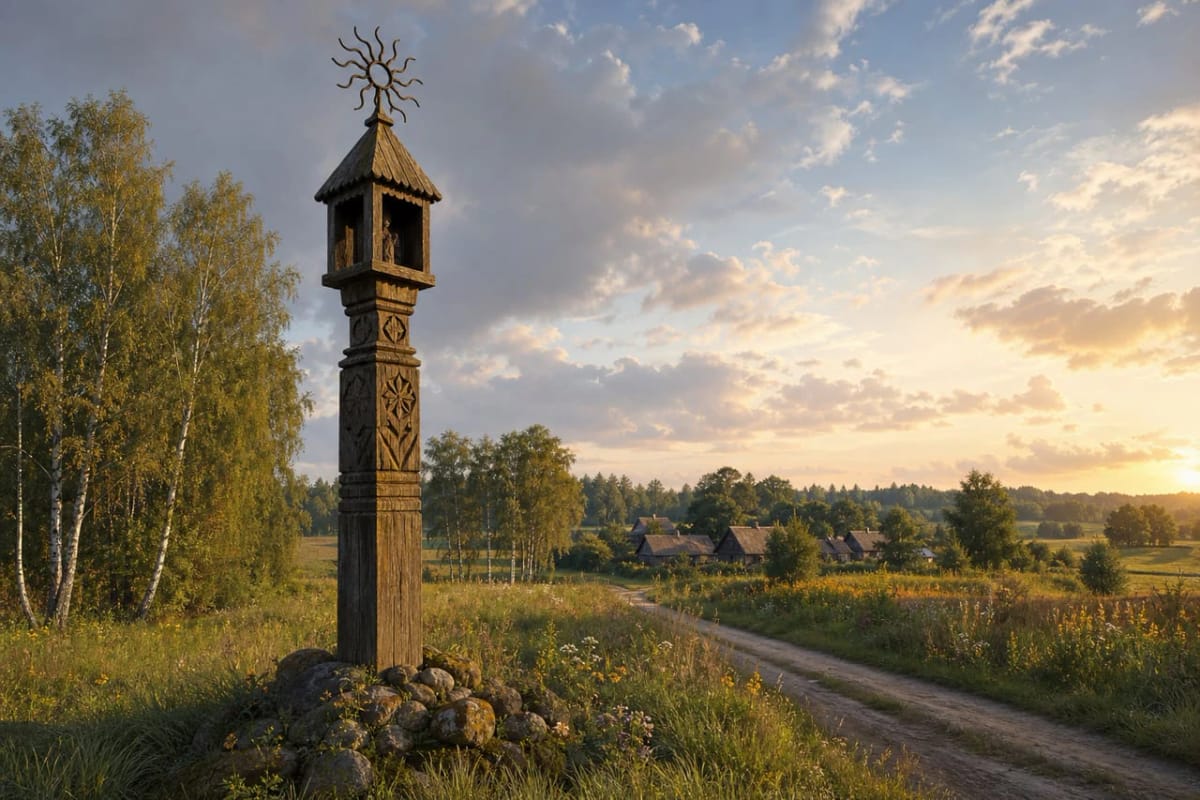
A roofed pole stands between architecture, sculpture, and the sign of a sacred site. Its small roof protects a sacred image or symbol, while the vertical post lifts the sign above ordinary ground.
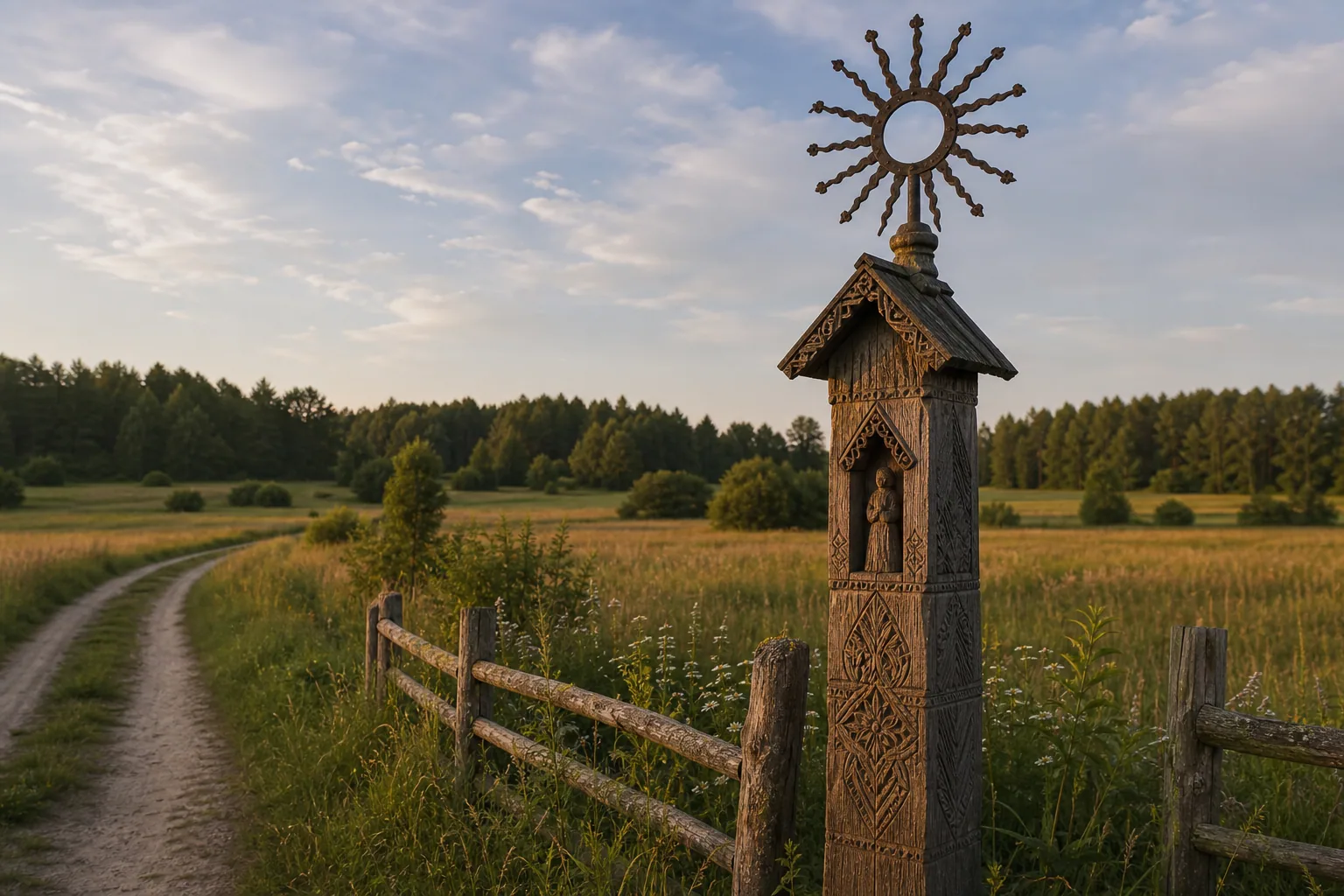
Such objects often appear by roads, near farmsteads, in cemeteries, or at important places. They show that sacredness in Lithuanian culture can be very local: marked by a specific road, tree, village, or family memory.
Sunburst and layered ornament
The sunburst is one of the most recognizable Lithuanian ornaments in cross-crafting. It can mean light, protection, heavenly order, and at the same time operate within the Christian context of the cross.
It is important not to oversimplify: cross-crafting is not merely the sum of pagan and Christian layers. It is a living world of folk art in which signs are reworked, joined, and adapted to a specific place.
How to read this symbol today
Today roofed poles and sunbursts are often treated as signs of Lithuanian identity. A good explanation should show their sacredness, locality, and craftsmanship, not only the decorative ornament.
Wayside crosses and roofed pillar monuments connect woodworking, remembrance, and community customs. Their decoration places sunbursts, plant forms, and other traditional motifs alongside Christian signs.