- Category
- Soul Symbols
- Domain
- Soul, spirit of the dead, death, sleep, winged form, night moth, fever, transformation, otherworld
- Source status
- folkloric
drugys, peteliškė, little butterfly, night moth, fluttering moth
Is the butterfly or moth a symbol, or a being?
In Lithuanian mythology the drugys stands between symbol and mythical being. On one hand it is an ordinary creature of nature, a butterfly or night moth; on the other, it was understood as a visible form of the soul, and so is closely tied to the vėlė and the world of the dead.
This page treats the butterfly and moth among animal symbols, but their meaning cannot be separated from vėlės. It therefore points to the separate page on vėlės, where the souls of the dead are described more fully. The butterfly or moth is only one of their visible forms.
This in-between status is not accidental. The butterfly and moth belong to beings that move between states: between day and night, body and soul, life and death. It is more meaningful to read them as signs of boundary and transformation than as decorative insects.
The soul in winged form
The most important meaning of the butterfly or moth is the image of the soul. In Lithuanian and Baltic tradition the human soul was not always imagined as formless: some of the oldest images of the vėlė are zoomorphic, meaning that the dead soul could be imagined as a mouse, bee, bird, or other animal. The winged moth belongs in this sequence.
A winged creature suited the soul because it is light, mobile, and able to rise from the ground. A moth flying from darkness into light or from the body into air became a natural image of the soul's departure. Thus at death or in sleep the soul could be imagined leaving the body in such a form.
This image is not uniquely Lithuanian. The idea of the soul as a butterfly is widespread in many cultures. In Lithuanian tradition, however, it naturally joins the local idea of the vėlė as an animal, and so becomes part of a distinctive imagery of the dead soul.
The night moth and the visiting vėlė
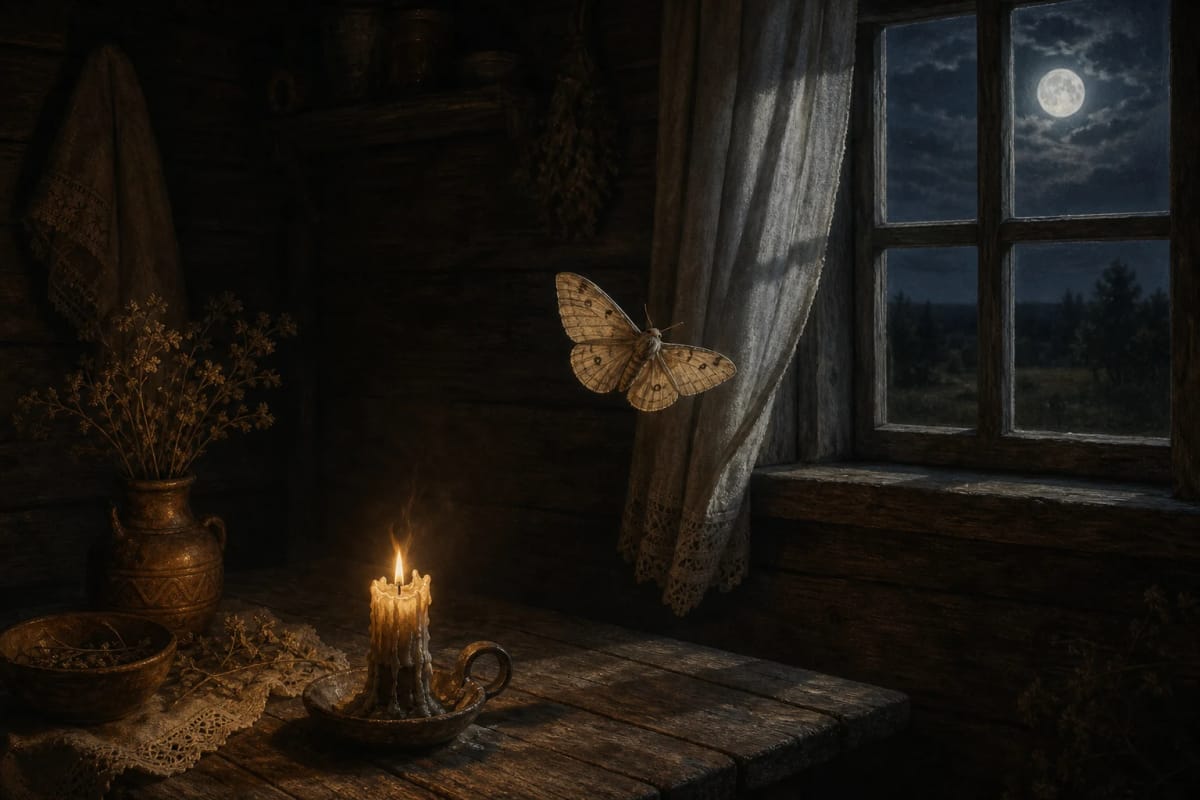
A night moth flying into the house had special meaning. Such an unexpected visitor at night, especially circling a light near a sick or dying person, was understood in folklore as a visiting vėlė: the soul of a dead relative returning to the living.
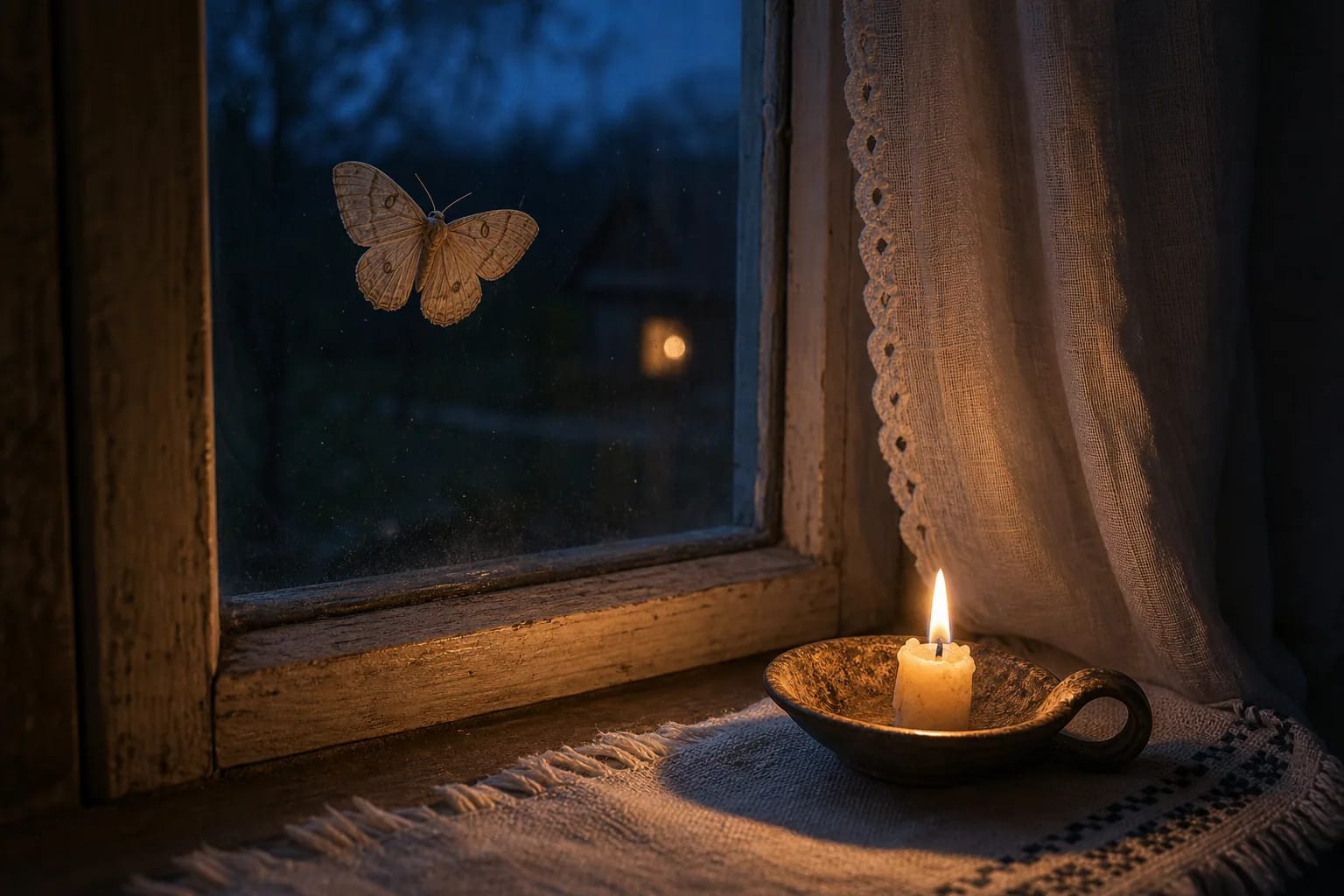
For that reason people did not treat a night moth indifferently. They tried not to kill it or drive it away harshly, because that might harm the dead person's own soul. This behavior shows that the moth belonged not only to nature, but also to the world of ancestral memory.
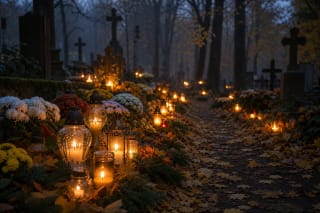
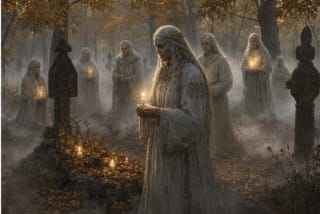
This belief connects the moth closely with Vėlinės and images of returning souls. The returning soul could appear as a small, quiet creature fluttering near light, so the night moth became a silent link between the living household and the world of the dead.
Sleep, death, and the soul's journey
The image of the butterfly or moth as soul is also linked with sleep. It was believed that during sleep the soul might temporarily leave the body and wander, then return, much as a moth flies away and comes back. The image therefore became not only a picture of death, but also of temporary separation from the body.
In this imagery death is like a final flight of the soul. If in sleep the soul flies out and returns, in death it leaves the body for good, and that departure was imagined in winged form, as a moth rising from the earth.
This pairing of sleep and death is characteristic of an old worldview in which the boundary between them was thin. A butterfly or moth moving between body and air, darkness and light, expresses that boundary well and therefore became a symbol of the soul's journey.
Drugys as illness and fever
The Lithuanian word drugys has another meaning: it also named a fever, trembling, or periodically shaking illness. This overlap opens another layer of the symbol: drugys was linked not only with the soul, but also with a force that attacks and shakes a person.
In legends such illness is associated with the devil's action. Norbertas Vėlius mentions beliefs in which a person shaken by drugys, that is, by fever, or even possessed by the devil, behaves unusually. The illness was understood as a force from beyond that had struck the person.
Thus drugys includes both the light, winged image of the soul and the heavy, shaking illness. This duality shows that in folklore drugys is a boundary name, marking what flutters between body and soul, health and sickness, life and death.
Peteliškė and drugelis: shades of the same imagery
In standard Lithuanian, peteliškė often means a bright daytime butterfly, while drugys can mean any insect of this order, including night moths. In folklore these words overlap, and the key point is not biological species but the idea of a winged, fluttering creature.
A daytime, colorful butterfly better suits images of life, rebirth, and summer, while a quiet night moth suits death, the vėlė, and night. Together they form one symbolism in which the same creature can mean both life and its departure.
For that reason drugys and peteliškė are discussed together here: they are shades of the same winged image, not two unrelated things. Read together, they show how one creature can hold opposite meanings of life and death.
How should the butterfly or moth be read today?
Today butterflies are most often seen as symbols of beauty, lightness, and rebirth. In Lithuanian folklore the deeper layer should remain visible: here the butterfly or moth is first of all a form of the soul and vėlė, linked with death, sleep, and the otherworld.
The best way to interpret it is together with vėlės, Vėlinės, death, and sleep imagery. Then a night moth stops being only an accidental insect and becomes a quiet sign of ancestral memory, a visiting soul to be treated carefully and respectfully.
Distinguishing the meanings of drugys as soul, vėlė, and fever shows how rich this imagery is. It holds the flutter of life, the flight of death, and the illness that shakes a person, making it one of the most distinctive boundary symbols in Lithuanian folklore.