- Category
- Solstice Symbols
- Domain
- Rasos festival, Joninės, healing dew, herbs, fern flower, hidden knowledge
- Source status
- well attested
Rasos, Kupolės, Joninės, fern flower
What do dew and the fern flower mean?
Dew and the fern flower belong to the symbolic field of Rasos, Kupolės, and Joninės. Dew means morning freshness, health, harvest, plant life, and the power of summer night. The fern flower means hidden knowledge, extraordinary luck, and a brief miraculous moment.
These symbols are strong because they work at a threshold of time: night has not yet ended, but dawn is approaching; plants are full of life, but their power must be caught at the right moment.
Dew in Joninės customs
The VLE article on Joninės notes that special attention was given to water and dew. It was believed that heavy dew on the festival morning foretold a richer harvest, and that dew before sunrise had healing powers.
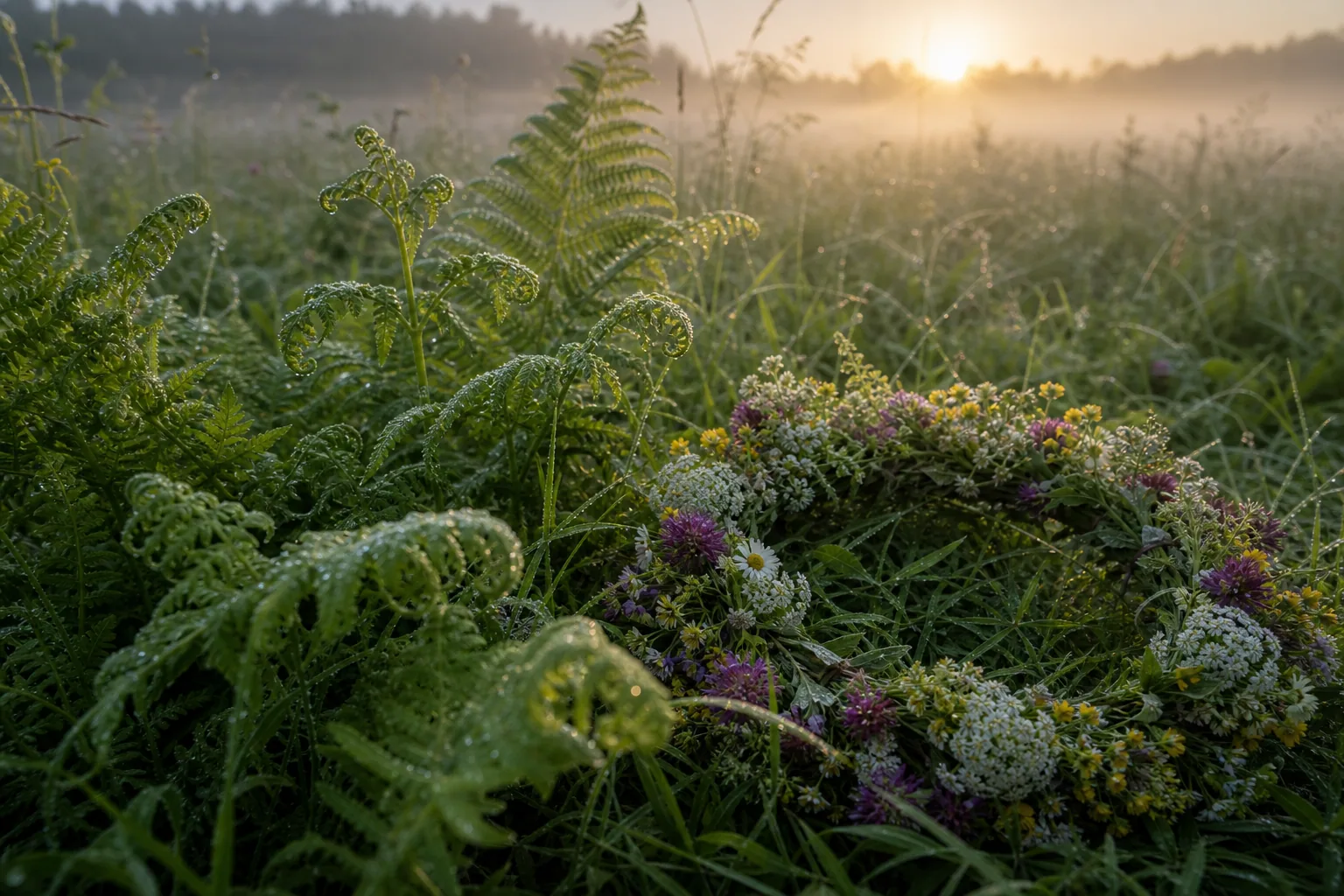
Dew was gathered by dragging a cloth through meadows, used for healing, and washed over the face. These concrete actions show that dew was not only a pretty poetic image. It was a practical and symbolic sign of health, beauty, and harvest.
Kupolės and the power of herbs
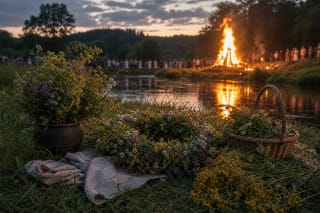
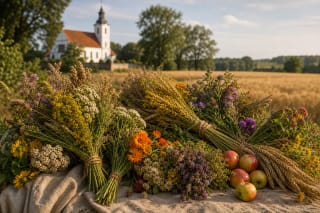
In Joninės customs, kupoliavimas, the gathering of herbs from seven or nine fields, is linked with the healing and magical power of plants. Herbs decorated the kupolė pole, homes, and barns, were dried, and were used for fumigation or livestock protection.
Dew, herbs, and wreaths form one symbolic system. Plants drink in dew at night; people gather, braid, keep, and use them as signs of health, happiness, or protection.
The fern flower and hidden knowledge
The VLE article on Joninės mentions the fern flower sought at midnight, called Perkūnas' fire, and the belief that whoever found it would become all-knowing. It is one of the best-known Lithuanian mythic motifs of summer night.
Biologically, ferns do not flower, so the symbol works as a search for an impossible flower. Its meaning lies not in botany but in mythic logic: on a special night one may find what is normally hidden from humans.
How should these symbols be read today?
Today dew and the fern flower are useful for explaining Rasos, Joninės, herb customs, bonfires, wreaths, health beliefs, and the magic of summer night. They show that the festival is not only a name day or entertainment.
It is important to keep two directions: dew is a very concrete substance used in custom, while the fern flower is mythic, impossible, and powerful precisely because of that. Together they join body, nature, and imagination.