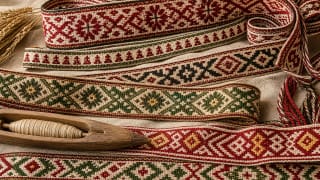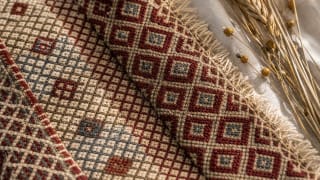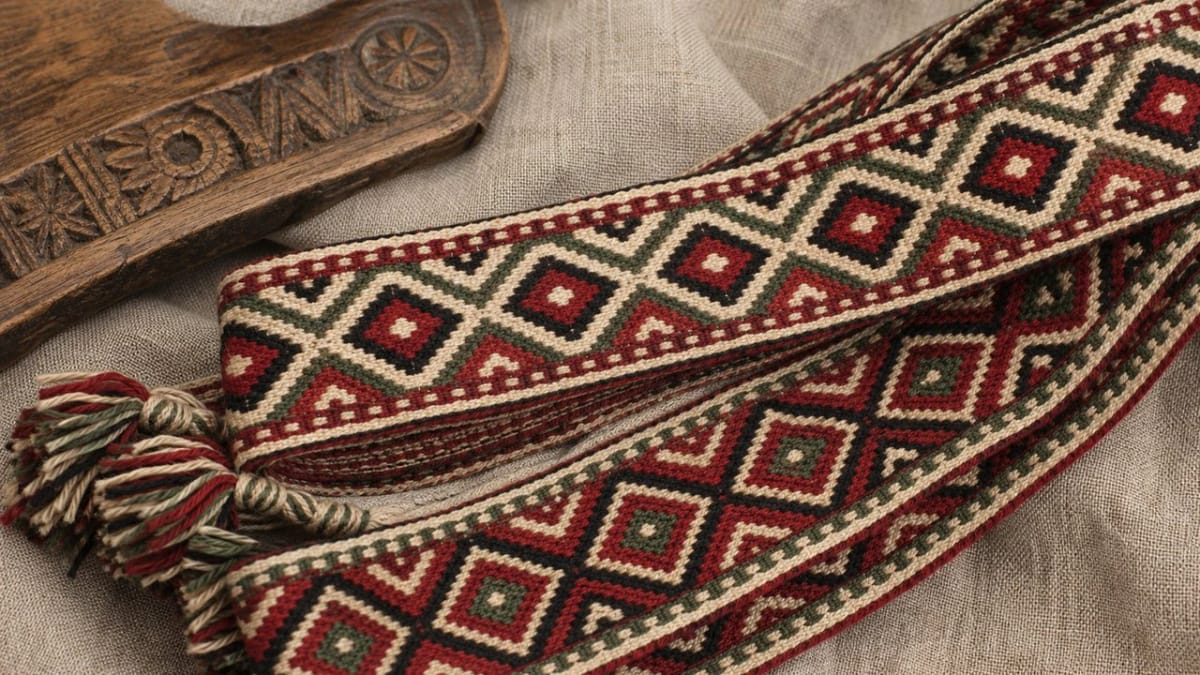
- Category
- Geometric ornaments
- Domain
- Rhombus, little eyes, textiles, sashes, earth, fertility, small squares, rhythm
- Source status
- well attested
little rhombuses, little eyes, eye pattern, checkered rhombus
What is the rhombus in Lithuanian patterns?
A rhombus is a slanting quadrilateral, very convenient for weaving and repeated pattern. In sashes it can be a separate sign, a grid of cells, or the central part of a motif.
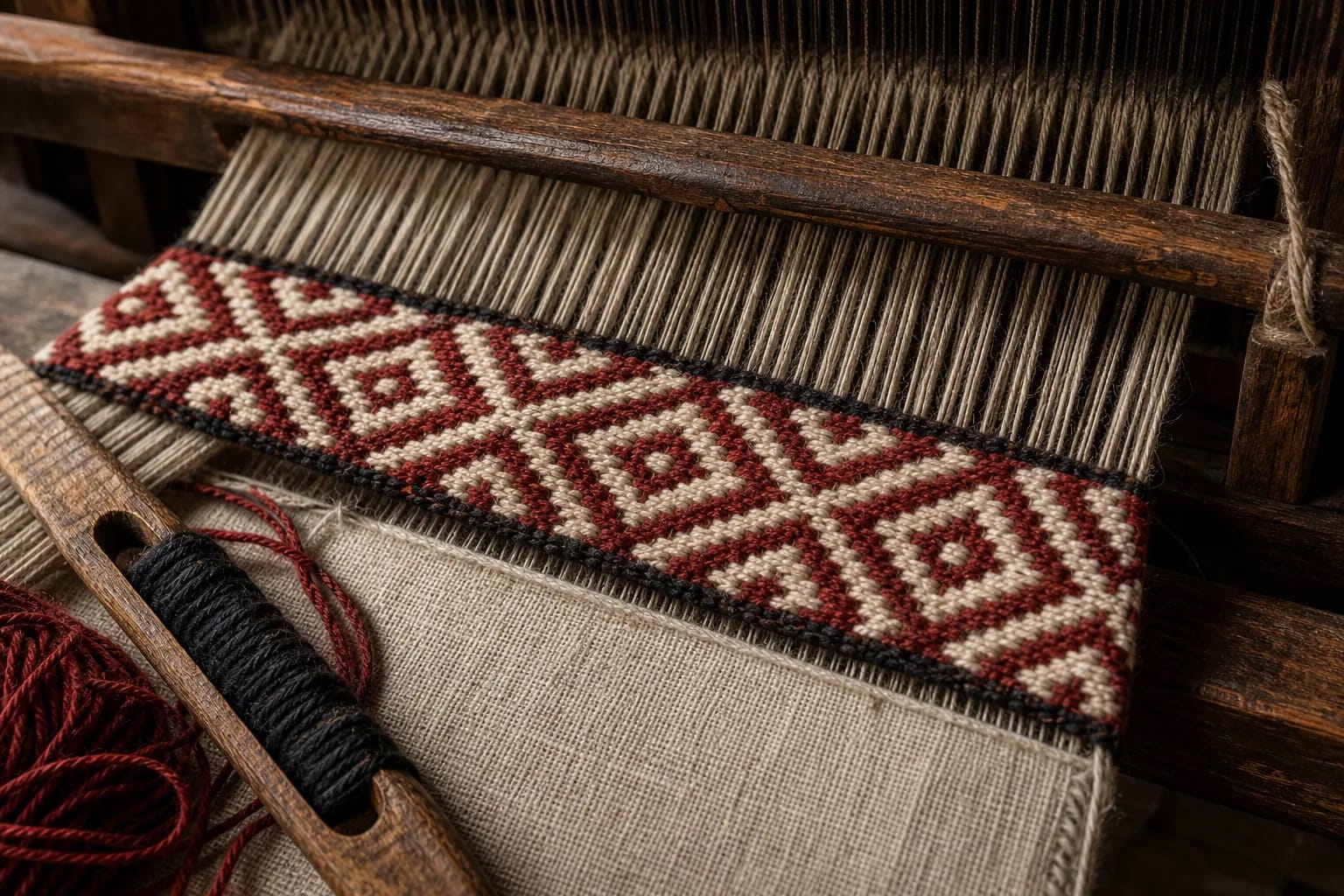
Lithuanian folk-art symbolism sources connect the rhombus with activity and with several meanings: earth, sun, day, wreath, or fire. This shows that the sign is multivalent rather than one encoded word.
Little eyes and the gaze motif
Little eyes are small dots, holes, or inner rhombus elements that give a pattern vitality. When a rhombus has a little eye in the center, it can look like an eye or watching window.
Such a motif is often explained as a sign of protection or attention, but the technical side also matters: in woven structure, little eyes create rhythm, contrast, and pattern readability.
Earth, field, and fertility
Because of its form, the rhombus is often connected with field, earth, and fertility. In Marija Gimbutienė's research a rhombus with a dot in the middle is interpreted as a plowed, sown field: a seed in the soil, a sign of fertility and the Earth Mother. In textiles and sashes this may be a symbolic hint of agrarian order, especially when rhombuses repeat as divided plots.
The best interpretation, however, does not separate meaning from material. In a textile the rhombus is both a sign and a pattern construction produced by the logic of warp and weft.
How does a rhombus differ from a net?
One rhombus works as a separate sign, while many rhombuses can form a net pattern. The rhombus and little eyes page therefore discusses the basic motif, while the net-pattern page discusses the repeated structure.
This distinction helps explain both the meaning of one rhombus and the broader patterns of sashes and textiles.