- Category
- Ornaments and patterns
- Domain
- Folk art, textiles, sashes, woodcarving, Easter eggs, cross-crafting, household objects
- Source status
- well attested
Lithuanian ornaments, Lithuanian patterns, folk-art ornaments, folk-art symbols
What are Lithuanian ornaments?
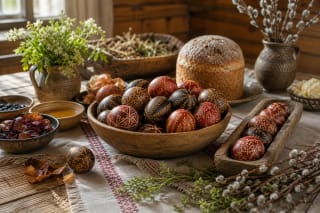
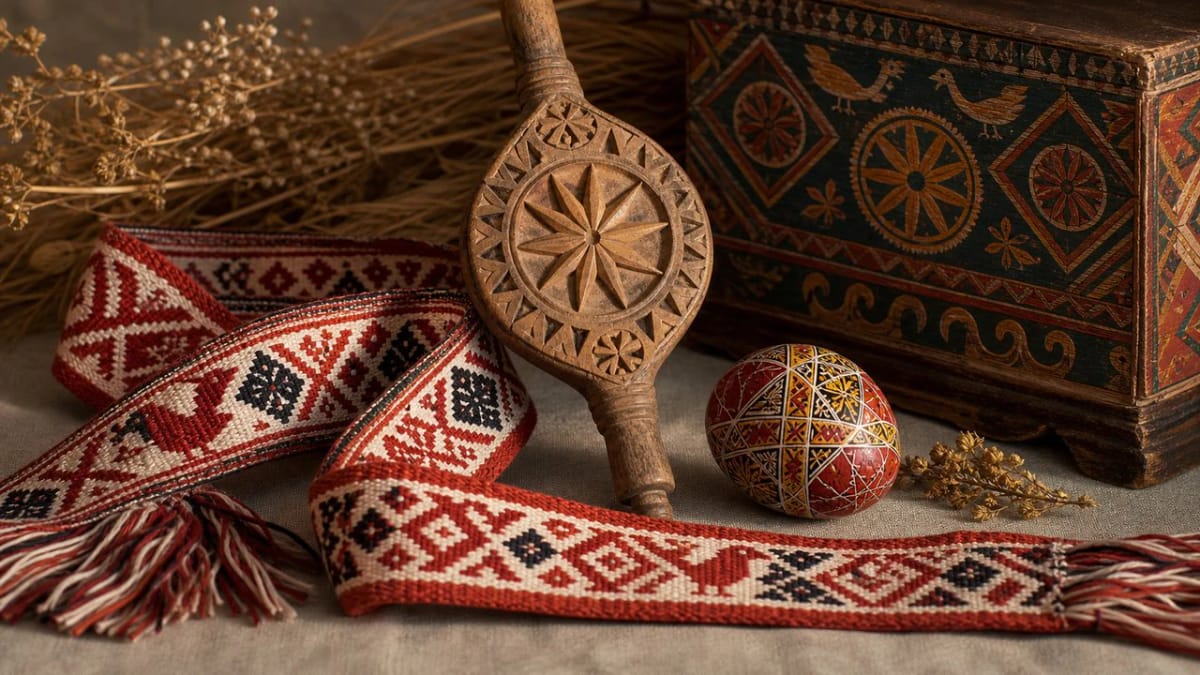
Lithuanian ornaments are a system of repeated signs, lines, and forms visible in textiles, sashes, Easter eggs, woodcarving, ironwork, cross-crafting, and household objects. They are not only decoration: a pattern often marks order, rhythm, celebration, protection, or the purpose of an object.
In encyclopedic terms, ornament is a form of decoration, but in Lithuanian tradition it is often tied to the observation of nature and communal memory. A sunburst, rhombus, crosslet, spiral, or grass snake can work both as an artistic motif and as a hint of worldview.
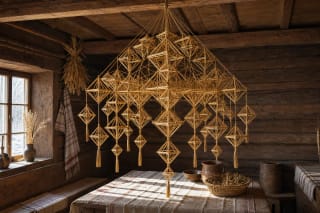
Lithuanian ornaments are usually divided into three main groups: geometric ornaments, such as rhombuses, crosslets, zigzags, and stars, often considered the oldest; plant ornaments, such as blossoms, rue, the tree of life, and tulips; and zoomorphic ornaments, such as birds, little horses, grass snakes, and goat-hoof motifs. This division helps show how the same sign travels through textile, wood, metal, and paper.
Why should ornaments be interpreted carefully?
Many signs are well attested as folk-art motifs, but their old religious meaning was not always recorded directly. A good interpretation therefore separates three things: where the sign is found, what it was called, and what meaning was later assigned to it.
This is especially important when speaking about crosses, swastikas, fire motifs, or motifs associated with Perkūnas. The image itself may be old, while the specific name or mythological explanation may belong to another period.
Where do ornaments live?
In textiles and sashes, ornament becomes rhythm that can be worn, given, or used ritually. In wooden objects it emphasizes the object's place in the household world: a distaff, distaff board, chest, or roof finial receives a marked surface.
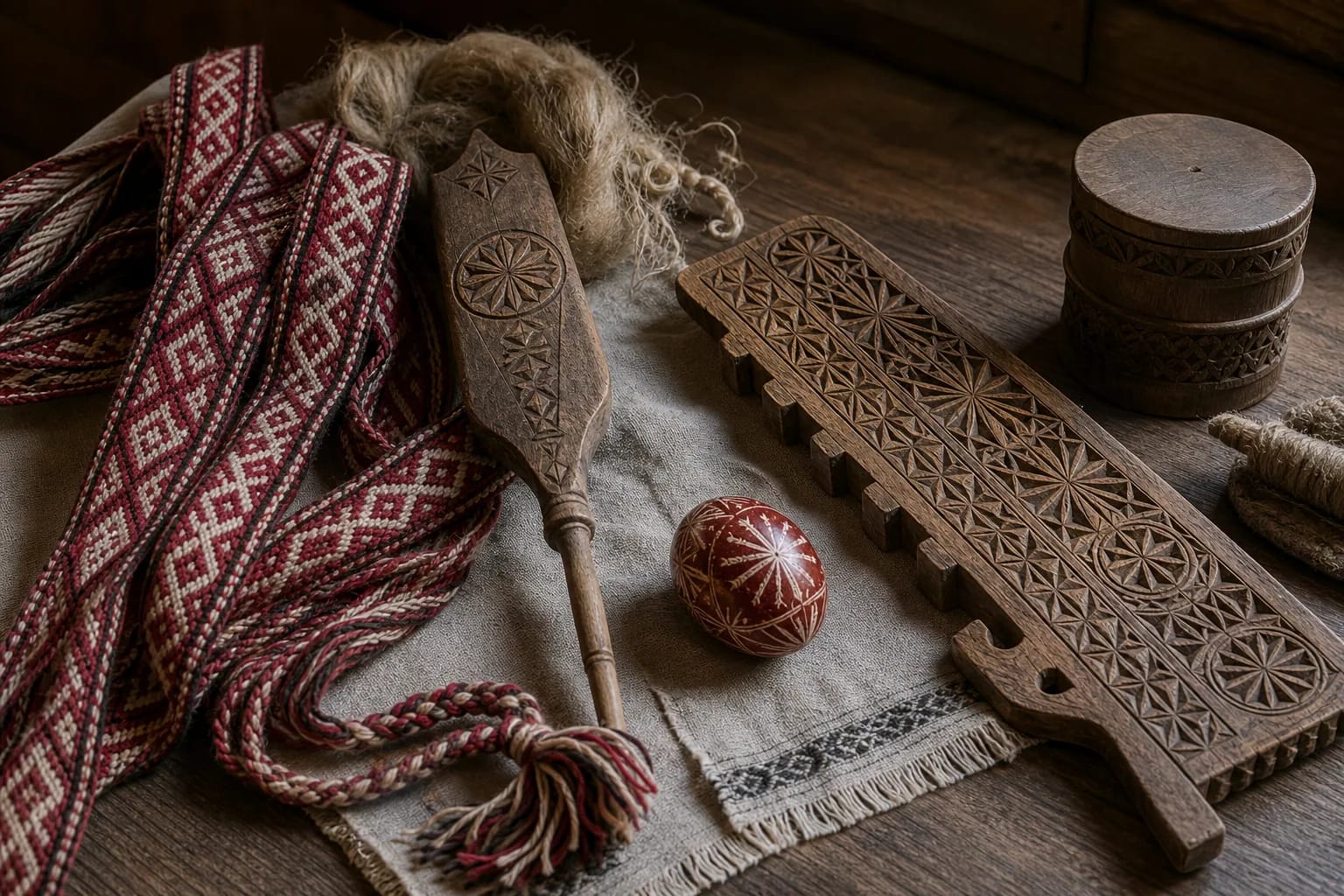
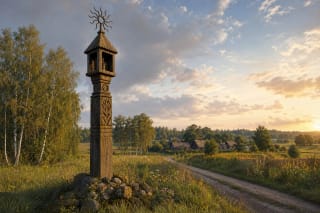
In cross-crafting and cemetery signs, ornament enters the language of sacred space. There sunbursts, stars, birds, grass snakes, and plant motifs join Christian and older layers of folk symbolism.
How to read the pages in this section
This section explains ornaments as signs of traditional culture, not as a closed system with one universal key. When interpreting a motif, it helps to distinguish a form, an object, a regional tradition, a festival, or a modern reconstruction.
That method avoids over-quick claims while still showing that Lithuanian patterns form a very rich visual language. They connect agriculture, home, heavenly bodies, fire, water, animals, and the work of human hands.