- Category
- Tree Symbols
- Domain
- Sacred tree, Perkūnas, strength, lineage, sacred place, forest
- Source status
- well attested
Perkūnas' tree, sacred oak, oak grove
What does the oak mean?
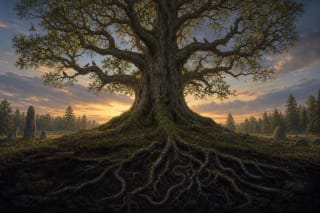
The oak is a symbol of the sacred tree, strength, long life, and lineage. In Lithuanian culture it is connected with the forest, sacred places, masculine force, and especially Perkūnas, the god of thunder and lightning.
The oak's meaning grows from its physical nature: it is large, long-lived, hard, visible from afar, and resilient. It easily becomes a sign of the world's firmness, communal memory, and higher power.
Oak in the tree cult
The VLE article on the tree cult shows that trees in Baltic and Lithuanian tradition could be considered sacred and connected with gods, the dead, or special places. Oak has an exceptional place in this field because of its link with Perkūnas and sacred oak groves.
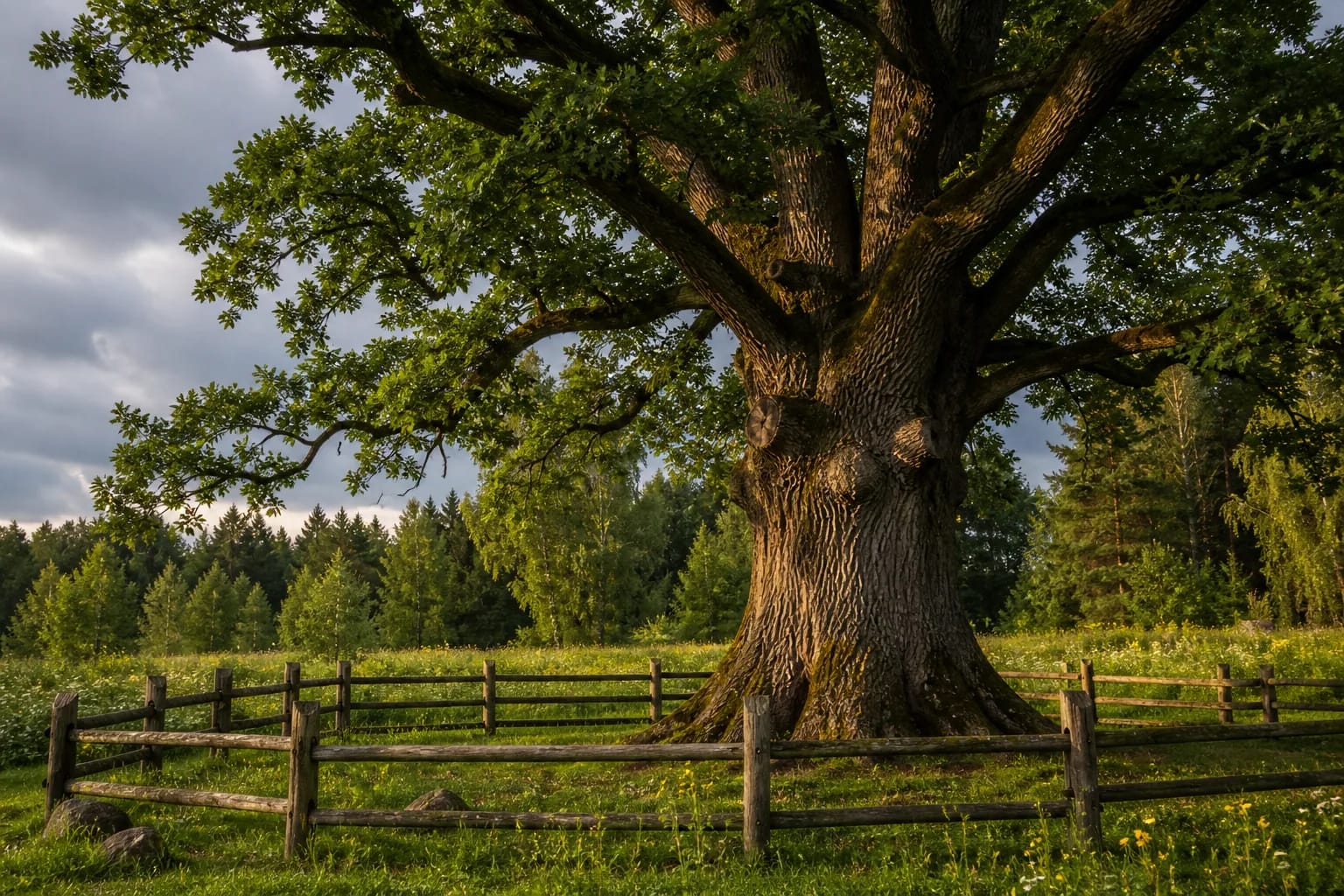
It is important to distinguish the symbolism of the species from a particular sacred tree. A specific oak in a sacred place could have its own local story, custom, or prohibition, while the wider oak symbol works through strength, sky, storm, and forest.
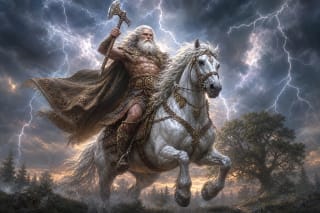
Oak and Perkūnas
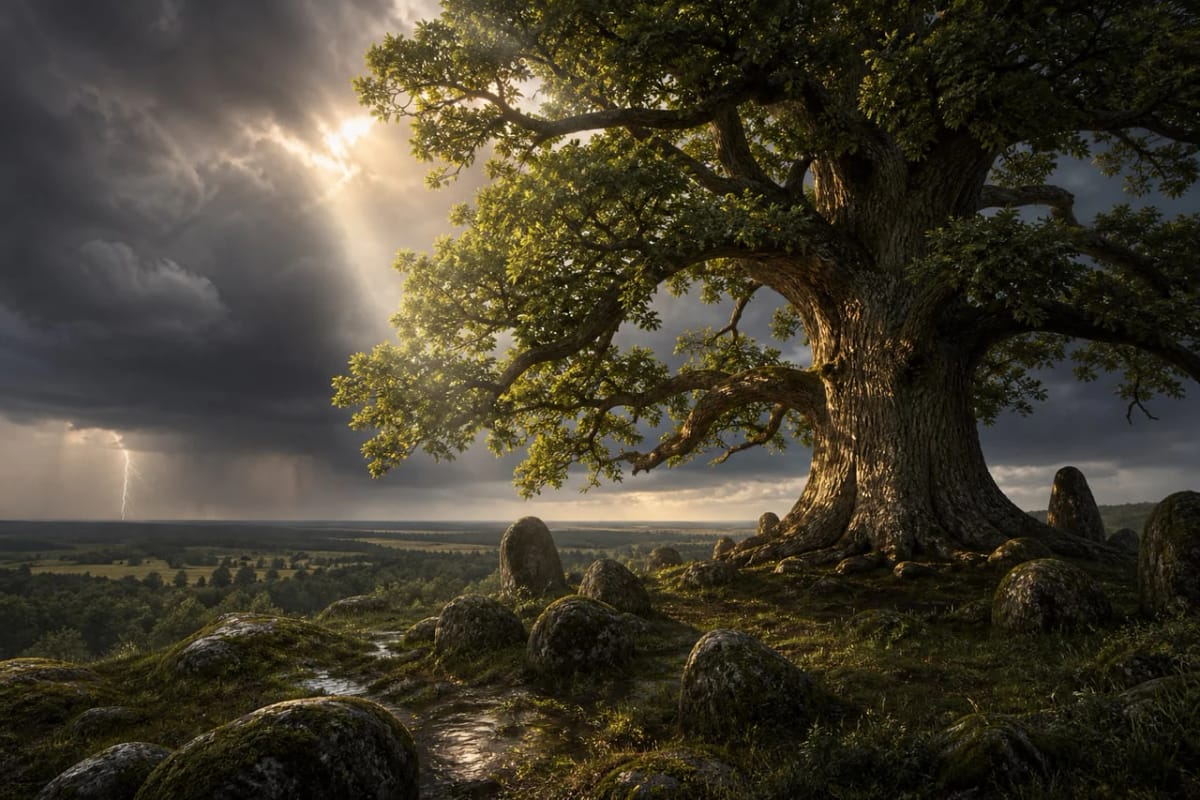
Perkūnas is often connected in folklore and scholarship with oak, hill, stone, fire, and lightning. Oak becomes his tree not because every oak was a shrine, but because the tree fits the symbolism of Perkūnas' force, height, and storm.
A tree struck by lightning could be understood in folk imagination as an object touched by a special heavenly power. This helps explain why oak joins the firmness of earth with the strike of the sky.
Respect for old oaks survives in concrete trees as well: the Stelmužė Oak in Zarasai district is considered one of the oldest in Europe, perhaps about 1,000 to 1,500 years old, and in the nineteenth century Dionizas Poška made a museum inside a hollowed oak trunk at Bijotai, the Baublys. Such examples show that the oak remains a tree of living memory and national identity.
Oak in songs and lineage images
In Lithuanian songs, trees often help speak about a person, family, brother, father, strength, or fate. Oak is especially suited to images of masculine bearing, firmness, and family roots.
In such texts the oak does not necessarily mean Perkūnas directly. Sometimes it works as a poetic analogue for a person or lineage. Song symbolism therefore needs to be read by genre and situation.
How should oak be read today?
Today oak is often used as a symbol of Lithuanian strength, memory, statehood, or lineage. Its older mythological associations include the sacred tree, forest, Perkūnas, sacred place, and a respectful relation to trees.
The oak’s associations with Perkūnas, the world tree, sacred places, songs, and calendar festivals add to its present role as a national symbol.