- Category
- Agricultural Symbols
- Domain
- Harvest, earth, bread, household plenty, sheaf, reaping, communal work
- Source status
- well attested
rye, grain, sheaf, bread, harvest
What do crops, rye, and grain mean?
In Lithuanian tradition crops, rye, and grain mean harvest, earth's fertility, bread, household plenty, and communal survival. This is one of the most earthly symbols: it is directly tied to food, work, the yearly cycle, and the well-being of the home.
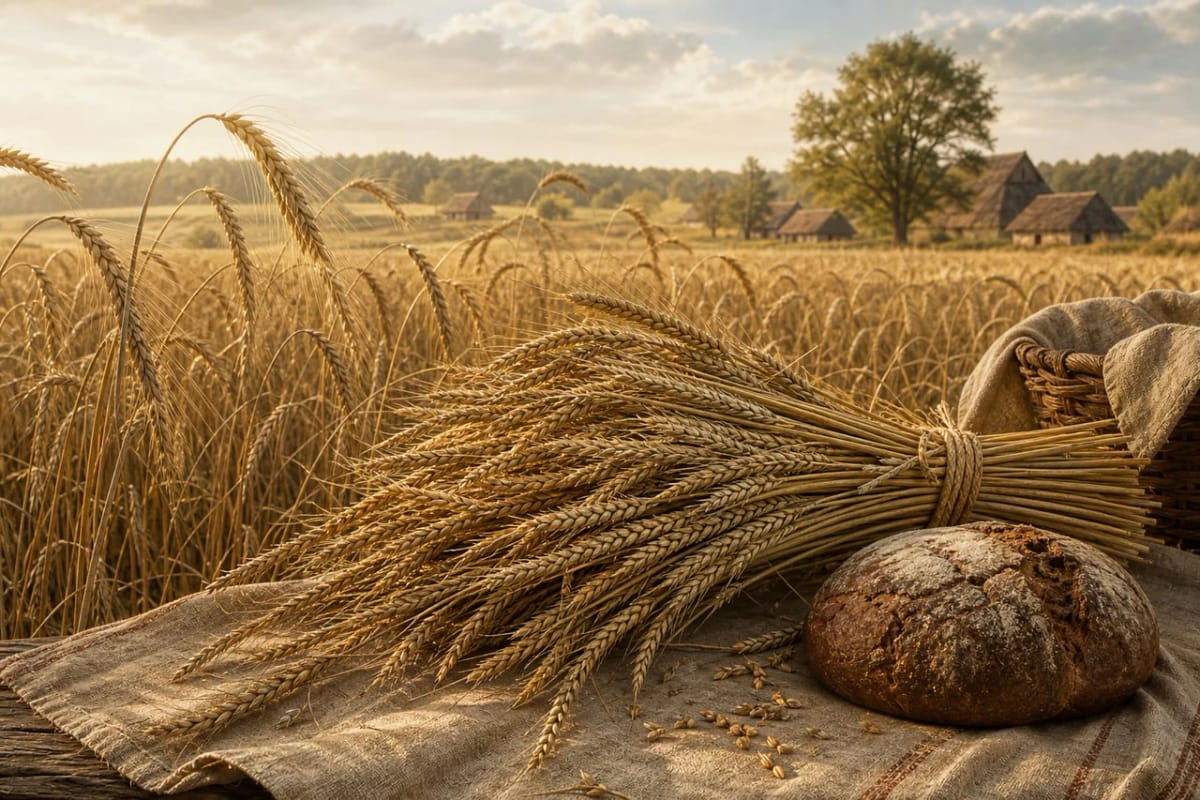
Rye is especially important because everyday bread was baked from it. Grain is therefore not only an agricultural product. It becomes a sign of life, the family table, and communal labor.
Rye harvest customs
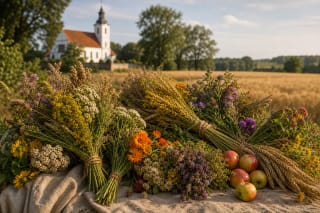
The VLE article on rye harvest describes harvesting, communal work parties, completion rites, and many customs. The first sheaf was brought home, while the last sheaf symbolized the spirit embodying the rye and that year's harvest.
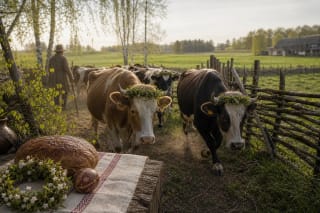
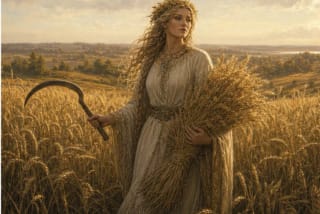
This is crucial for a symbol page: the meaning of crops is not theoretical. It appears in concrete actions: reaping, tying the sheaf, the harvest-completion wreath, songs, feasting, and shared work.
Sheaf, wreath, and completion rites
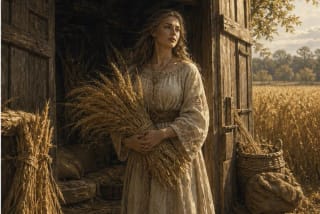
A sheaf is a concentrated sign of harvest. It joins many stalks into one form and therefore symbolizes the fruit of the fields, human labor, and the ordering of the harvest.
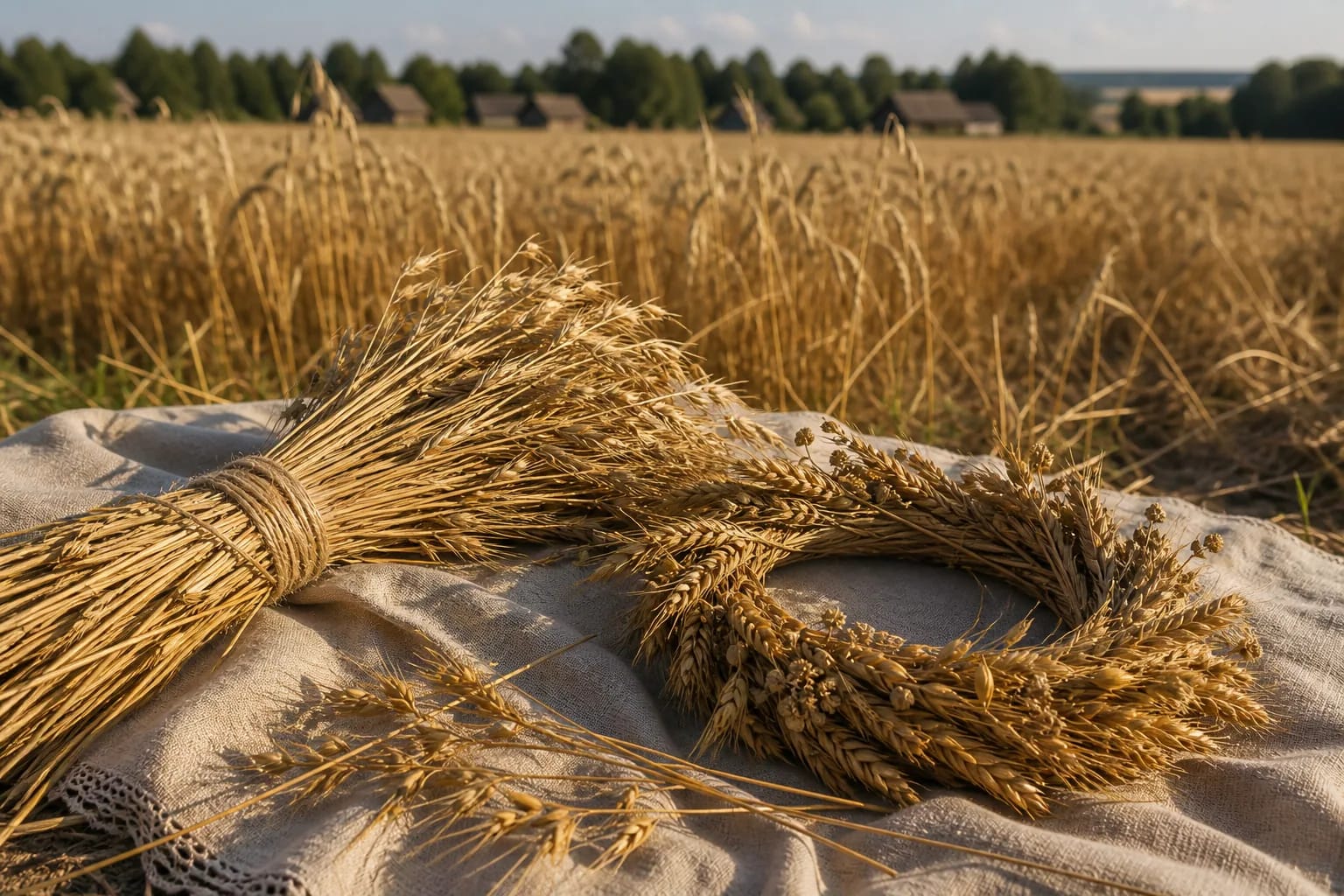
The wreath made from the last sheaf, or other completion signs, show that the crop cycle ends not only economically but ritually. The last uncut cluster of grain or sheaf was in some places called boba, diedas, or ožys and understood as the dwelling of the field or rye spirit; cutting it required symbolic action, and the reapers' wreath was ceremonially given to the master of the farm. The harvest is accepted as the result of a relationship between community and earth.
Crops, Žemyna, and bread
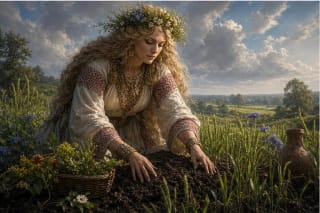
Žemyna, goddess of earth and fertility, lets crops be read mythologically. Earth gives growth, people work, and grain becomes bread. This path from field to table is one of the core models of an agrarian worldview.
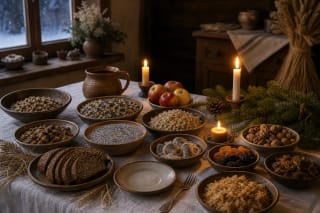
Bread extends grain symbolism into the home. It means not only food but plenty, hospitality, and daily respect for work and earth. Crop symbolism should therefore connect with Žemyna, Javinė, Krūminė, Rūgutis, and calendar festivals.
How should crops be read today?
Today crops, rye, and grain help explain why Lithuanian tradition gives so much attention to bread, earth, rye harvest, completion rites, and harvest festivals.
Grain recurs in accounts of deities, songs, and harvest customs. Its symbolism connects mythology with the farmer’s everyday work.