- Category
- Sky and light signs
- Domain
- Rosette, segmented star, sun, distaff boards, wooden objects, circular geometry
- Source status
- well attested
segmented star, rosette, little rose, star, sunburst
What is a rosette?
A rosette is a circular form that unfolds from a center. In folk art it can resemble a flower, star, or sun, so its meaning depends on the specific context.
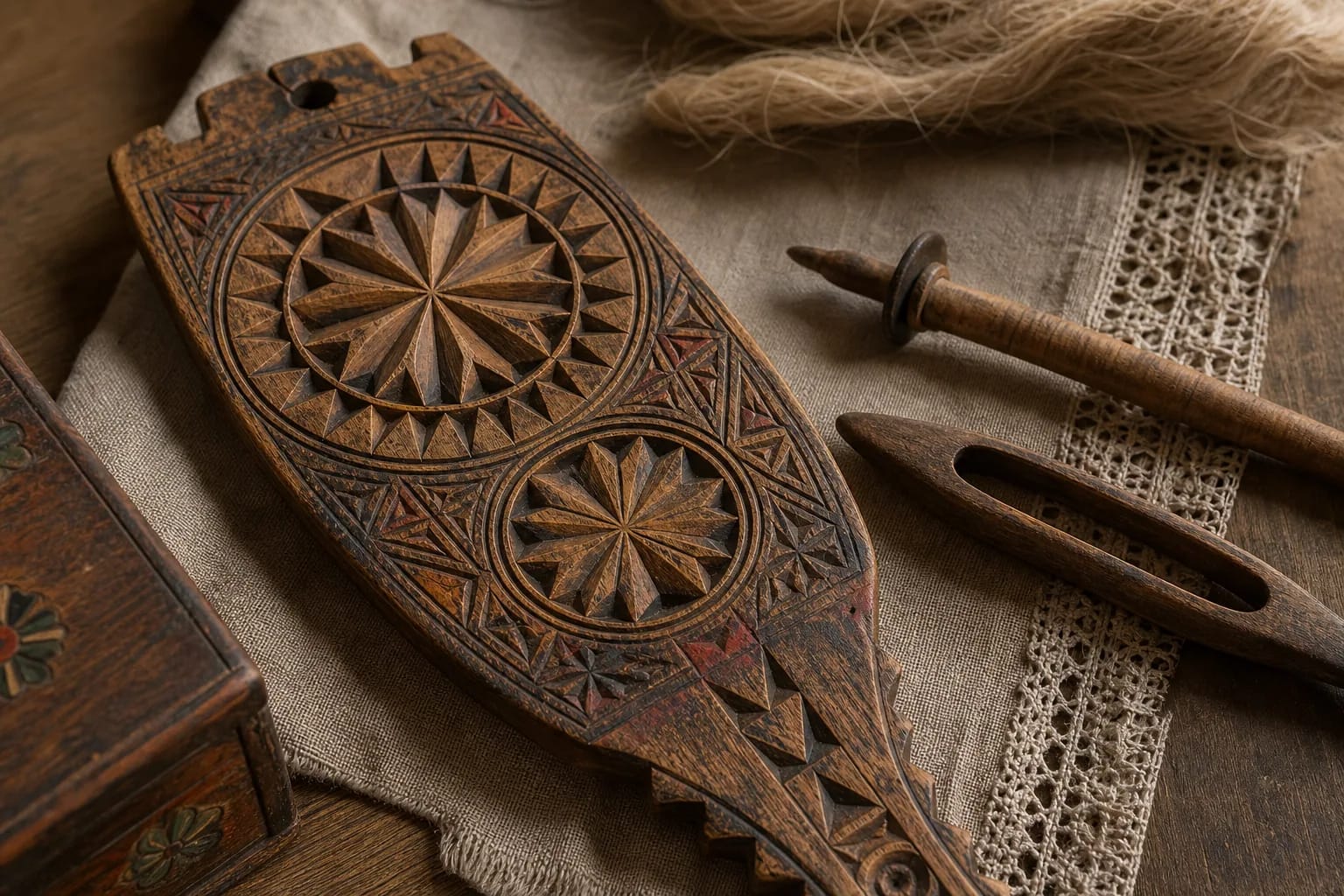
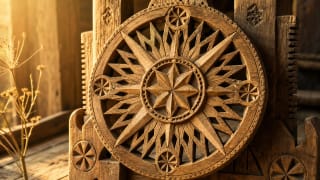
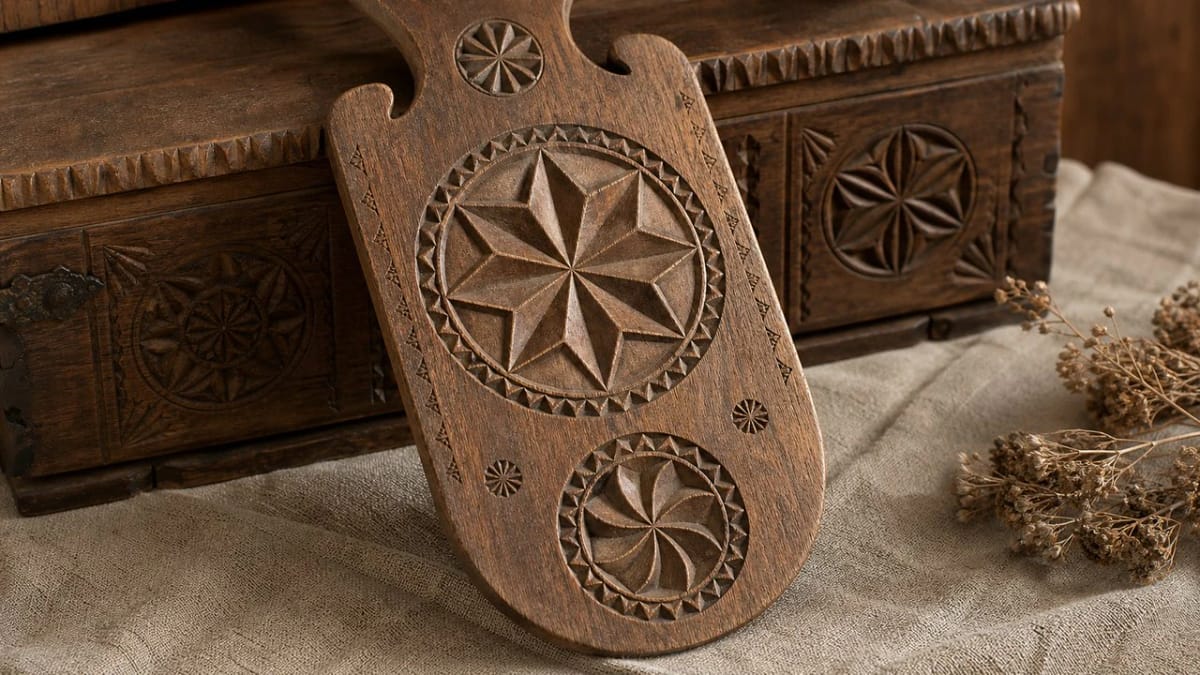
The segmented star is one of the clearest variants of the rosette: it is made from geometrically arranged parts of a circle and is often explained as a sign of sun and light.
Why is the segmented star important?
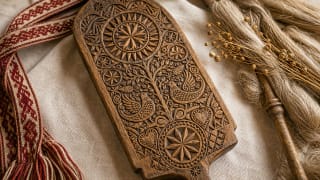
Lithuanian folk-art symbolism sources describe the segmented star as a very important solar symbol. The Encyclopedia of Lithuania description of distaff boards also mentions sun and segmented-star motifs.
This means the sign is not only a modern interpretation. It is firmly visible in traditional objects, especially wood decoration. Segmented stars and rosettes are usually drawn with a compass: the circle is divided into 6, 8, or 12 parts, producing a very regular sign, the same geometric precision that links it with images of the sun and star.
Rosette, blossom, and center
The rosette structure has a center and a circle arranged around it. For that reason it can be connected with order, light, flowering, time, and renewal.
When a rosette is carved into a distaff board or chest, it not only decorates the surface but also visually gathers attention. It becomes the object's eye, star, or sun center.
How is it different from the sunburst?
The sunburst emphasizes solar and ray meanings more strongly, while the rosette can be a broader motif of circular geometry. The segmented star stands between them: it is a rosette, but is often read as a sun sign.
A rosette and a sunburst can look similar, but naming a geometric form is different from interpreting it as a solar sign. That distinction matters when describing woodcarving and distaff-board ornament.