- Category
- Sky and light signs
- Domain
- Sun, rosette, rays, cross-crafting, distaff boards, woodcarving, textiles
- Source status
- well attested
sun sign, sunburst, radiant sun, solar ornament
What is the sunburst?
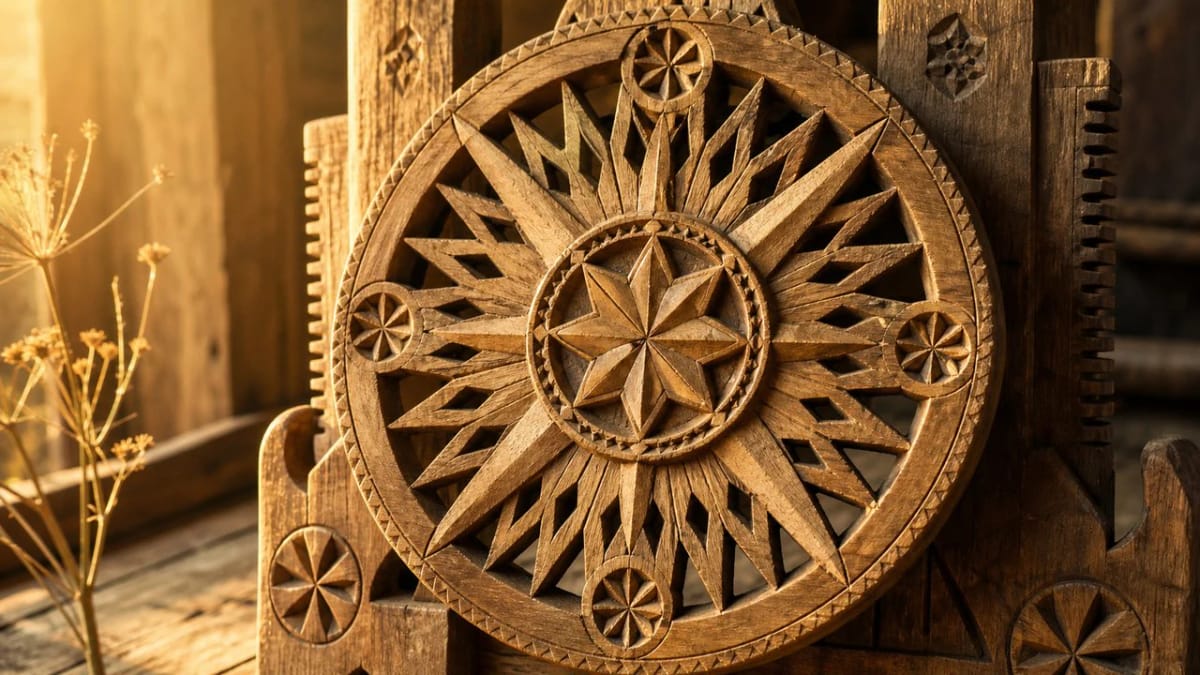
The sunburst is a stylized sun sign: a circle, star, crown of rays, or radiant cross. It is common on distaff boards, in cross-crafting, woodcarving, textiles, and folk-art ornament.
This motif allows light, time, life, and sacredness to be joined in one form. For that reason the sunburst is one of the most important motifs in Lithuanian traditional symbolism.
The sunburst on distaff boards and wood
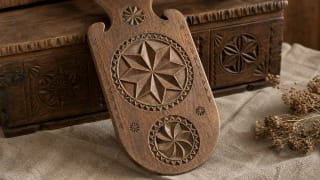
The Encyclopedia of Lithuania notes that distaff-board decoration includes sun and segmented-star motifs, and that these motifs are especially vivid in Samogitia. This is an important foundation because the sunburst is visible here on a specific traditional object.
On wooden objects, the sunburst does not only decorate a surface; it creates the object's center. It becomes the place from which rhythm, rays, and visual order spread.
The sunburst in cross-crafting
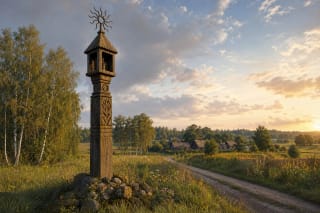
In cross-crafting the sunburst often appears at the crossing, at the top of the cross, or as a forged-metal ornament of rays. Iron cross finials with radiant sunbursts, little moons, and little stars are one of the most beautiful Lithuanian ironwork genres, where the light sign rises at the highest point of the cross. In this way the sunburst joins the Christian cross while retaining the image of solar light.
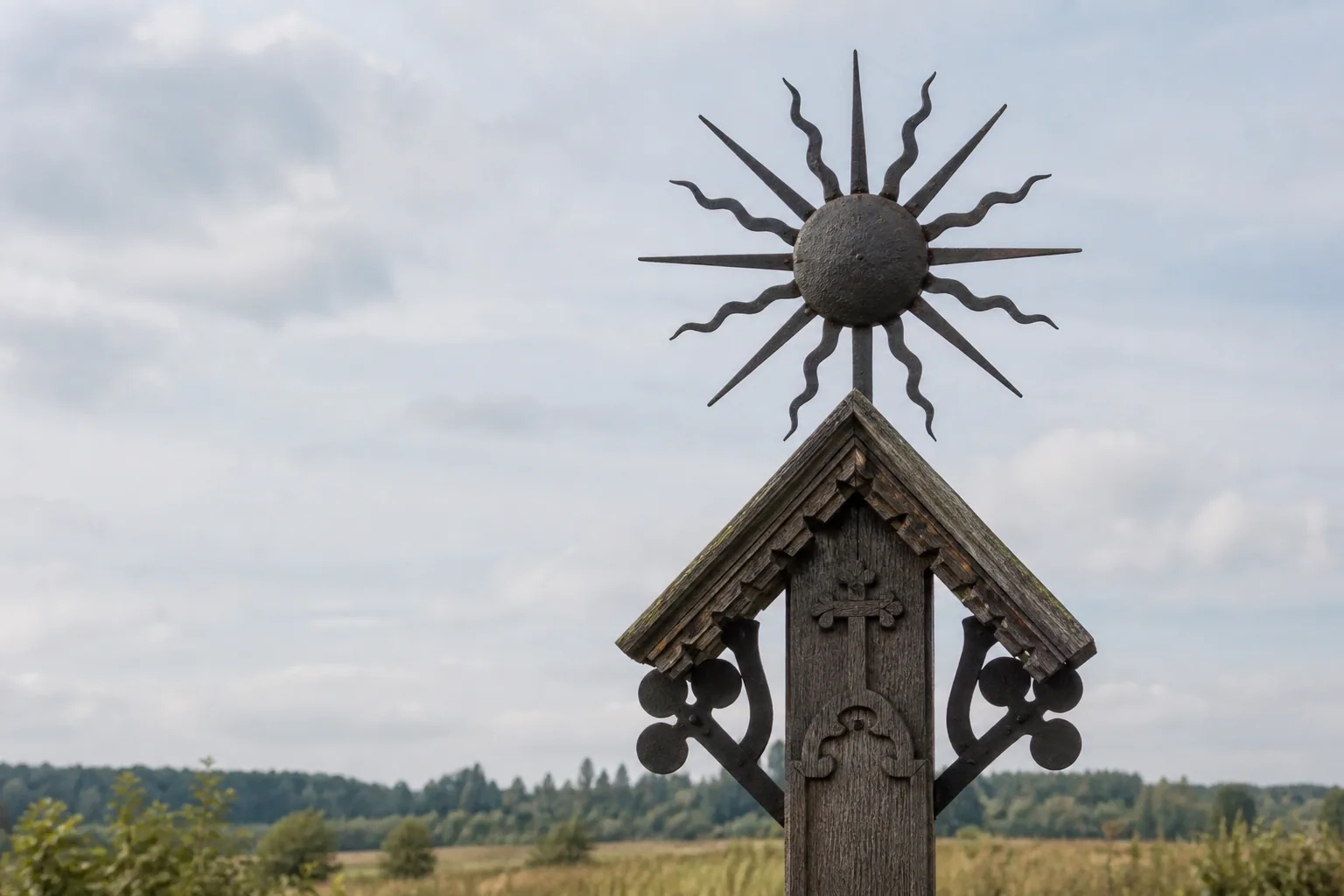
This is a good example of how Lithuanian symbols are not single-layered. The same sun sign can function both in older imagination about heavenly lights and in the Christian culture of sacred space.
How to use the sunburst today
In contemporary design the sunburst is often recognized as a Lithuanian heritage sign. It is important not to separate it from its materials: wood, metal, textile, sash, or Easter egg.
It works best when shown not as an abstract logo, but as a living ornament connected with light, the annual cycle, and handwork.