- Category
- Forest and Boundary Symbols
- Domain
- Forest, predation, fear, wild boundary, transformation, werewolf, God's dog
- Source status
- folkloric
gray wolf, pilkis, forest one, wolf skin
What does the wolf mean?
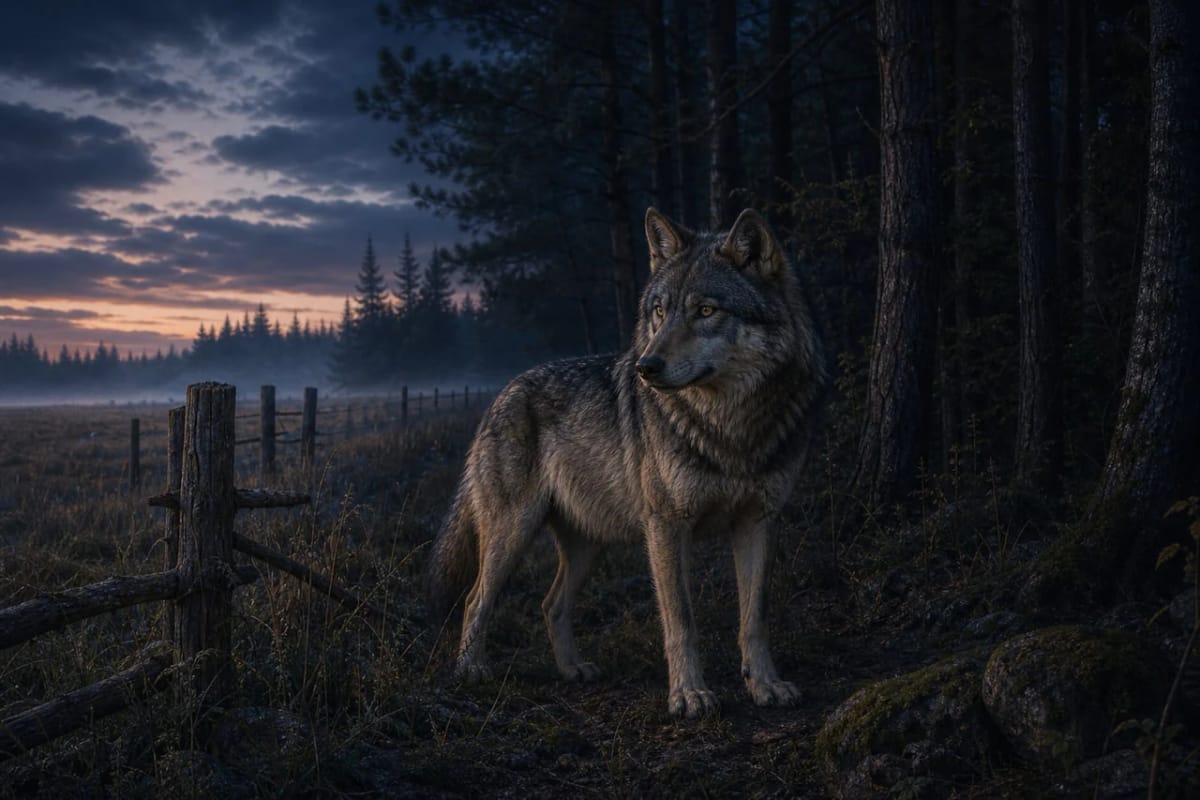
In Lithuanian folklore the wolf is the animal of the forest and the wild boundary. It comes from where human order is weaker, so it means threat, predation, and untamed natural force.
Yet the wolf is not only negative. It is strong, clever, and enduring, and in legends its form can become a sign of human transformation. In some tales the wolf even helps the hero, so its image is ambivalent.
Forest, herd, and communal fear
In the village world the wolf is dangerous to livestock, so its symbolism is connected with herd protection, night, and the boundary of the homestead. The wolf reminds people that household order must constantly defend itself from the wild environment.
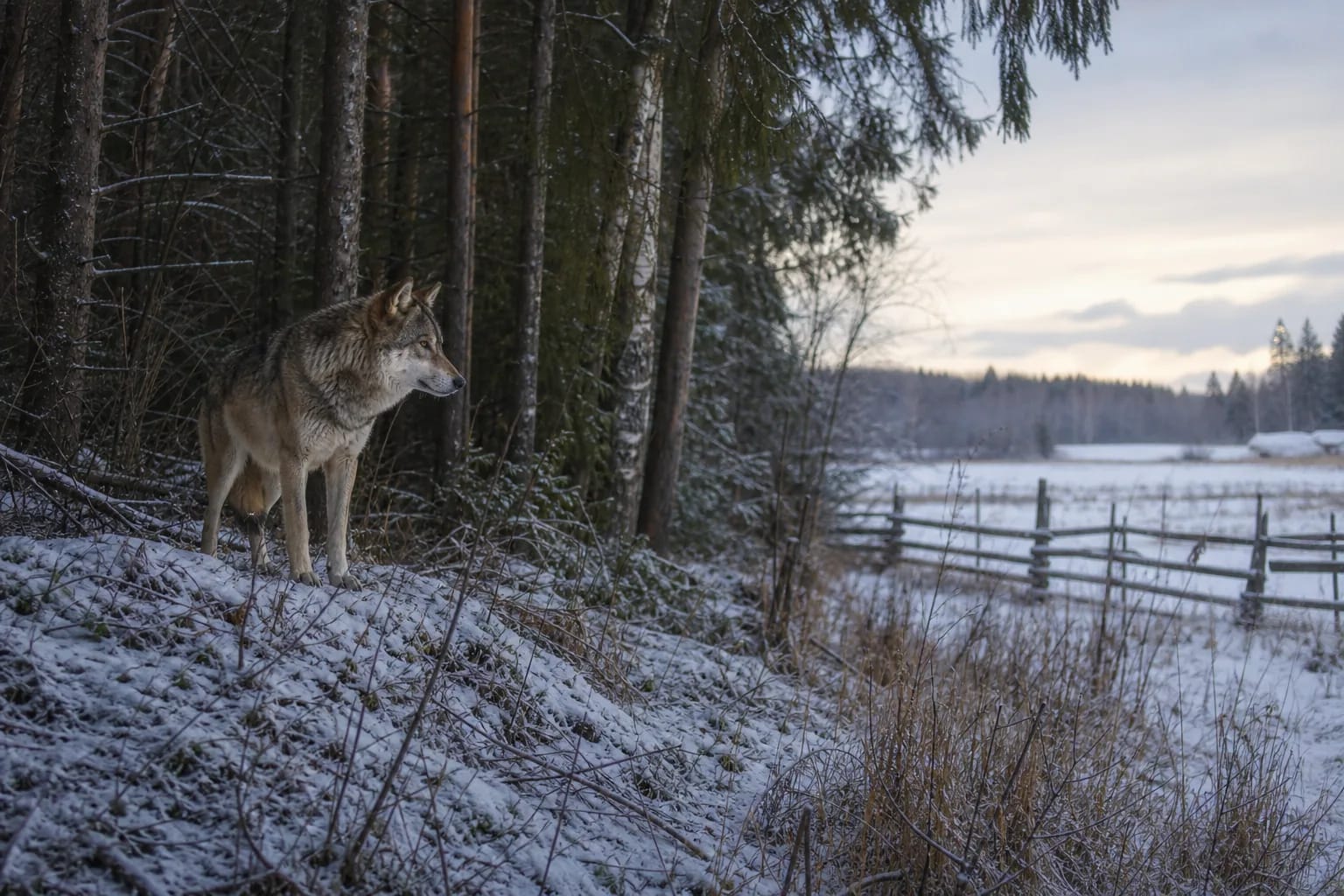
This is also tied to name avoidance: at certain times of year, especially during winter 'wolf days' around Christmas, people did not dare call the wolf by its true name, lest they attract it. Instead they said pilkis, 'the gray one', miškinis, 'the forest one', or other ritual substitutes. This shows that the word itself had magical power.
God's dog and the wolf shepherd
In folklore the wolf is sometimes called 'God's dog'. It was believed that it eats only the animal assigned to it by a higher will, so the damage done by a wolf was understood as fated rather than accidental.
Related to this is the image of the wolf shepherd, a mythical being or guardian who controls wolves and distributes prey to them. In folk belief this role is sometimes taken over by a saint, such as St. George or St. Martin. The wild predator is thus written into a wider world order in which even the wolf obeys someone.
The werewolf and the danger of transformation
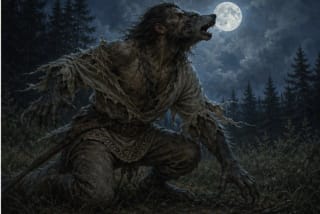
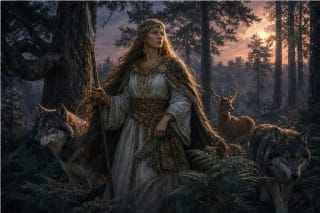
Wolf symbolism becomes especially strong in werewolf, or vilktakis and vilkolakis, legends. There a person may turn into a wolf, be cursed, or put on a wolf skin, making the boundary between human and beast unstable.
This transformation speaks about social and moral tension: what happens when human order is lost and a wild form begins to act. The werewolf is a being stuck between human and beast, and so is both frightening and pitiable.
How should the wolf be read today?
Today the wolf is often romanticized as a symbol of freedom, but in Lithuanian folklore the layer of threat should also remain visible. It is free because it belongs to the forest, and the forest is not wholly safe.
The wolf is best explained together with the werewolf, Medeina, night, the herd, and the homestead boundary. Then it becomes a living folklore symbol: threat, 'God's dog', and sign of transformation, not just a general nature image.