- Category
- Sky and Home Birds
- Domain
- Spring, household luck, bringer of children, homestead protection, protection from fire, sacred bird
- Source status
- folkloric
gužas, starkus, white stork, Adomas
What does the stork mean?
In Lithuanian folklore the stork is a sacred bird of the home, treated almost like a member of the family. It is linked with spring, household luck, fertility, and protection of the homestead, so among birds it was one of the closest to people.
The stork's image is positive and protective. It was not regarded as a threat or bad sign. On the contrary, its arrival and settlement near the home were understood as a blessing. Because of this respect, the stork became a kind of symbol of the Lithuanian homestead.
The stork and household luck
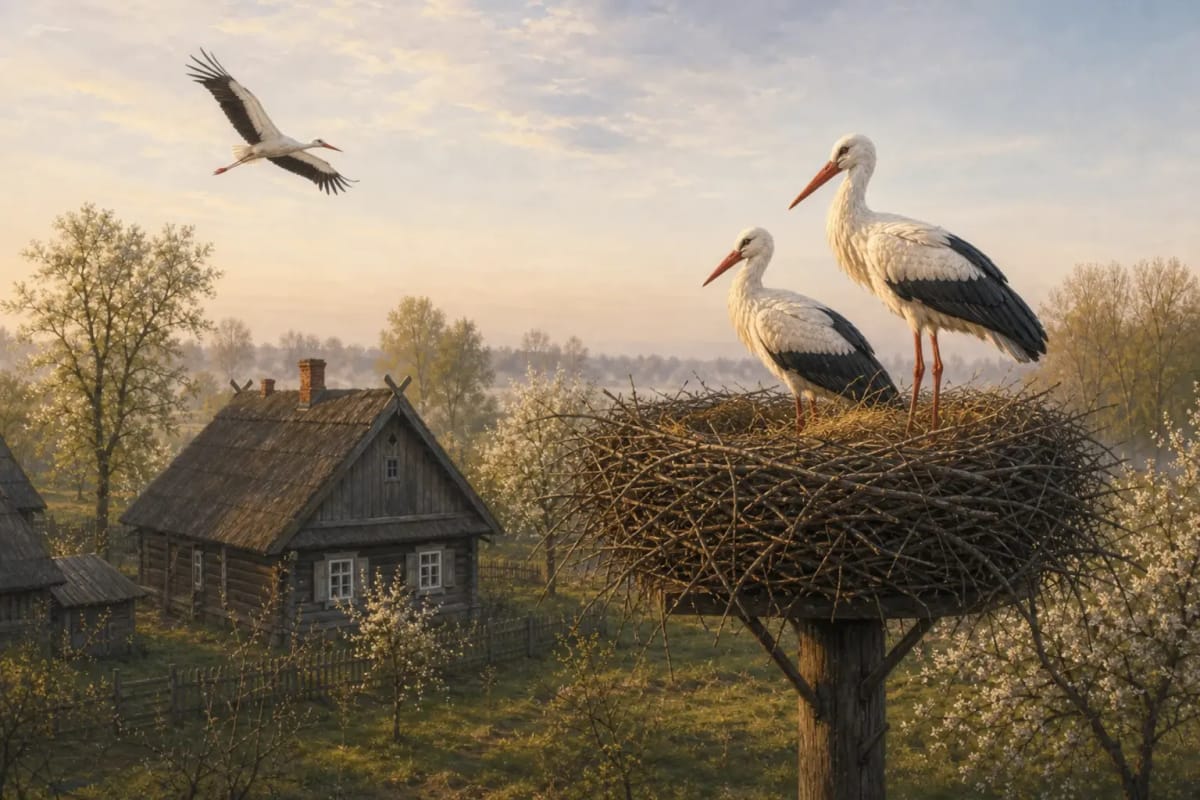
It was believed that the stork settles among good people and brings luck to the homestead where it nests. A nest on the roof or near the house meant that the family would be accompanied by success, so people tried to attract storks and make room for a nest.
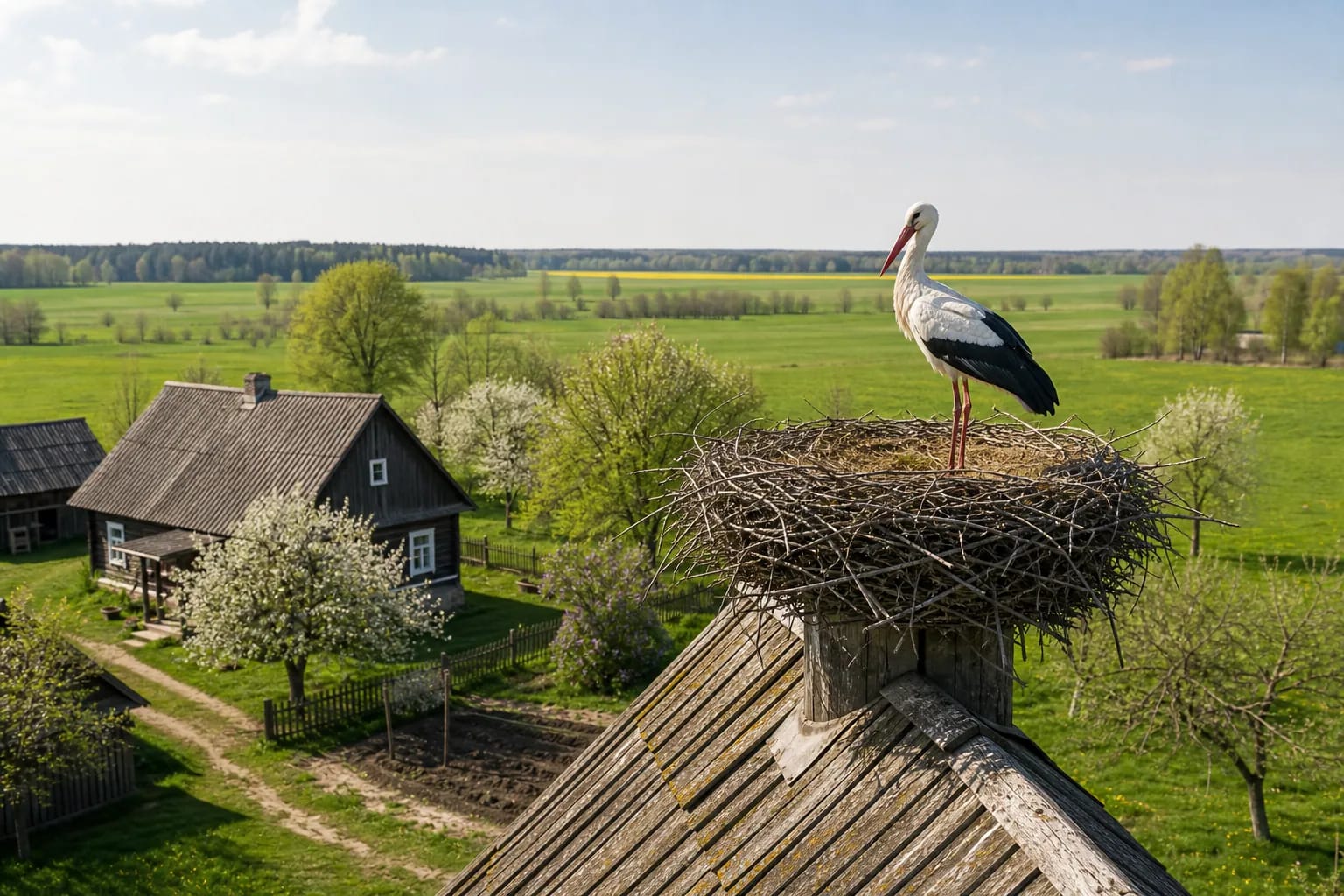
The stork was also credited with power to determine a successful marriage, bring a newborn child, and even cure various illnesses. One bird thus gathered many hopes for household welfare, from weddings to children and health.
Protection from fire and lightning
Beyond general luck, the stork was given protective power: it was believed that its nest protected the homestead from thunderbolt and fire. This belief further encouraged people to respect the stork and leave its nest untouched.
Because of this protective meaning, a stork's nest on the house or barn was treasured. Destroying it would not only offend the bird, but also remove the home's protection. Nests therefore often remained in the same place for many years.
The bringer of children
One of the best-known Lithuanian folk beliefs about the stork is that it brings newborn children. This image is closely tied to the stork's meaning as a bird of fertility and household abundance.
Children were told that the stork had brought snacks or gifts, and its arrival was connected with new life and the beginning of harvest growth. This belief is still alive today as a playful family story about where children come from.
The stork and spring: Gandrinės
The stork's return marked the beginning of spring, so a separate festival was dedicated to it: Gandrinės, celebrated on March 25 together with the Catholic Annunciation to the Blessed Virgin Mary. Gandrinės marked the start of the phenological calendar and the agricultural half-year.
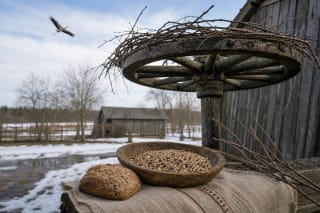
How one first saw the stork mattered: if it was flying and from the right side, people believed that all the year's work would go quickly. Housewives baked small buns and shared them with neighbors, while children found them on fences or trees as gifts from the returning stork.
The origin legend of the stork
Folk legends also explain the stork's origin. They say that the stork was once a human being to whom God gave a tied sack full of reptiles, such as snakes, frogs, and lizards, ordering him not to untie it. The person could not resist, opened the sack, and the creatures scattered through the world.
For disobedience he was turned into a stork and condemned forever to catch those reptiles and clear the fields of them. This legend explains why the stork eats frogs and snakes, and at the same time justifies it as a useful bird serving people.
Why a stork must not be harmed
Harming a stork, killing it, or destroying its nest was considered a great sin that brought misfortune. It was believed that someone who wronged a stork might face fire, livestock illness, or other trouble, so the bird was strictly protected.
This respect was not accidental: the stork was both useful, destroying pests, and mythically important as a household guardian. This double practical and sacred role made it one of the most respected birds in Lithuanian culture.
How should the stork be read today?
Today the stork is often seen as a sign of Lithuania, a country known for one of the world's largest white stork populations. Behind that natural fact, however, lies a deep folklore layer in which the stork is the bringer of household luck and spring.
The stork is best explained together with Gandrinės, spring return, household protection, and the image of the bringer of children. Then it becomes not only a beautiful bird on a roof, but a living folklore symbol joining the homestead, the natural cycle, and family wellbeing.