- Category
- Protective Plants
- Domain
- Protection, witches, laumės, Velnias, homestead guardian, tree of consolation
- Source status
- folkloric
common rowan, šermukšlė, tree of consolation, rowan stick
What does rowan mean?
In Lithuanian folklore rowan is a protective tree. It guards people, livestock, and the homestead from witches, laumės, Velnias, and other harmful mythic beings. It is one of the most important folk plants of protection.
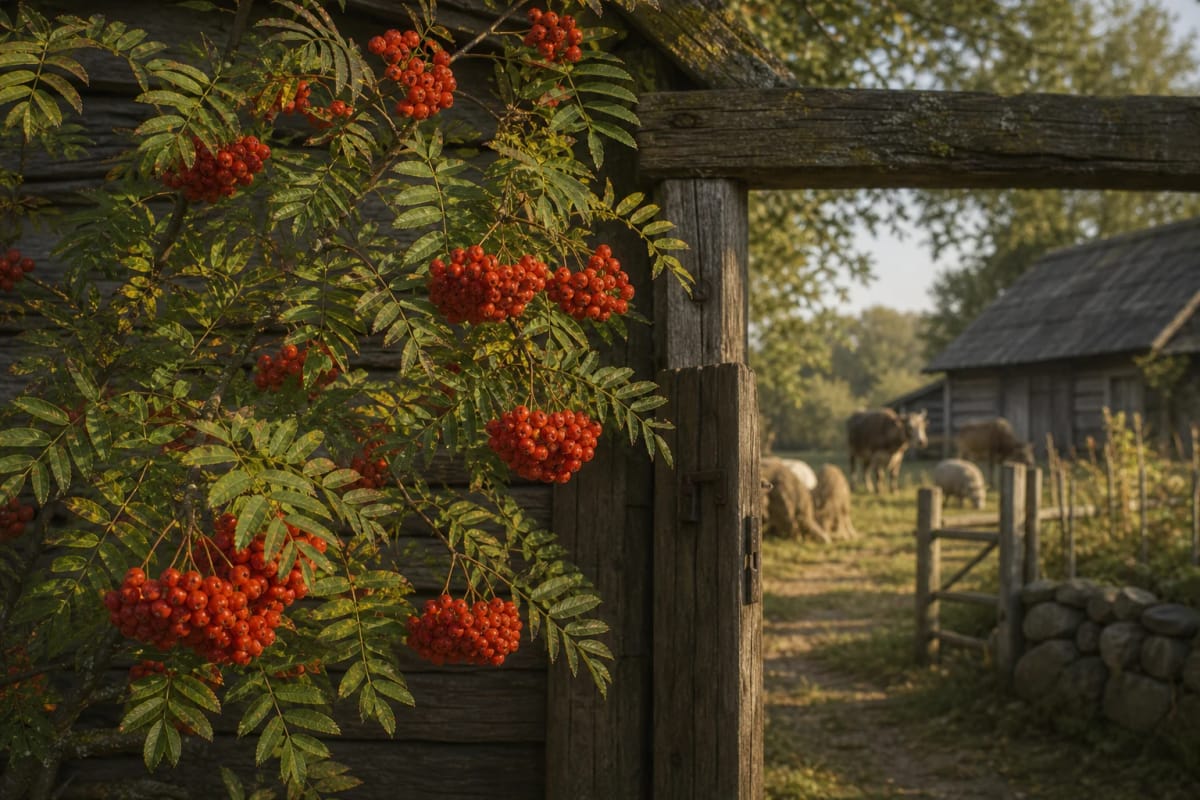
Rowan's meaning is linked with its nature: it is a common, visible tree with bright red berry clusters and a distinctive leaf made up of many, often nine, leaflets. Red color, bitterness, and a mythically meaningful number help it become a sign of defense.
In older descriptions of Lithuanian beliefs, rowan is often named second after the sacred oak. Its firewood was considered suitable for ritual fire, so the tree also belongs among honored, sacred plants.
Protection from witches at Joninės
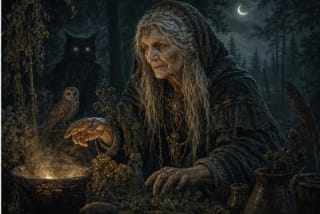
The clearest rowan protection custom is connected with Joninės. On the eve of Joninės, rowan branches were stuck around barn doors and gates so witches could not enter and harm livestock.
The protective mechanism is explained through the rowan leaf. The leaf consists of many, usually nine, long leaflets, and a witch supposedly has to count them all before entering. By the time she counts them, the rooster crows and the nocturnal power must withdraw.
Rowan thus works as a boundary: it keeps a harmful being from crossing the threshold until her time of action ends. Other beings of the devil's sphere were also believed to avoid rowan.
Rowan and laumės
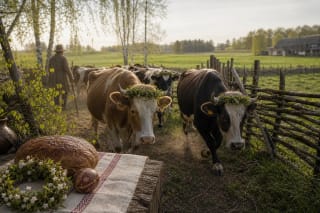
Rowan also protects against laumės. During summer night pasturing, when horses were kept out at night, a rowan branch was tied to the horse's back; it was believed that then a laumė would not ride and exhaust it.
This custom belongs to the wider belief that laumės take horses at night, ride them, and return them worn out. The rowan branch acts as protection that prevents the laumė from touching the animal.
Rowan helps on the farm in similar ways: branches were stuck in the rue garden to drive away moles, and a fisherman wove branches into the net so he would not be left without a catch. Everywhere rowan acts as a tree of help and protection.
Rowan and Velnias
A well-known belief also connects rowan with Velnias. A rowan stick can defend easily against the devil, but one must know how to use it: strike an odd number of times, saying one, one, one, because even-numbered blows give Velnias strength.
It is said that after one blow Velnias asks for a second, so one must quickly strike a third. If a circle is drawn with a rowan stick, no powers of hell are frightening; when waiting for the fern flower at Joninės, this was how one was supposed to protect oneself so evil beings could not cross the boundary.
There is also a famous saying that Velnias hates rowan so much he cannot even pronounce its name: instead of šermukšnis he can only say mukšnis. This stresses that the tree's very name has protective power.
Homestead guardian and tree of consolation
Rowan was often planted by homestead gates as a guardian against all misfortunes. At the beginning of house construction it was used in a blessing rite so the future family would be protected from trouble.
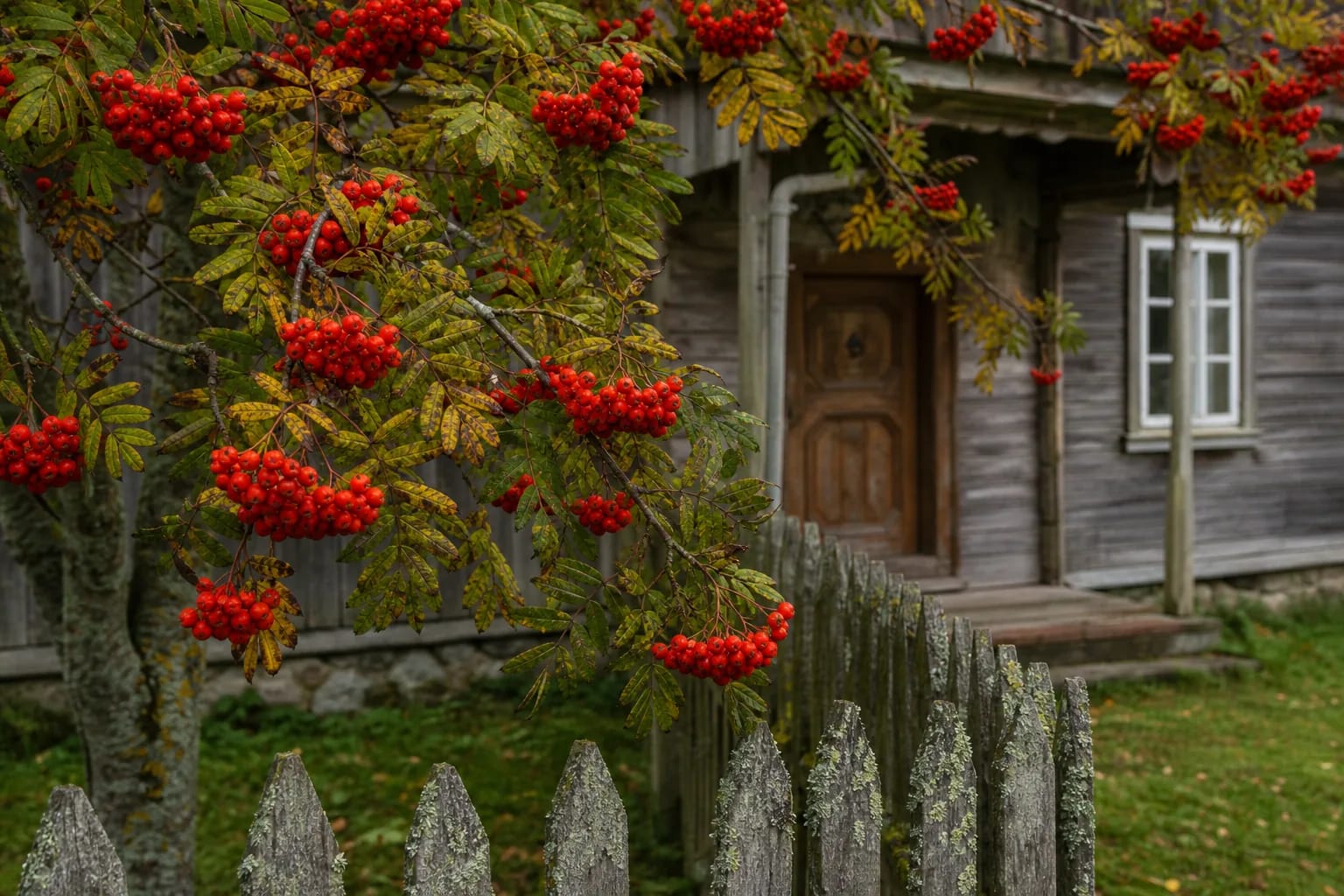
Rowan also has a consoling meaning. In the Dieveniškės area an old custom was recorded: a person would choose a tree in the forest, usually a rowan, care for it and visit it, and when misfortune came would go to it seeking consolation. Because of this worldview, rowan has been called the Lithuanian's tree of consolation.
Legends also said that the spirits of smiths lived in the rowan and that the tree was linked with heavenly gods and world-makers. That is why underworld and water deities, the chthonic forces, feared it.
Red berries and the mythic number
Rowan's protective power is strengthened by its red berries and special leaf. The bright red color of the berries is close in folk imagination to fire and life, a color traditionally protective against evil.
The structure of the leaf is also mythically meaningful. The compound rowan leaf usually has nine leaflets, and the number nine is treated in Lithuanian folklore as a strong number with magical power. The witch therefore has to count many leaflets, and the tree becomes still more powerful.
This combination, red color, bitterness, and nine leaflets, explains why rowan was understood as especially reliable protection, not only a beautiful tree at the forest edge.
How should rowan be read today?
Today rowan is mostly known as an ornamental and medicinal tree: its berries are valued for vitamins, used in drinks and baking, and it is planted in gardens and by homesteads. Folklore retains older associations with protection from witches, laumės, and Velnias.
It is also necessary to distinguish Lithuanian beliefs from foreign parallels. Rowan's magical powers were believed in Scandinavian and Celtic Druid regions as well, but these are separate traditions. In Lithuania, rowan is first of all a homestead guardian, a protective and consoling tree, best connected with witches, laumės, Joninės, and the boundary of the farmstead.