- Category
- Footprint and animal-sign ornaments
- Domain
- Feet, cat-paws, goat-hoof motifs, animal tracks, sashes, textiles, road, guardianship
- Source status
- well attested
footprint pattern, cat-paws, goat-hoof motifs, track ornament
What are footprint patterns?
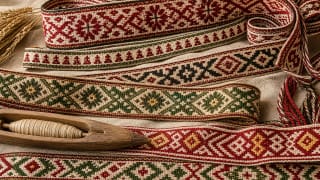
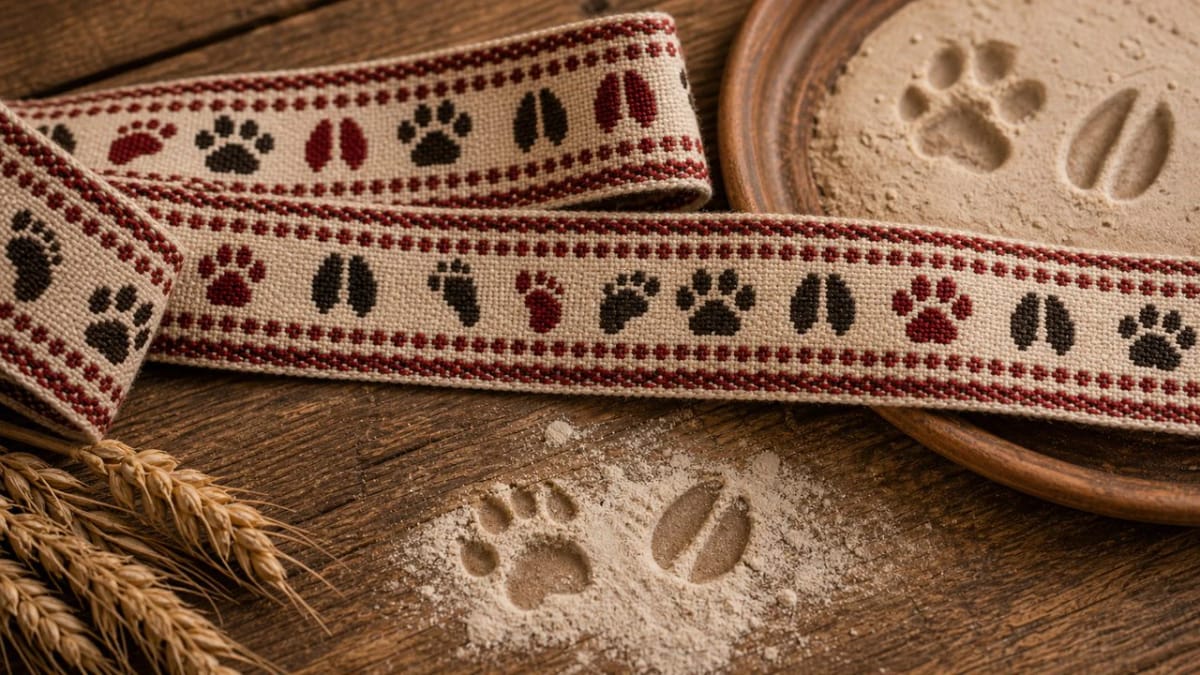
Little footprints, cat-paws, and goat-hoof motifs are small ornaments that resemble feet, paws, or hoofprints. Such motifs often appear in rhythmic sash and textile compositions.
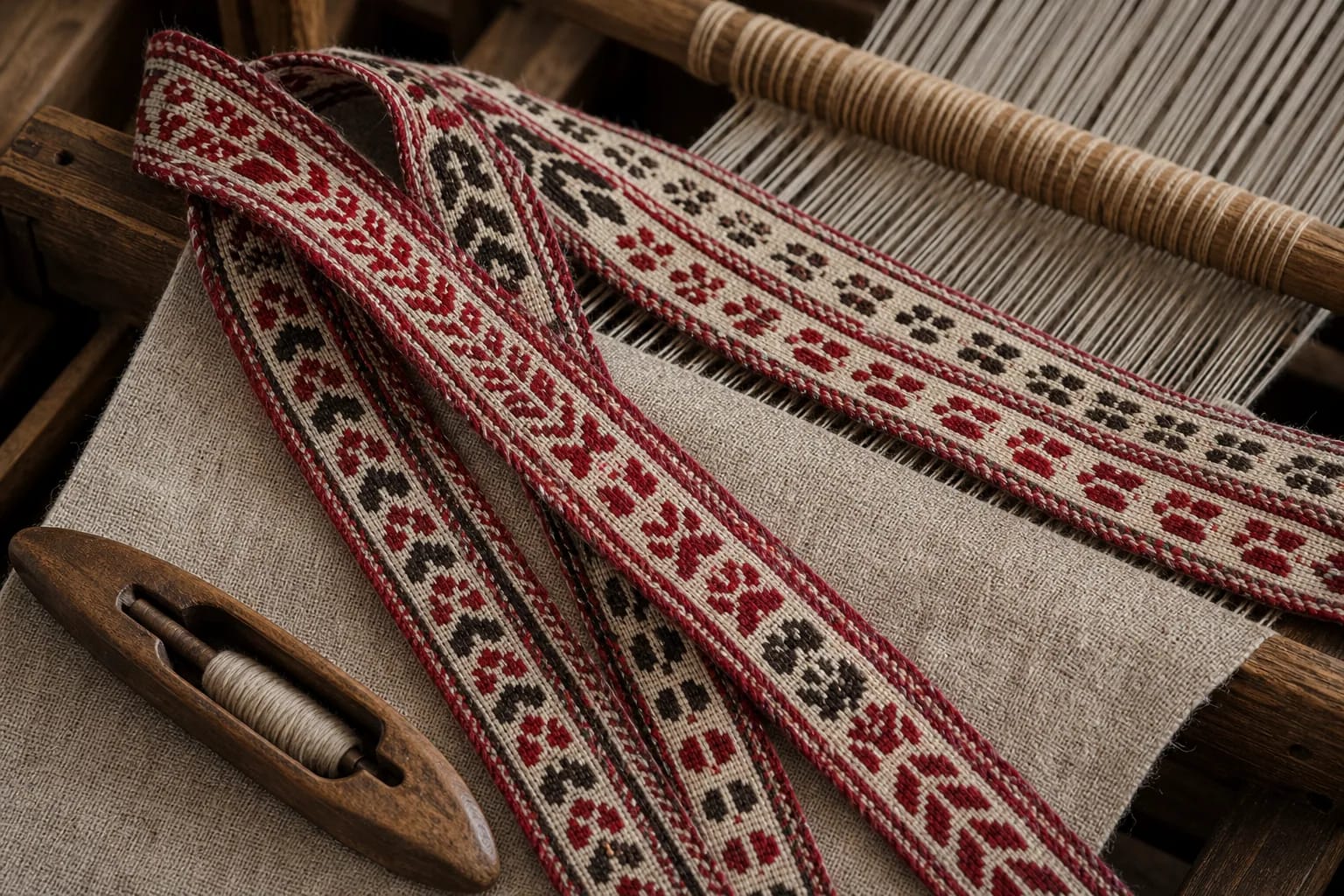
They are very earthy signs. They do not speak about the great cosmos, but about movement on earth, the animal beside the human, and the everyday village world.
The track as road
A foot always points to movement. A track means that someone has passed, left a mark, or shown a direction.
For that reason footprint motifs can be connected with road, transition, following, and the presence of a human or animal in a given space.
Cat-paws and nearness to home
A cat-paw is a small, soft track. It can recall the household environment, quiet movement, and the small protective presence of an animal.
Although the cat's mythological status is not as central as that of the grass snake or horse, the cat-paw pattern matters as a household and everyday ornament.
Goat-hoof motifs and the livestock world
Goat-hoof motifs recall hooves and livestock tracks. They are close to the symbolism of herding, livestock care, spring, and the farm.
Names for small patterns are an important part of textile tradition. The names little footprints, cat-paws, and goat-hooves are characteristic of pattern-woven sashes: weavers often named motifs by what they resembled in nature, so the terminology itself preserves a living bond with animal tracks and the village environment.