- Category
- Sacred Site Symbols
- Domain
- Sacred place, offering, memory, boundary, footprints, basins, the sacredness of stone
- Source status
- well attested
mythological stone, basin stone, footprint stone, sacred stone
What does stone mean?
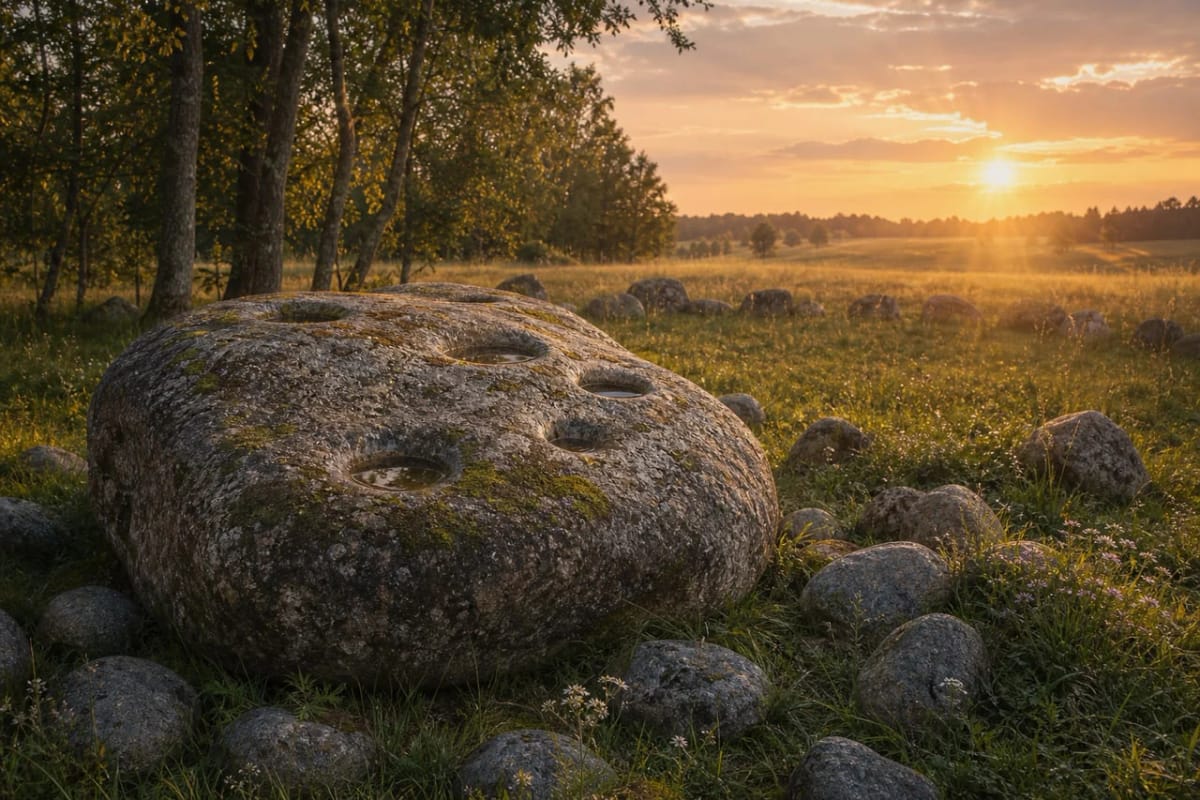
In Lithuanian mythology and legends, stone means firmness, boundary, memory of place, and a sacred sign. It may be an ordinary natural object, but when a stone has a basin, cup marks, footprints, an unusual shape, or a story attached to it, it becomes a mythological landmark.
Stones matter because they endure. They can mark places where rites were performed, offerings were made, people gathered, or stories were told about gods, devils, laumės, people turned to stone, and exceptional events.
Ritual stones in the sources
The Visuotinė Lietuvių enciklopedija describes ritual stones as archaeological and mythological monuments, often found at sacred sites. In Baltic lands they are connected with religion, gods and divinities, and people made offerings and prayed near them.
Many ritual stones with cup marks, basins, or footprints are known in Lithuania. Water collected in some basins, and sacred fire may have been tended near some stones. This shows that stone often worked together with water, fire, and a specific sacred place.
Basins, cup marks, and footprints
A basin stone is not only a stone with a shape. The basin can collect water, and water in this context may take on meanings of sacredness, healing, or offering. Cup marks may point to ritual action, but their interpretation depends on the particular monument.
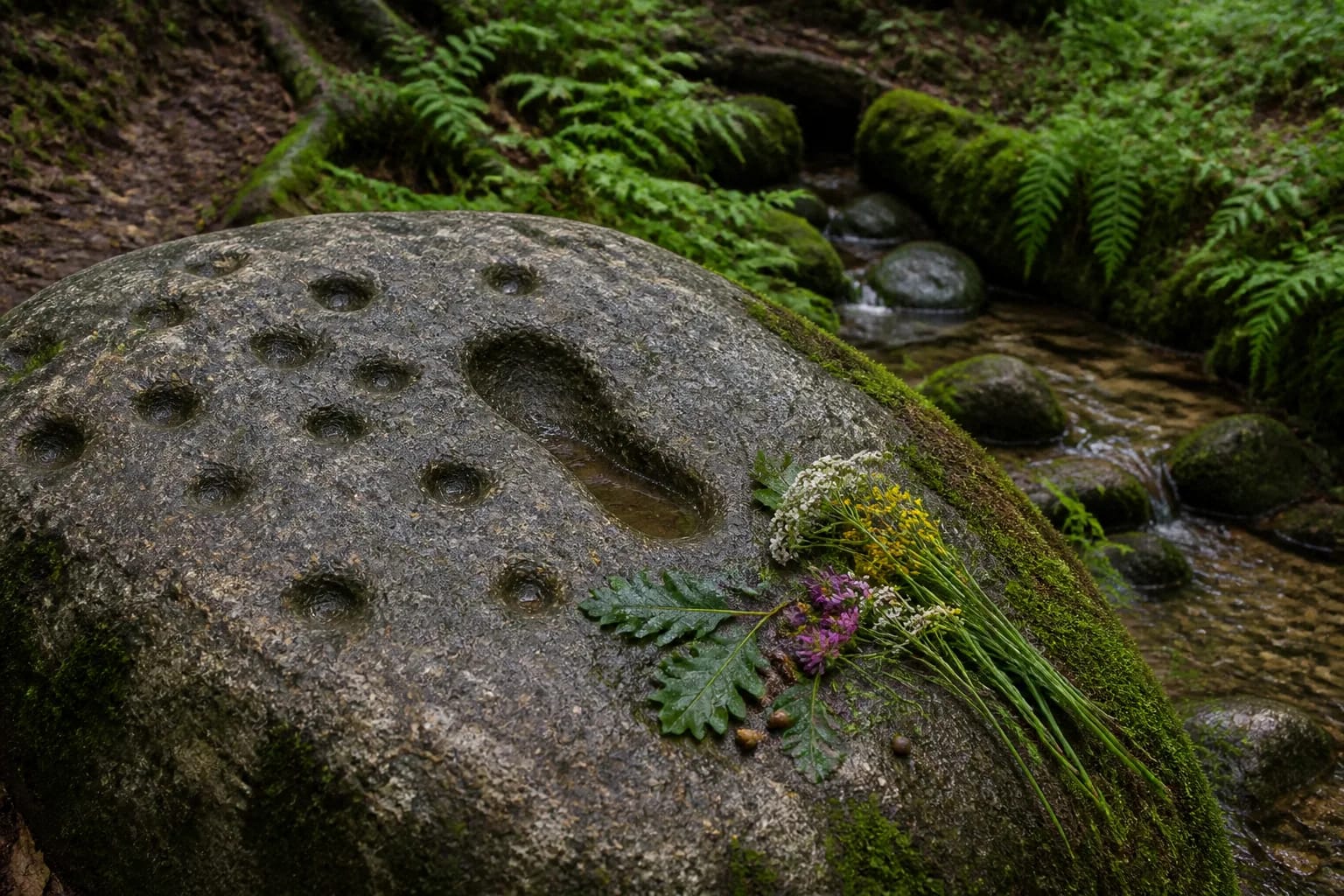
Footprint stones are often explained by legends: the footprint is attributed to God, Mary, the devil, a witch, a laumė, or an animal. Such stories help people understand an unusual natural mark through mythological narrative.
Stone as memory of place
Stones often have names: Devil's Stone, Laumė's Stone, Maidens' Stone, Mokas, or other local names. The name itself becomes a key to the place story, which may survive longer than the rites. The best-known such boulder is Puntukas near Anykščiai, one of Lithuania's largest stones; legend says the devil carried it to destroy a church, but dropped it when the rooster crowed. Such stories show how a large stone becomes a mythological center of narration almost by its presence.
Accounts of particular sacred stones connect local geography, legends, archaeological finds, and community memory.
How should stone be read today?
Today stone should be presented not as a decorative ancient sign, but as a material heritage object. It has a place, form, legend, archaeological context, and sometimes a living tradition of visitation.
In legends, stones are associated with Perkūnas, Velnias, laumės, water, or fire. The story of a particular stone helps explain which association matters at that place.