- Category
- Geometric ornaments
- Domain
- Cross, crosslets, textiles, woodcarving, cross-crafting, fire and center symbolism
- Source status
- well attested
crosslet, Greek cross, four-direction cross
Why is a small crosslet important?
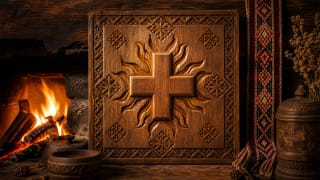
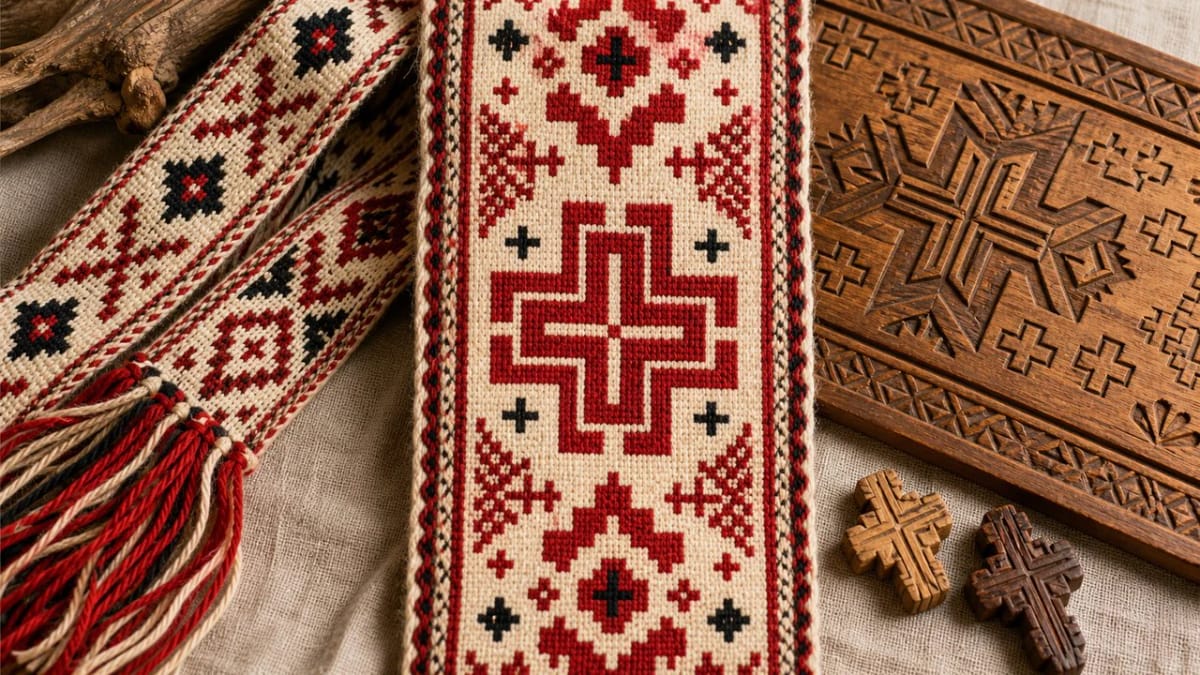
The equal-armed cross is one of the simplest ornamental forms: four directions of equal length meet at a center. Because of this simplicity the sign is easily repeated in textiles, sashes, Easter eggs, and carvings.
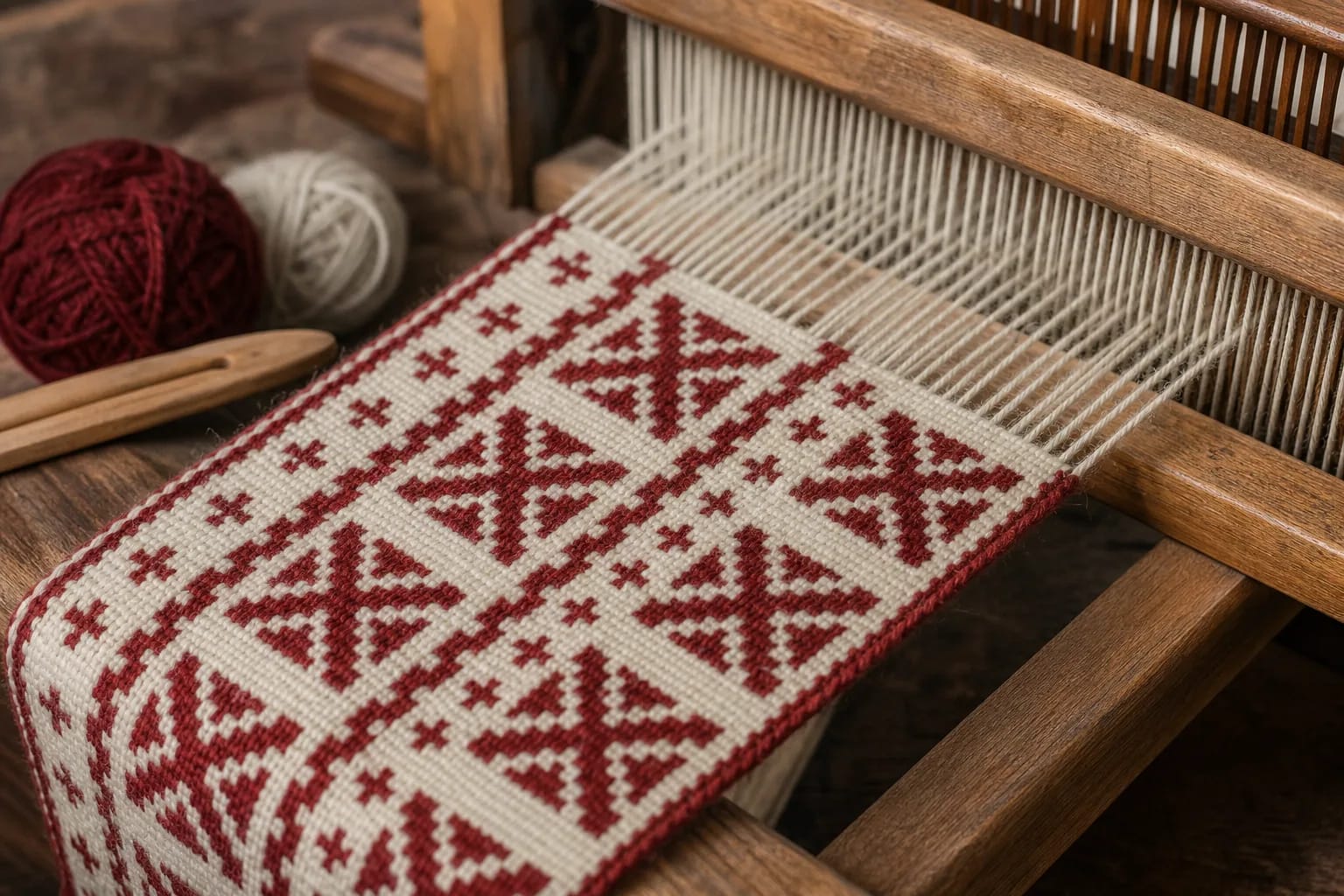
In Lithuanian folk art, a crosslet can be a rhythmic motif, a protective sign, a sacred reference, or part of broader cross symbolism. It does not always mean the same thing, but it almost always organizes the surface.
Center and four directions
The equal-armed cross naturally creates the idea of a center. From the center the sign spreads into four directions, so it can be connected with ordering space, the quarters of the world, marking boundaries, and balance.
When a crosslet is repeated in a sash or textile, it becomes part of rhythm. Such ornament works not only as a separate symbol but as a model of repeated order. The equal-armed cross is one of humanity's most universal and ancient signs; in Lithuania it appears already in prehistoric ceramics and metalwork, long before the Christian cross.
The cross between old and Christian
The cross in Lithuanian culture has many layers. It is a Christian sign, but as a geometric form and as a fire or center motif it is also discussed within the broader environment of older ornament.
For that reason the equal-armed cross should not be locked into one meaning. Its meaning depends on the object: on an Easter egg, distaff board, cross-crafted monument, or sash it works differently.
Connection with Perkūnas and Fire crosses
A swastika-type or turning cross can be understood as a dynamic variant of the equal-armed cross. This connection matters when speaking about Perkūnas and Fire crosses.
The equal-armed cross is a broader motif than particular forms of turning cross. Geometric similarities alone do not establish a shared origin or meaning.