- Category
- Herb, Festival, and Regional Heritage Symbols
- Domain
- Vilnius verbos, Palm Sunday, herbs, juniper, willow, dried flowers, Kaziukas Fair, spring
- Source status
- well attested
Vilnius verba, verba, verba tying, bundle-shaped verba, roller-shaped verba
What is a Vilnius verba?
VLE defines a verba as a bouquet of juniper, goat willow, currant, birch, and other early-budding tree or shrub branches, or a rod wrapped with dried blossoms and herbs, blessed on Palm Sunday.
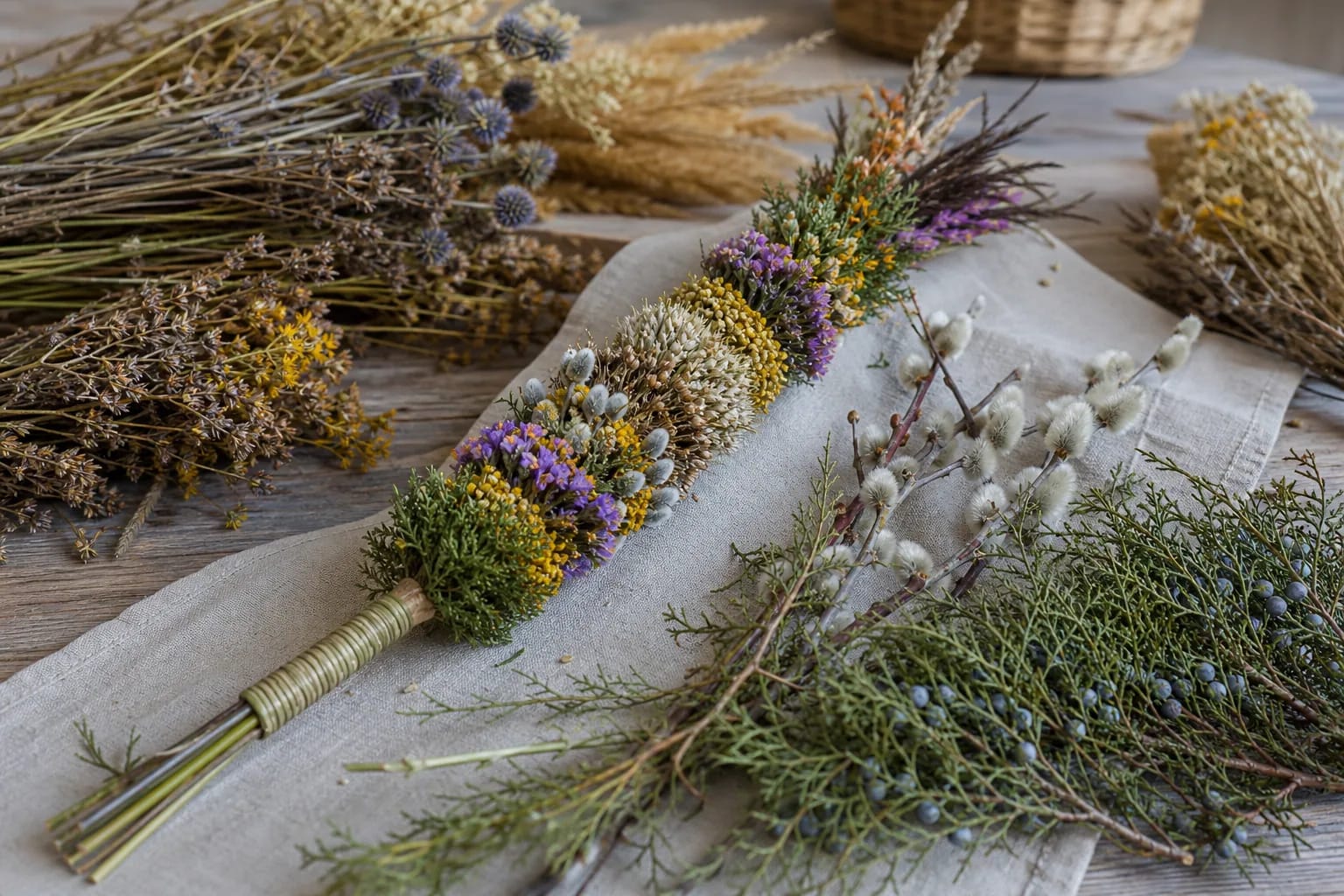
The Lithuanian National Culture Centre inventory describes the Vilnius verba as a distinctive variant of this tradition: an artistic composition of dried flowers and herbs with sacred, decorative, regional, and economic importance.
Protection and blessing
VLE records the belief that blessed verbos protected people from disease, homes from thunder and misfortune, and crops from hail, drought, and rodents.
Verbos are therefore not merely spring souvenirs. They are blessed bundles of plants that carry vitality and protective force into the home, field, beehive, and livestock.
Verba patterns
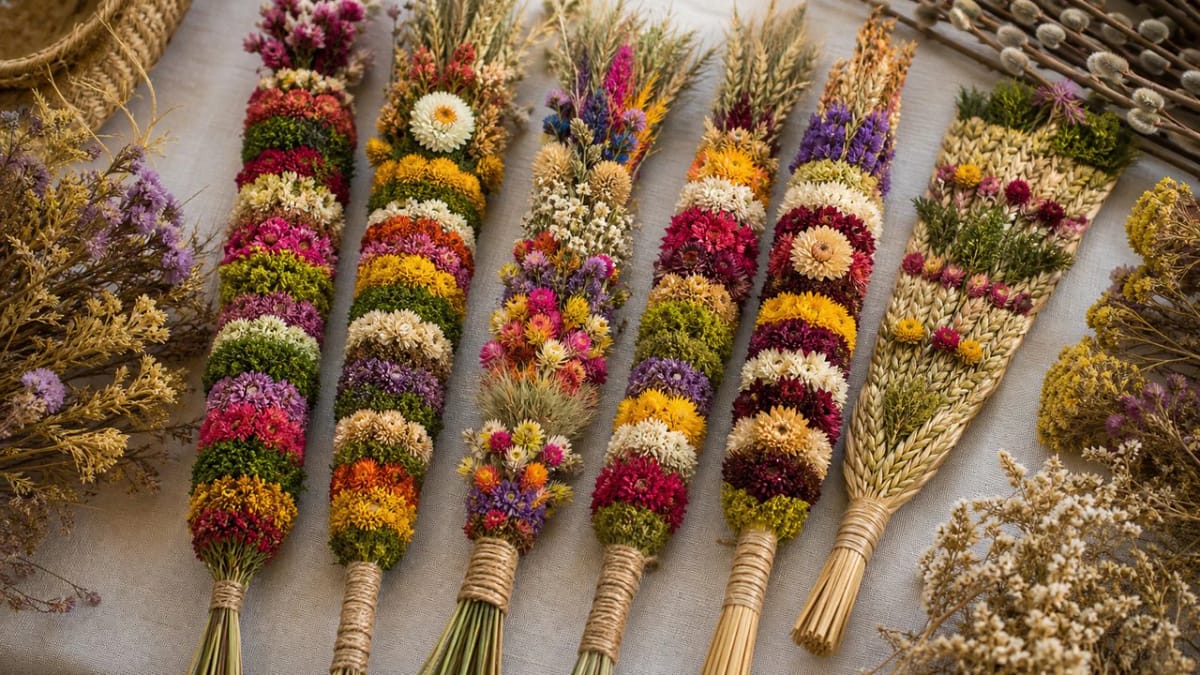
Vilnius verbos are made on a hazel stem by arranging natural or dyed flowers, grain ears, grasses, mosses, and other plants. They are three-dimensional plant ornaments.
Roller-shaped, flat, figured, and branched verbos have their own compositional logic: color bands, repeated blossoms, spirals, and plant texture.
Vilnius region identity
The LNKC inventory emphasizes that the tradition lives in the Vilnius region and is passed from generation to generation. After the war, verbos also became part of Kaziukas Fair.
A Vilnius verba is therefore not only a religious or spring sign but also a very recognizable symbol of regional heritage.