- Category
- Sky and Message Symbols
- Domain
- Sky, message, soul, spring, fate, boundary between human life and the other world
- Source status
- folkloric
female bird, little bird, singing bird, returning bird
What does the bird mean in Lithuanian folklore?
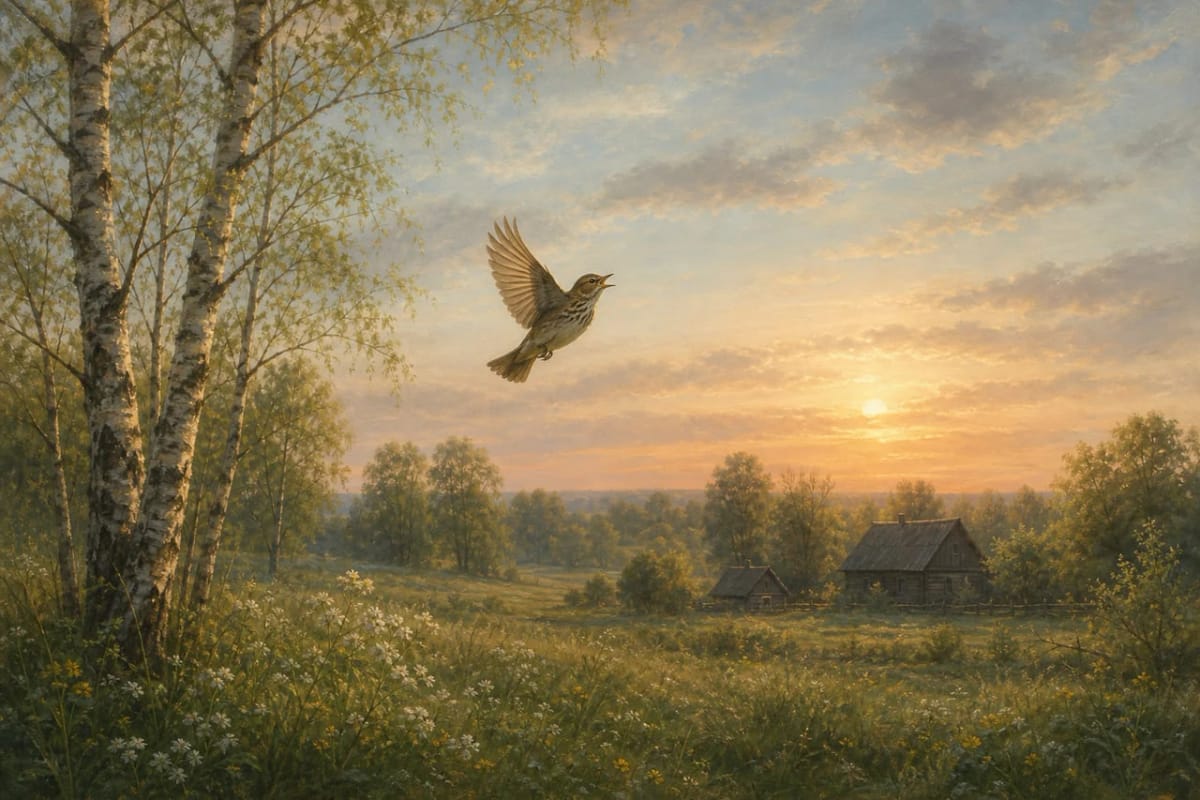
The bird is a natural mediator between earth and sky. It lives near humans, yet rises upward, returns from far away, sings before day or spring, and can be understood as a bearer of messages.
Therefore in Lithuanian songs and legends the bird often marks not the animal itself but a transition: from winter to spring, from silence to song, from home to distance, from human life to another state of being.
Song, message, and time
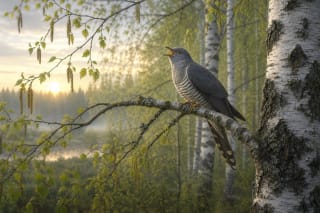
The bird's voice matters because it announces. The rooster sings in the morning and frightens away dark forces, the cuckoo counts time, and the skylark and other spring birds announce nature's awakening. Such a voice becomes a calendar and fate sign.
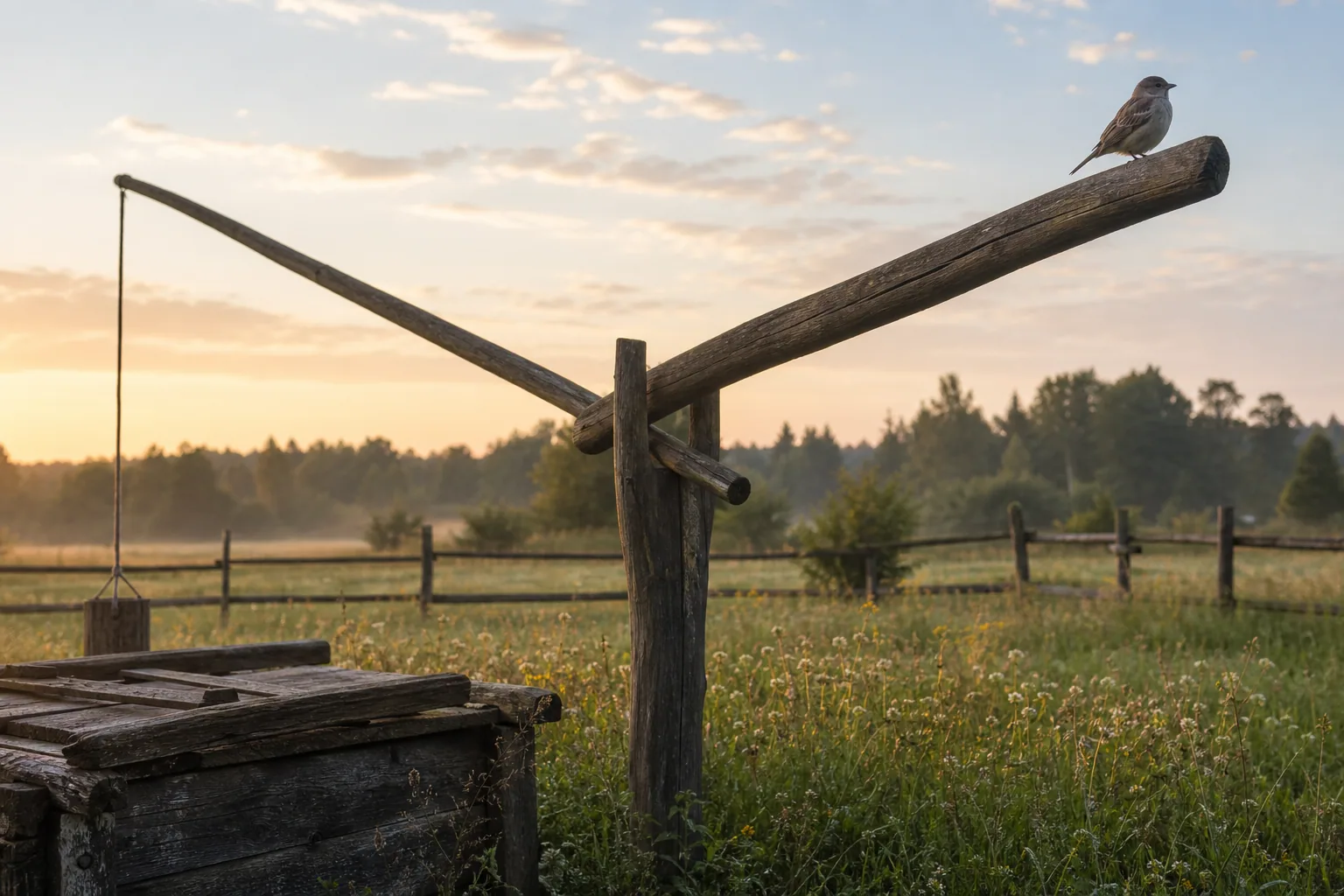
In songs a bird can speak the language of human feeling: it may grieve, call, bring a message, or echo the state of a maiden, young man, or orphan. In tradition the stork is associated with spring, household success, and even the bringing of children, so its nest on the homestead was considered a good sign.
Wings, soul, and the Milky Way
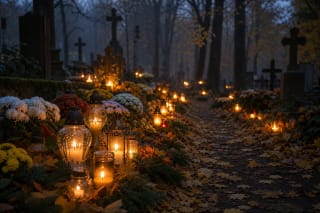
Wings allow the bird to be linked with images of the soul, the vėlė, and free movement. In Lithuanian beliefs the dead person's vėlė is often imagined as a bird, and the band in the sky, the Paukščių Takas or Bird Road, was understood as a road along which birds or souls fly to the other world. In some cosmogonic images, even the universe begins from an egg laid by a bird.
Such explanations require caution, because different birds mean different things, but the general direction is clear: the bird crosses the limits of the human body and therefore connects birth, soul, journey, and death.
How should bird symbols be distinguished?
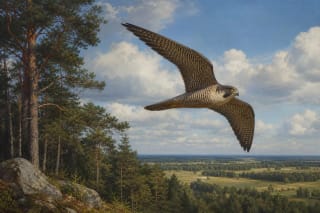
It is important to look at which bird is named. The cuckoo is more often connected with time and fate, the falcon with the young man and high flight, the rooster with morning and protection, the stork with spring and the household cycle, and the swan with the maiden and beauty. The general bird symbol works only together with species, song, and situation.
Today the bird is worth reading as a connective sign in Lithuanian folklore. It allows sky, home, spring, message, soul, and human states to be joined on one page.