- Category
- Animal and roof signs
- Domain
- Little horses, lėkiai, roof decoration, woodcarving, sun, protection, home
- Source status
- well attested
roof horse heads, horse ornament, little horses, lėkiai horses
Why are little horses important in ornaments?
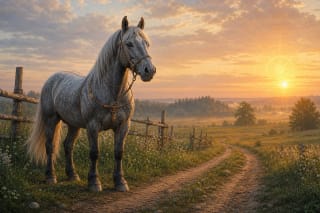
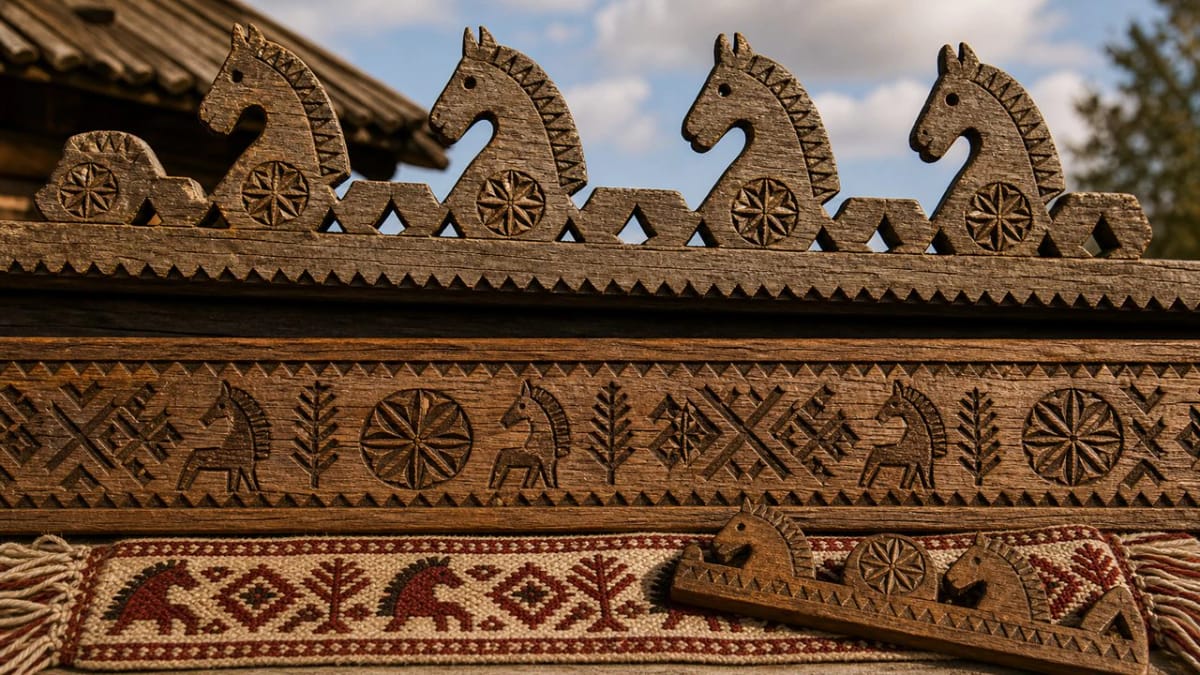
In Lithuanian tradition the horse is an animal of prestige, journey, strength, and the heavenly road. When it is stylized into ornament, that meaning moves into wood, roof, sash, or another object.
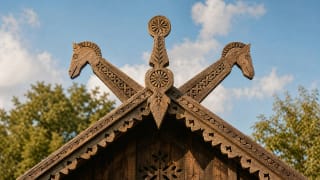
Little horses are especially vivid in roof decoration and lėkiai, where they become signs of the top of the house, protection, and symbolic journey.
The roof as household boundary
The roof is the boundary between the household interior and the sky. For that reason the little horses placed on it are not only decoration: they mark the protected household world and its relationship with the sky.
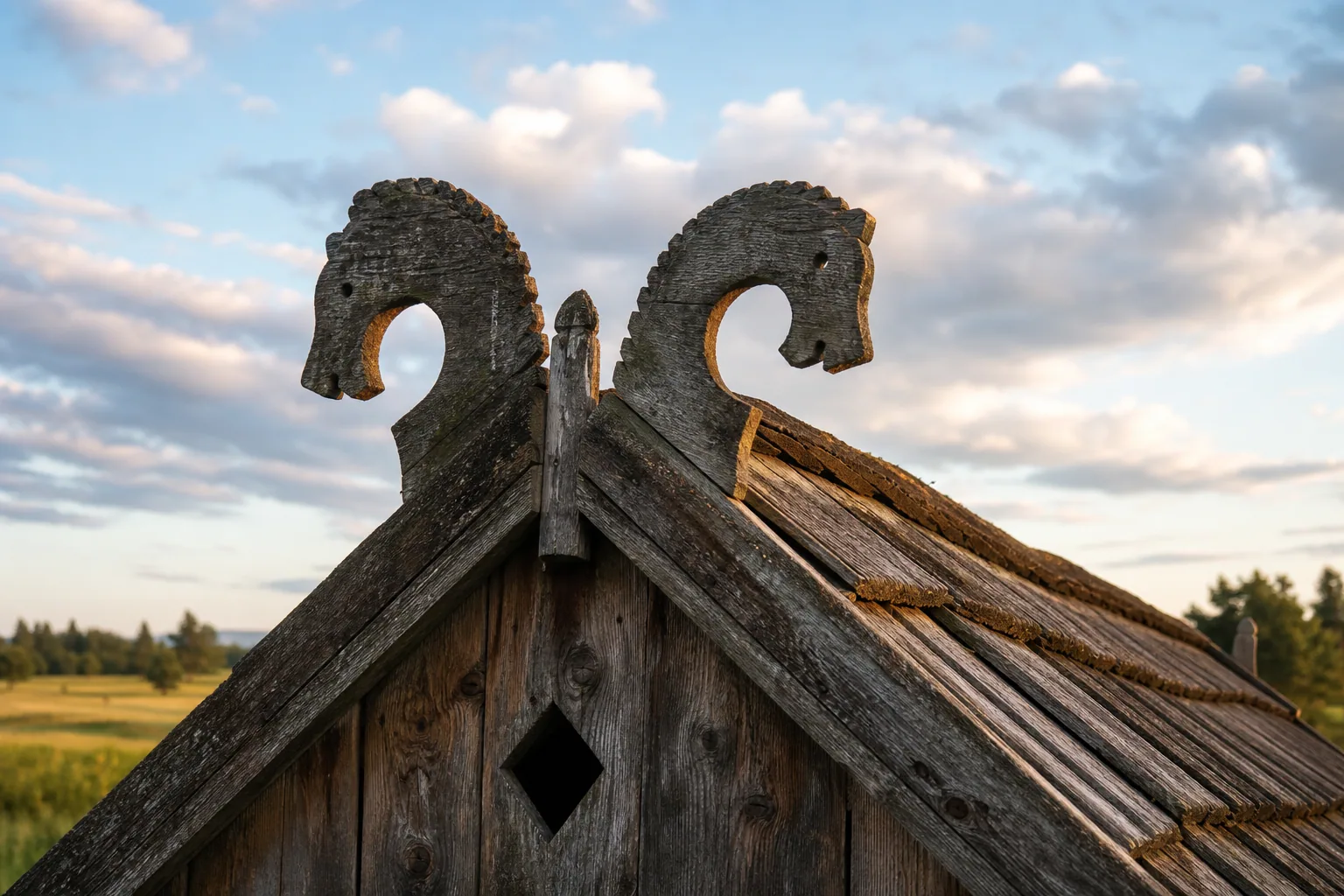
When lėkiai end in the form of little horses, the house silhouette gains an animal, mobile, and festive sign.
Horse, sun, and road
In folklore the horse is often connected with road, rider, heavenly journey, and images of the sun. Ornamented little horses can therefore be read not only as farm animals, but as signs of movement between worlds.
This meaning is best explained beside solar-wheel and road symbolism, where the horse image gains a broader mythological function.
Ornament and architecture
Little horses in ornaments connect two levels: the symbolism of the horse as animal and the little horse as a woodcarving or roof-decoration form.
What matters here is not only the general meaning of the horse, but the concrete traditional form: lėkiai, roof silhouette, carving, and household protection signs. The most characteristic horse composition is paired: two small horses or horse heads mirrored toward one another, common in lėkiai and in carved furniture and chests, where symmetry emphasizes harmony and protection.