- Category
- Garden and Love Symbols
- Domain
- Garden, flowering, fruit, love, family, harvest, girl's flower garden
- Source status
- folkloric
little apple tree, apple, garden tree, flowering apple tree
What do the apple tree and apple mean?
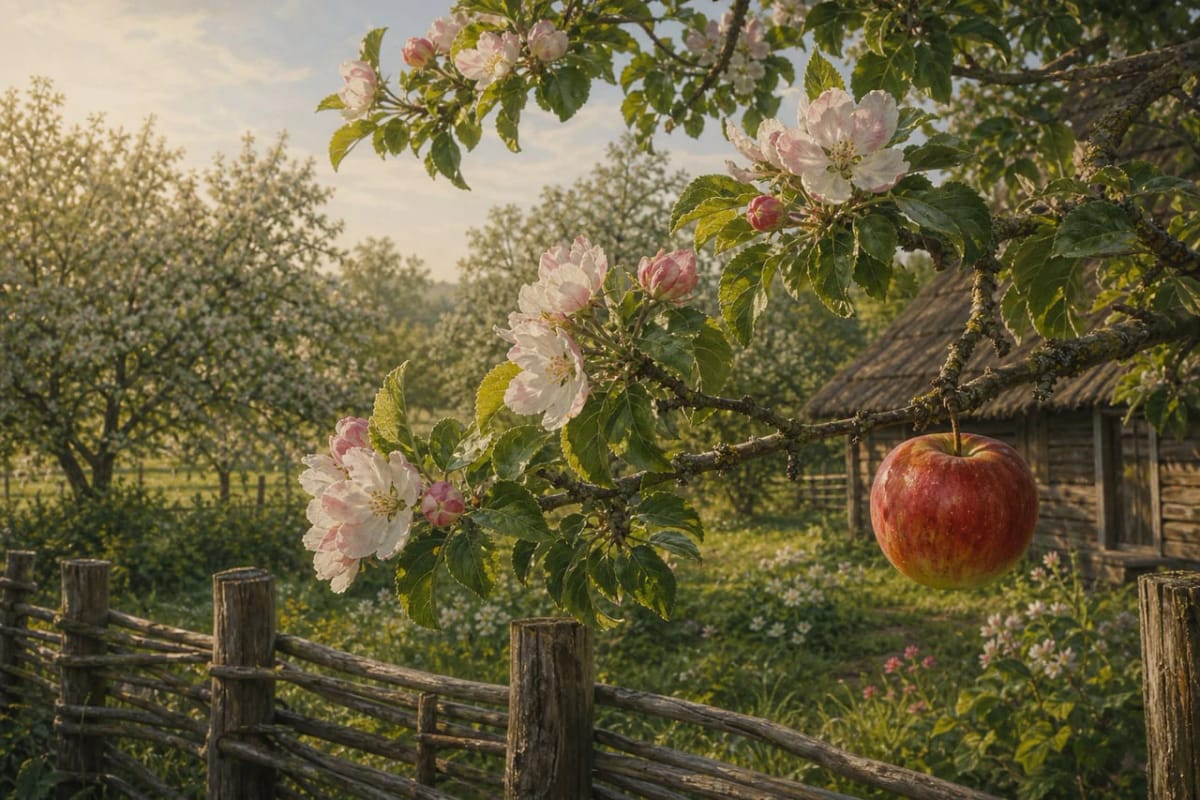
The apple tree is a garden tree, so it differs symbolically from forest trees. It grows by the home, blossoms in spring, and bears fruit in autumn. This cycle links it with family, harvest, and fullness of life.
The apple is ripe fruit. In songs and symbolism it can mean love, gift, maturity, abundance, or desire.
Blossoms, garden, and the girl's world
A flowering apple tree creates a powerful spring image. It stands close to the girl's flower garden and youth symbolism, because flowering shows beauty but not final maturity.
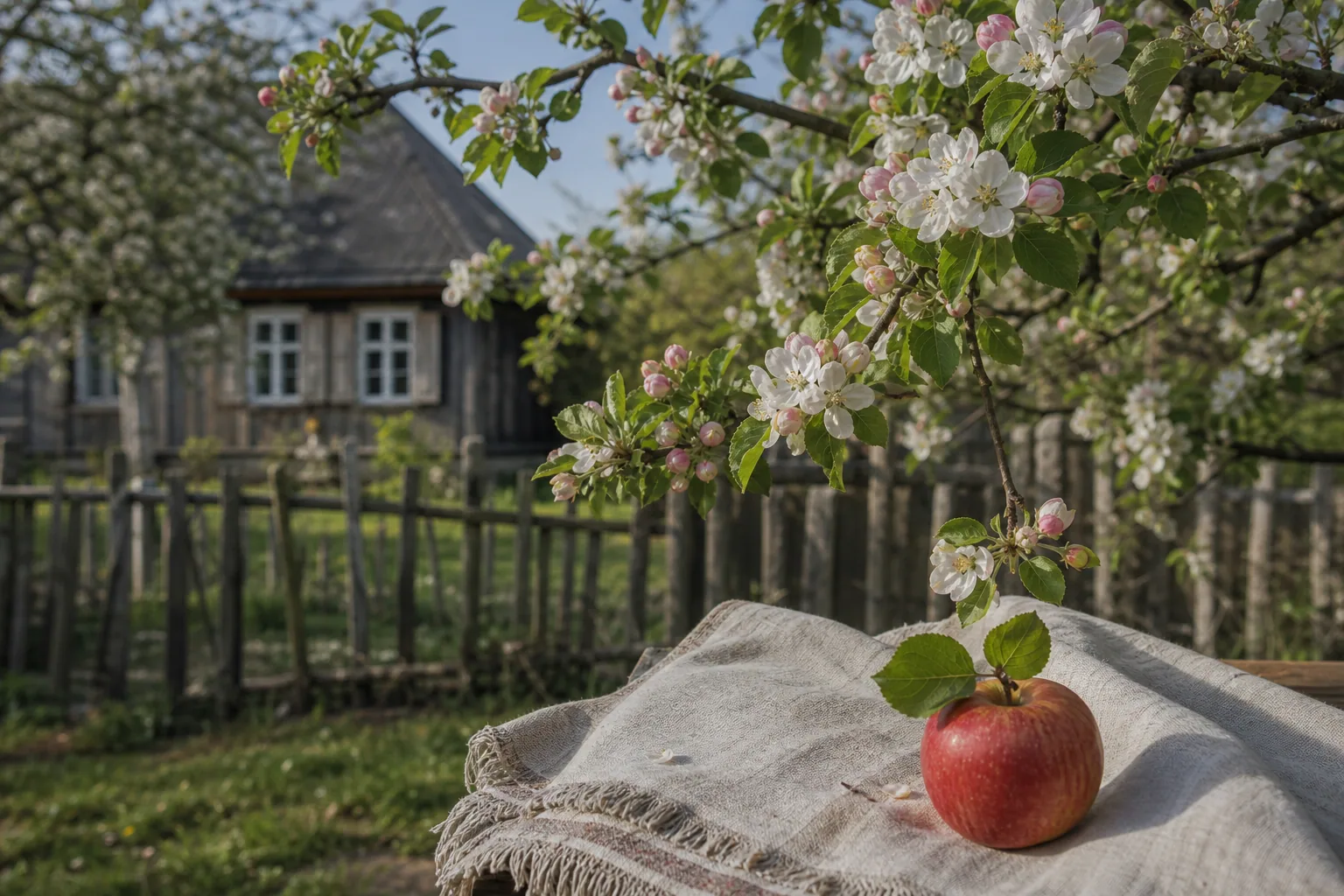
In Lithuanian culture the garden is cultivated nature. The apple tree in it means household care: fruit appears only when the tree is planted, tended, and awaited.
Apple as gift and fertility
An apple can be given, picked, kept, or shared. It therefore becomes a symbol of relationship: the fruit carries sweetness but also marks maturity and choice.
In folklore the apple's meaning depends on the situation. In one place it may mean love, in another harvest or family continuity. In songs and tales, a red or golden apple is often a love or courtship gift: a girl gives or rolls it to a young man, while a garden of golden apples belongs to a miraculous otherworld. The apple should not be reduced to one meaning.
How should this symbol be read today?
Today the apple tree and apple help explain Lithuanian garden culture: home, flowering, fruit, family continuity, and patient labor.
The symbol connects with flowers, rue, harvest, Žolinės, and Lithuanian song poetics.