- Category
- Forest Power Symbols
- Domain
- Forest, strength, winter, fur, wild power, closeness between human and beast
- Source status
- folkloric
meška, lokys, male bear, forest beast
What does the bear mean?
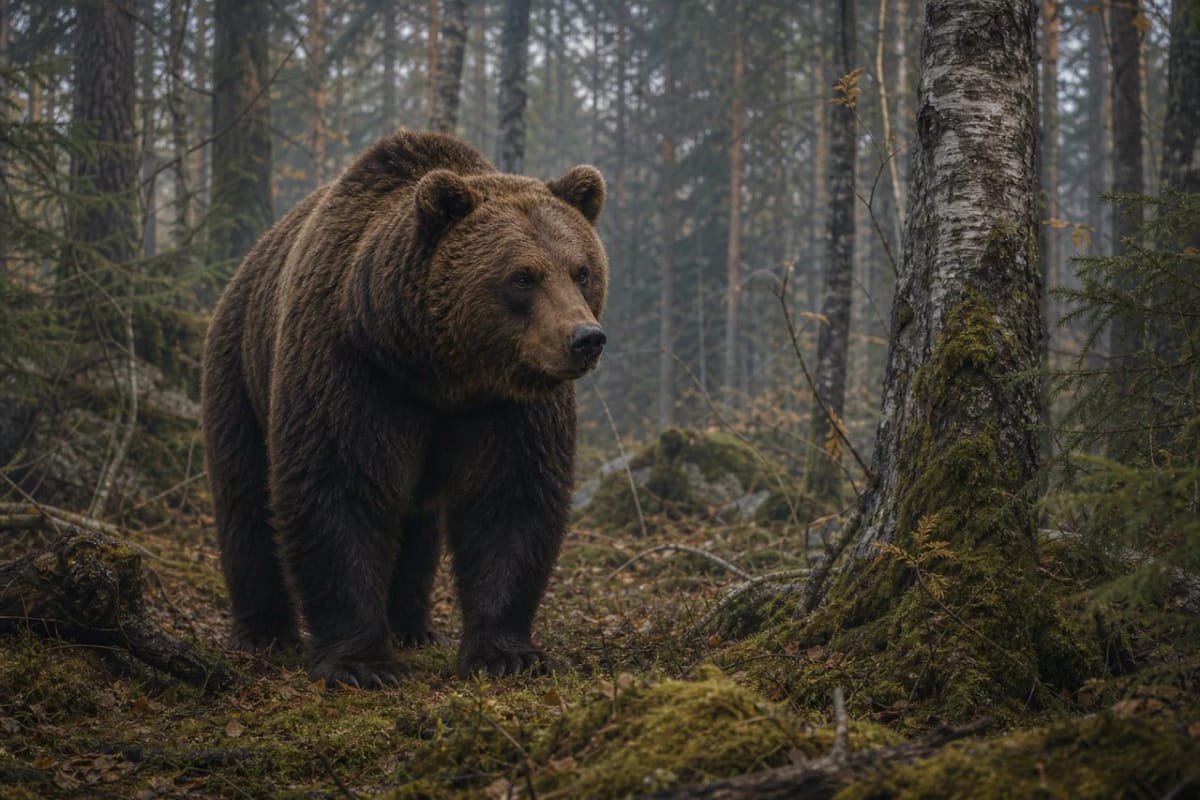
The bear is not as common a symbol in Lithuanian folklore as the wolf, but it very clearly marks the strength of the forest. It is a large, heavy, furred animal whose closeness to humans brings both fear and respect.
The bear image often works through the body: paws, fur, strength, clumsiness, or winter sleep. Symbolically it is power that is not quick like the wolf's, but massive and difficult to stop.
Forest strength and human closeness
The bear is interesting because its body and posture can sometimes seem close to a human being. In tales or mask traditions the bear can therefore be comic, threatening, and humanlike at the same time.
This closeness makes the symbol ambivalent. The bear is not only an enemy; it can be a wild relative, reminding people that the human being also has an animal bodily side.
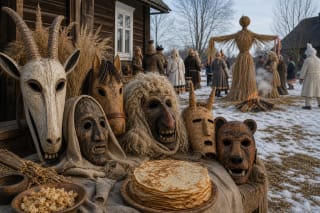
Winter, fur, and Užgavėnės masks
Because of its fur and winter sleep, the bear is easily linked with the dark part of the year. In the world of Užgavėnės masks, animal form helps bring forward a wild, comic, and liminal force that must be mastered or driven out.
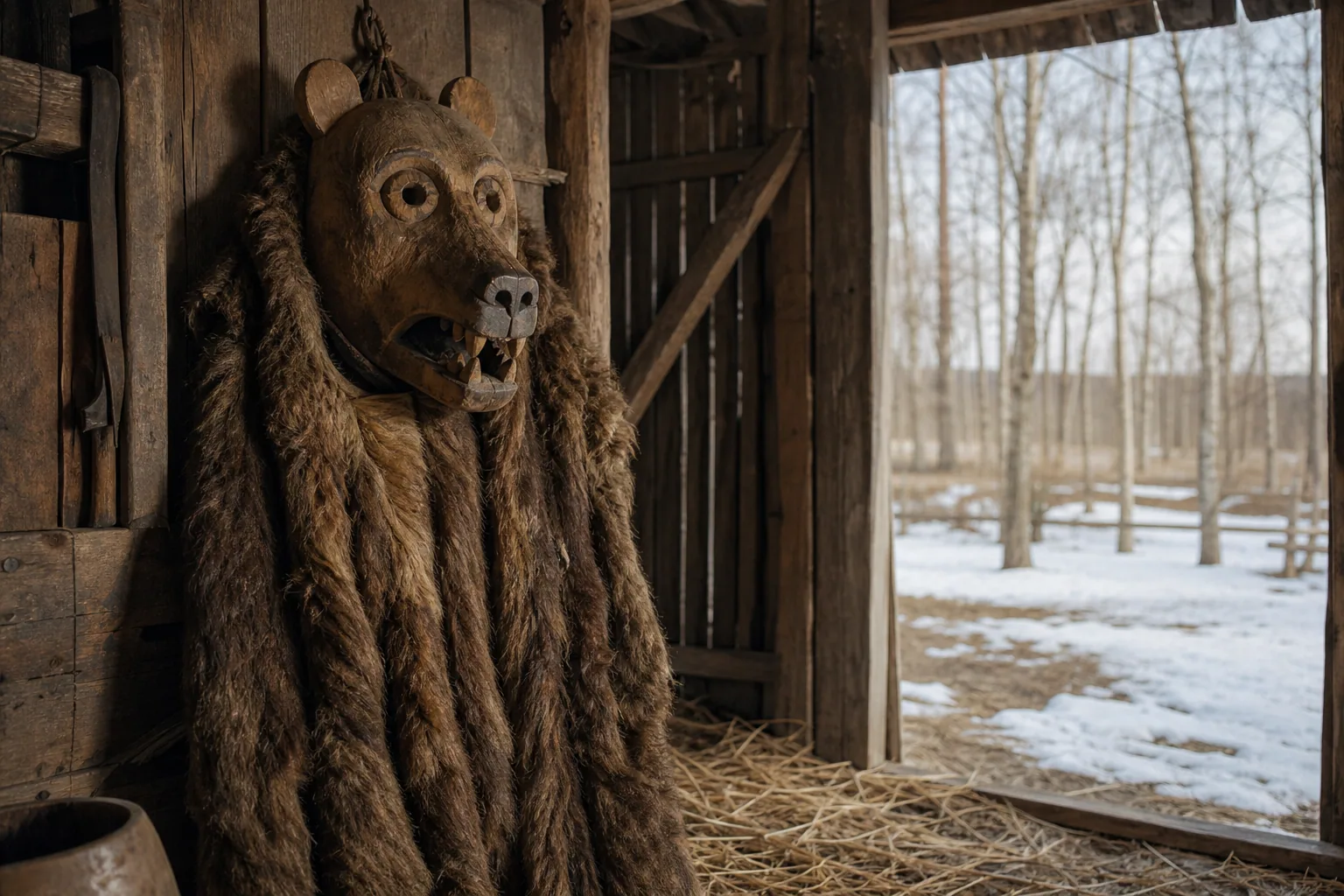
This meaning is not only an ancient cult layer. It is alive as a carnival symbol in which a person puts on animal form and briefly crosses everyday order. In actual practice, traveling bear-handlers also led and trained bears, showing a chained bear at fairs and in villages. The bear was therefore both a frightening forest force and a tamed spectacle.
How should the bear be read today?
Today the bear is not as frequent a symbol as the wolf, but it meaningfully adds to the field of forest imagery: if the wolf is swift threat and transformation, the bear is the heavy force of the forest.
The bear's symbolism is best explained through tales, masks, winter, fur, and the closeness of wild power to human beings.