- Category
- Tree and Song Symbols
- Domain
- Spring, youth, whiteness, orphanhood, switch, boundary of forest and home
- Source status
- folkloric
young birch, white birch, birch grove, birch branch
What does birch mean?
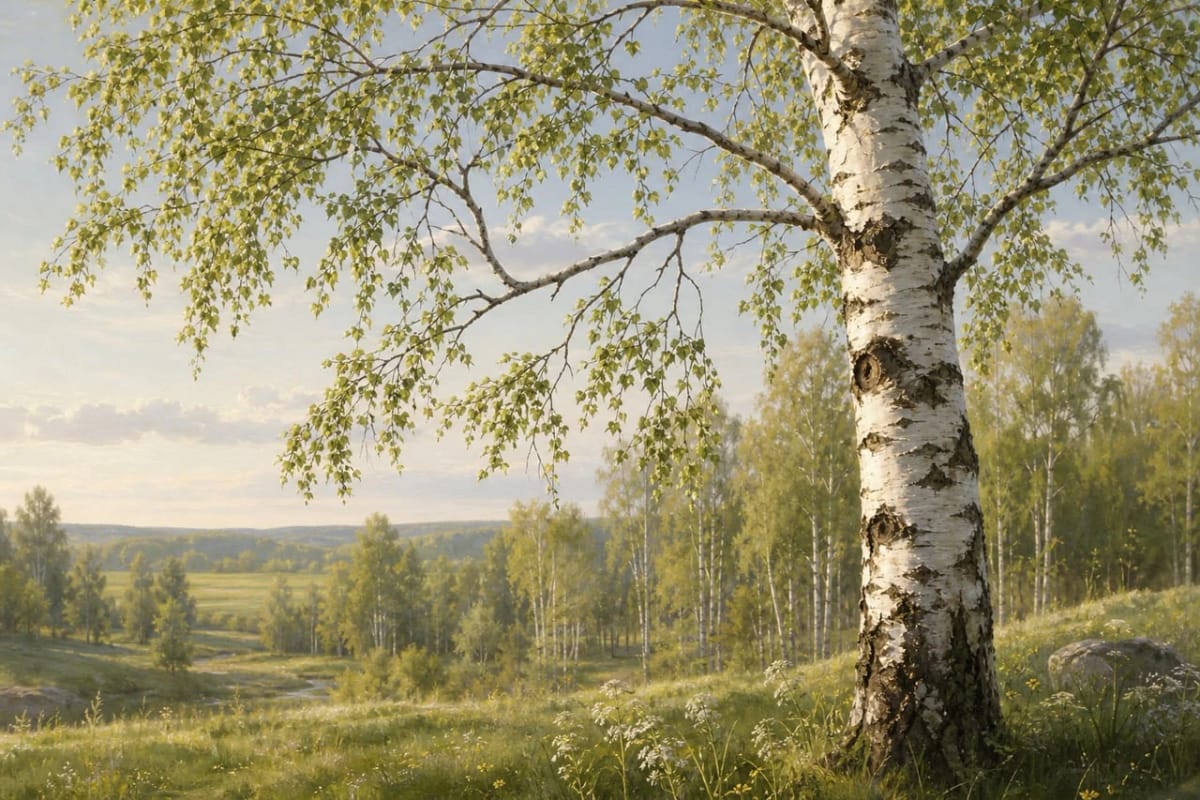
In Lithuanian songs birch often works as a young, bright, sensitive tree. White bark, light leaves, and spring budding link it with renewal, youth, and a gentle state of nature.
Yet birch is not only a cheerful spring sign. In songs, a birch grove, birch switch, or broken branch may speak of harm, orphanhood, violence, or a fragile human fate.
Whiteness, spring, and youth
Birch whiteness makes the tree an easily recognized symbol. It stands apart from the darker forest and often appears as a sign of light, cleanness, and young growth.
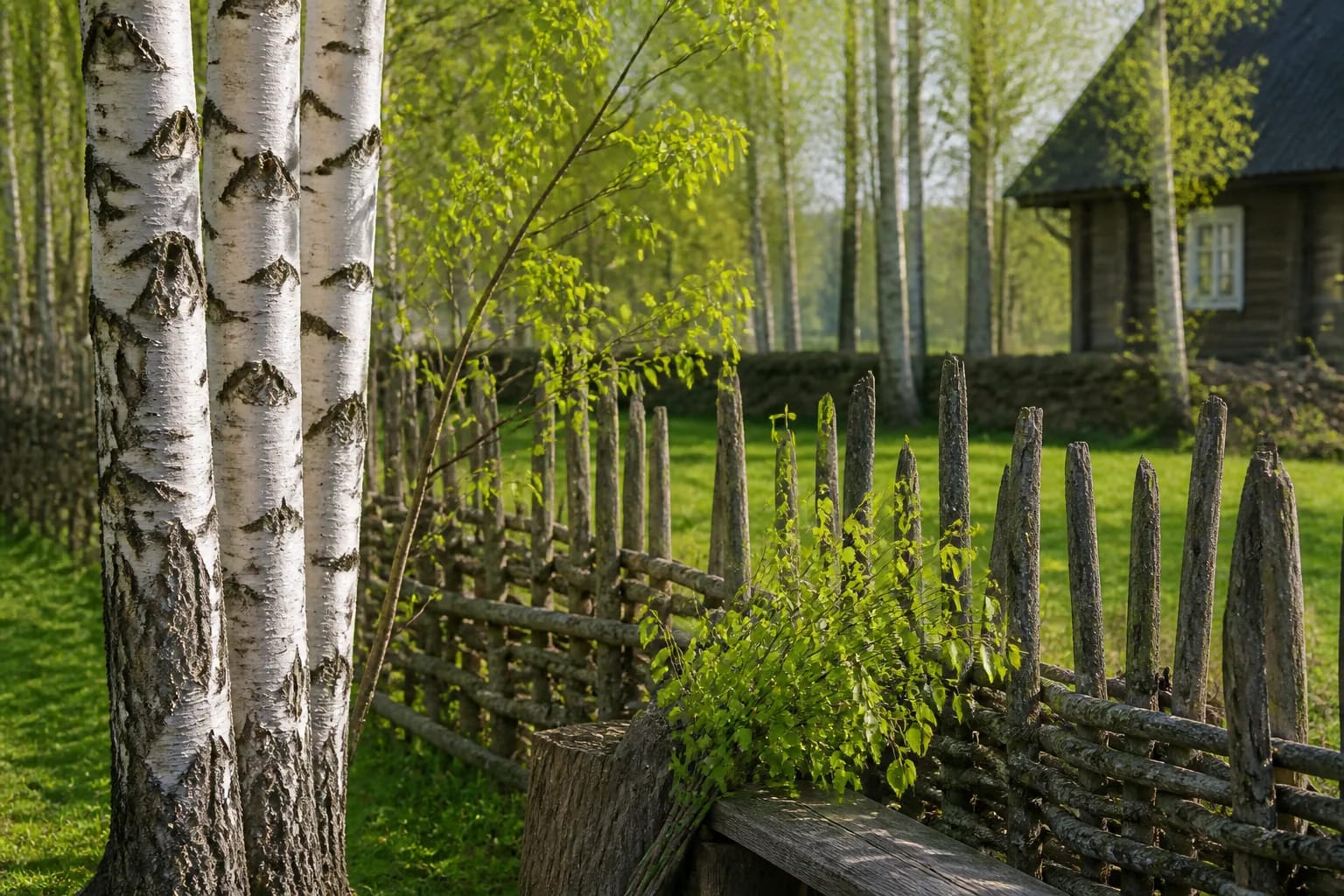
In spring the birch revives quickly, releases sap, and opens leaves. This natural cycle makes it a tree of awakening and a living homestead. Birch sap was drunk in spring as a drink of health and strength, and at Sekminės homes, yards, gates, and barns were decorated with birch branches or young birches; the young green birch became a sign of life and the beginning of summer.
Birch in songs: gentleness and harm
In folk songs a tree often takes on a human state. Birch can be a tender young birch, but it can also become the source of switches when a song speaks of an orphan girl or injury.
The birch symbol is therefore double: it is white and young, but its branches can recall vulnerability. This double quality makes it a strong folkloric tree rather than a merely decorative one.
How should birch be read today?
Today birch is often associated with the Lithuanian landscape. In songs, birch evokes spring, orphanhood, fragility, and gentle sadness.
Birch is best explained beside the cuckoo, linden, and oak. Then the whole range of tree symbols appears, from firmness to sensitivity and from care to loss.