- Category
- Forest and Winter Symbols
- Domain
- Evergreen life, winter, forest, Eglė Queen of Serpents, transformation, boundary of home and forest
- Source status
- folkloric
young spruce, green spruce, Eglė Queen of Serpents, winter tree
What does spruce mean?
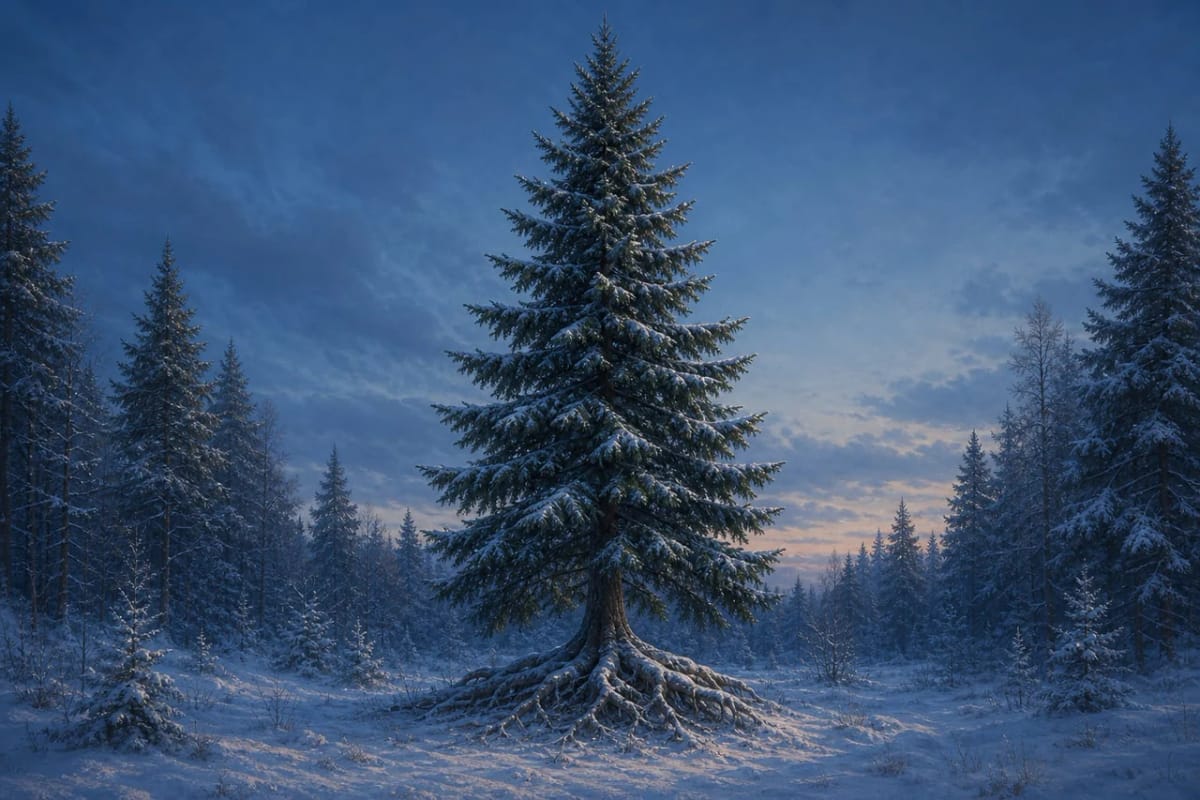
Spruce is an evergreen tree, so in Lithuanian symbolism it naturally connects with winter, the persistence of life, and green presence during the dark season. It stands green in the forest when most deciduous trees have lost their leaves.
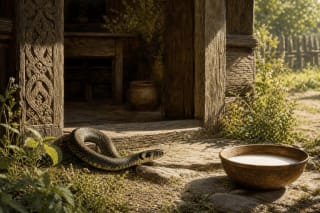
The symbolism of spruce in folklore is greatly strengthened by the tale of Eglė Queen of Serpents. There Eglė is at once a woman's name, a tree, and a sign of transformation.
Eglė Queen of Serpents and transformation
In the tale, Eglė encounters the world of the serpent, marries Žilvinas, and finally suffers a tragic rupture of the family. When her brothers kill Žilvinas, Eglė changes her children into trees and herself into a spruce: in the best-known version, the sons become oak, ash, and birch, while the daughter who revealed her father's name becomes the ever-trembling aspen. This is one of the clearest Lithuanian folklore images of humans becoming nature.
Spruce is therefore not only a Christmas tree. It can mean a woman's fate, family bond, irreversible transformation, and the tension between sea and forest worlds.
Winter, forest, and evergreen life
The green of spruce in winter links it with the continuity of life. In the dark season it remains green and becomes a sign of hope and endurance.
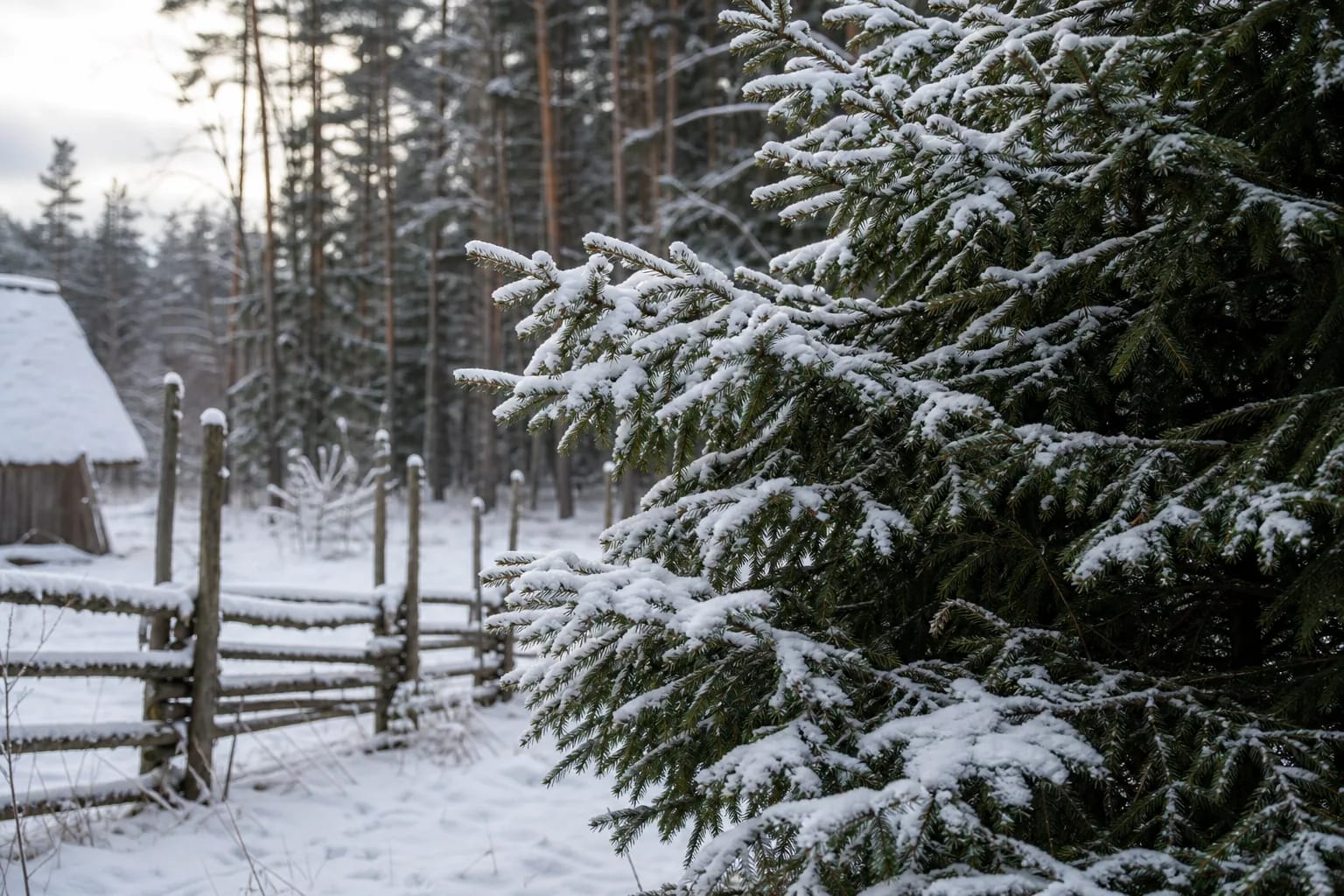
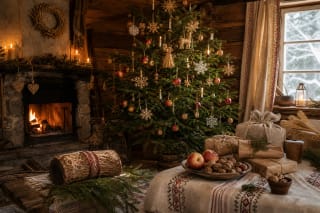
This meaning later blends easily with the Christmas tree. In the Lithuanian context, however, the older forest and tale layers should also be kept visible.
How should spruce be read today?
Today spruce has several layers: winter holiday tree, Lithuanian forest tree, the name of a woman in a tale, and a symbol of transformation. All can be discussed legitimately if they are not flattened into one simple meaning.
The best interpretation joins Christmas, serpents, the tale of Eglė, and the idea of evergreen life.