- Category
- Home and Community Symbols
- Domain
- Beekeeping, sworn friendship, household, fertility, purity, community
- Source status
- well attested
little bee, queen bee, hive, honey, bičiulystė
What does the bee mean in Lithuanian mythology?
In the Lithuanian worldview the bee is more than a useful insect. It is connected with order, purity, diligence, communal life, and household abundance. Bees are spoken of respectfully, and beekeeping is a ritualized labor in which not only honey matters, but also the relationship with a living, sensitive community.
For that reason the bee symbol connects well with Austėja and Bubilas. These divine names show that the world of bees was understood as a special field of home, fertility, and sweetness, where people had to behave orderly, gently, and responsibly.
Hive, swarm, and bičiulystė
The hive is a small model of an ordered world: every bee has its place, and common labor becomes honey and wax. The hive can therefore mean harmony, household security, and good stewardship.
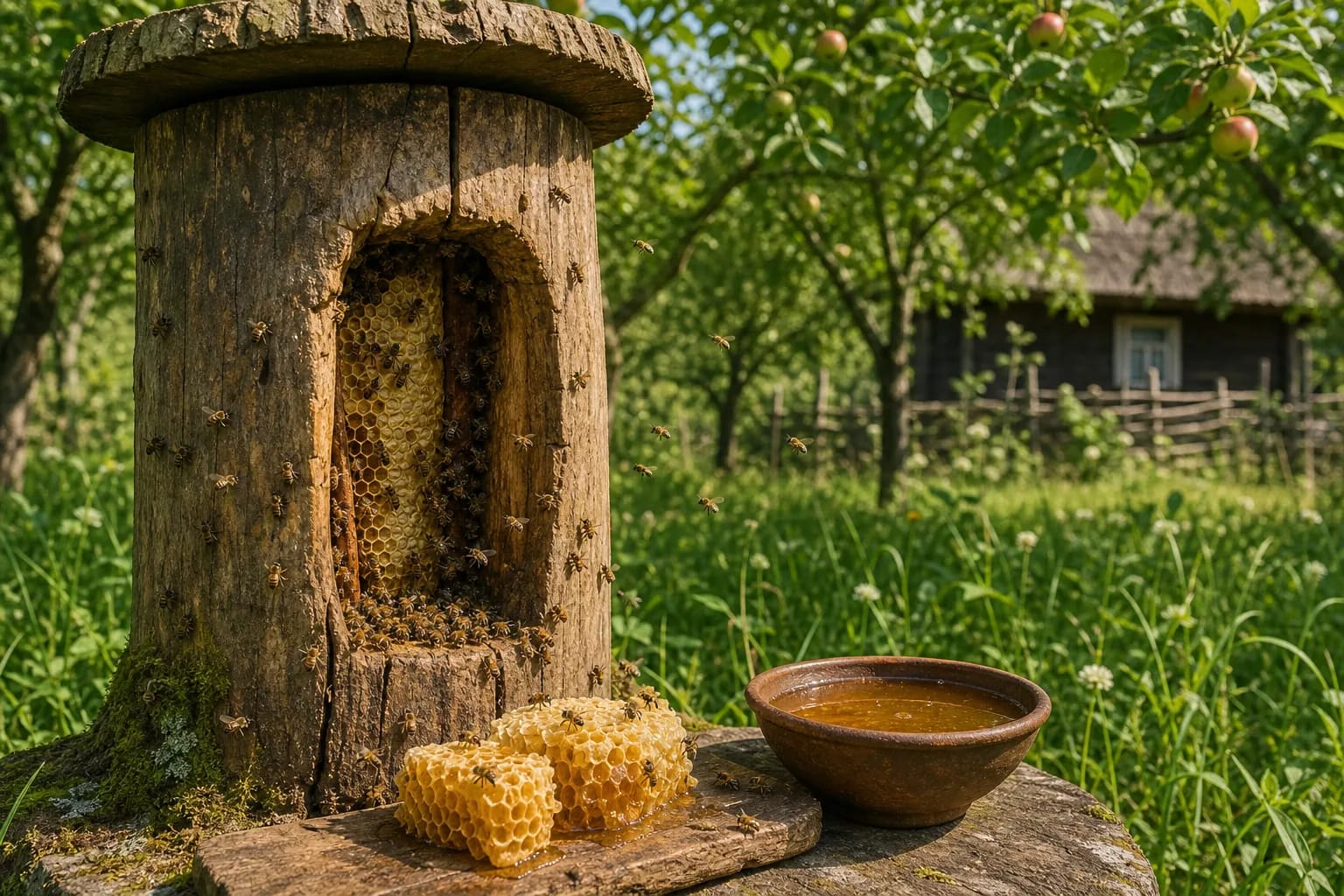
The Lithuanian word bičiulystė, friendship rooted in bee-sharing, is not accidental. Owning bees, sharing a swarm, and caring for it together created a social bond. Symbolically it means trust: honey appears only where a community works without chaos.
Honey, wax, and ritual sweetness
In Lithuanian tradition honey is a sign of sweetness, health, hospitality, and good fortune. It belongs with the festive table, healing imagery, and wishes where sweetness is not a luxury but a form of concord.
Wax adds another direction to honey: candles are made from it, so the bee symbol links everyday household work with light, prayer, and remembrance. In this way the bee moves from nature into the home and from the home into ritual. Mead fermented from honey was an important old feast and ritual drink, so the bee is indirectly connected with celebration as well.
The special status of bees is visible in language itself: of a dead bee people say 'the bee died', using the same verb as for a human being, not the verb used for an animal carcass. It was believed that bees cannot bear curses or dirt and that they sting an evil or immoral person, so one had to behave peacefully and properly near them.
How should this symbol be read today?
Today the bee often stands for diligence, Lithuanian rural heritage, and ecological sensitivity, but in a mythological context the wider meaning should remain visible. It speaks not only about work, but about clean order, concord, and careful communication with a living world.
The bee is best explained together with the hive, honey, linden, Austėja, and Bubilas. Then the symbol is not decorative, but clearly rooted in Lithuanian beekeeping, folklore, and old religion.