- Category
- Geometric ornaments
- Domain
- Net, rhombuses, small cells, textiles, sashes, order, field, protection
- Source status
- well attested
net, small cells, rhombic net, net pattern
What is a net pattern?
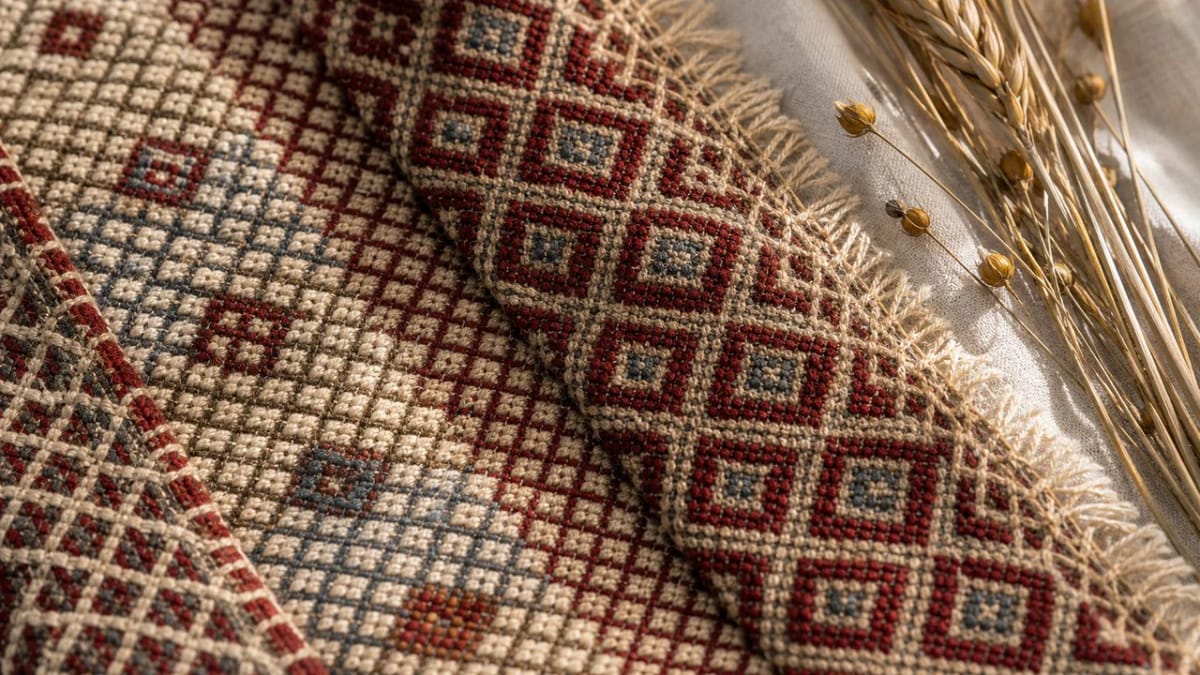
A net pattern is an ornament in which cells, rhombuses, crosslets, or connections repeat. It works as a structure that orders a surface: one sign becomes an entire system.
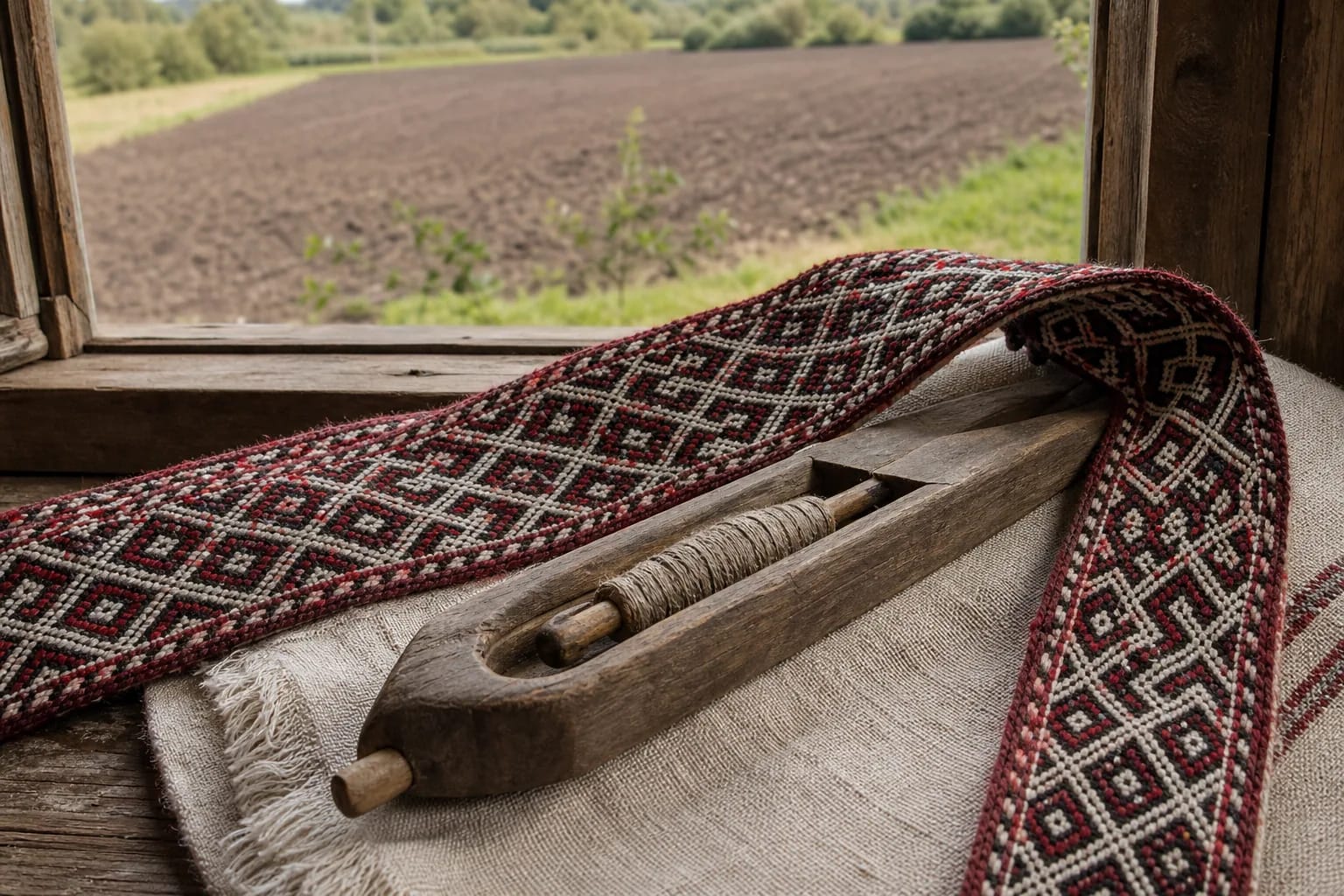
In Lithuanian textiles and sashes, net patterns often arise from weaving logic. But symbolic reading can connect the net with field, order, protection, and abundance.
The net as order
A net means connection and repetition. When a pattern covers a textile, chest, or wooden surface, it creates a protected and controlled space.
Such a pattern can be read as order opposed to chaos. Each cell has a place, and the whole sequence looks like a hand-made surface of the world. Just as a real net catches and gathers, the net pattern is sometimes interpreted as a sign that catches or holds back evil, which is why protective meaning is also assigned to it.
Connection with earth and field
A rhombic or cell-like net can resemble a divided field. For that reason it is close to agricultural symbolism, harvest, and the ordered surface of the earth.
This is not the only meaning, but it fits well with the agrarian foundation of Lithuanian culture and the rhythm of textile patterns.
The net pattern today
In contemporary visual systems, the net pattern can become a subtle sign of Lithuanian textiles. It is less immediately recognizable than the sunburst, but very useful as a background or structural ornament.
The main thing is to keep its connection with textile, sash, and handmade geometry. Then the net does not look like a neutral template, but works as a motif of traditional order.