- Category
- Liminal Plant Symbols
- Domain
- Laumės, tree anomalies, mistletoe, healing, protection, liminal growth, folk beliefs
- Source status
- folkloric
laumė's broom, witch's broom, mistletoe, tree mistletoe, strange tree growth
What are laumė's broom and mistletoe?
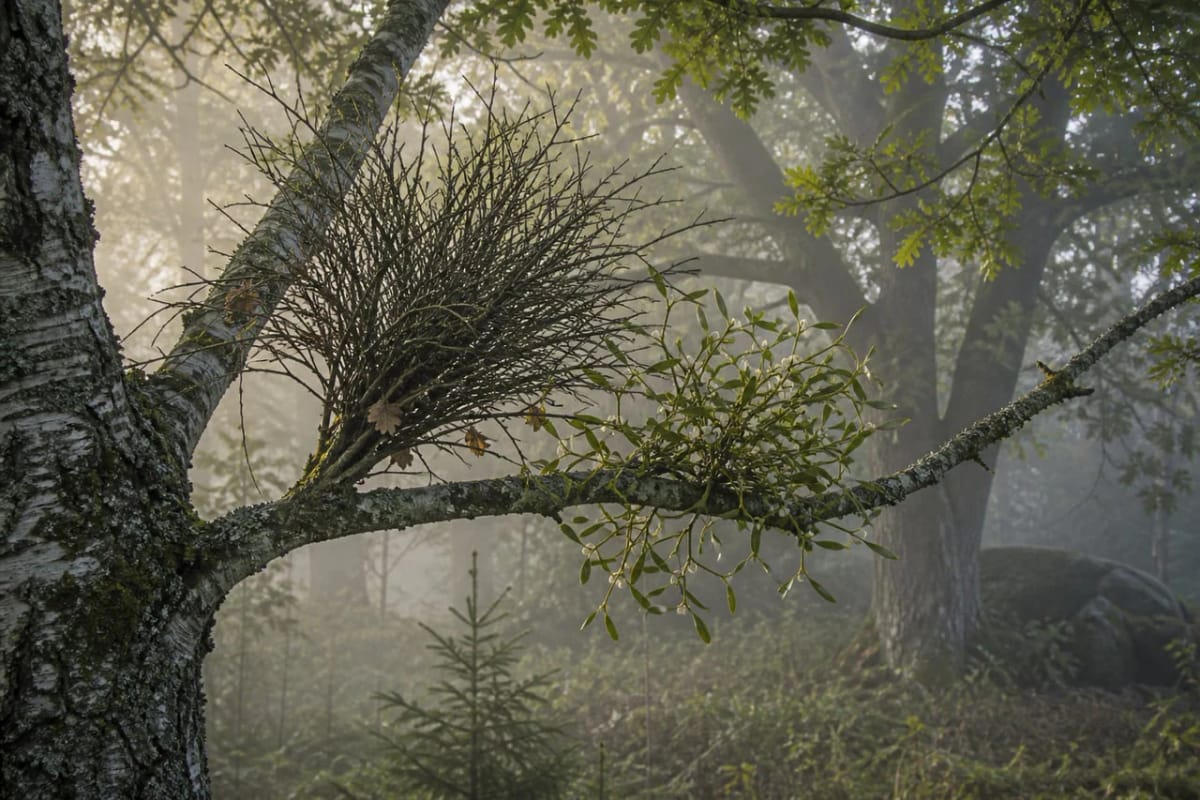
Laumė's broom is the name for an unusual dense cluster of small branches in a tree, resembling a broom. Mistletoe is a plant that grows on tree branches. Both images stand out because they look like something additional, strange, or liminal within the tree.
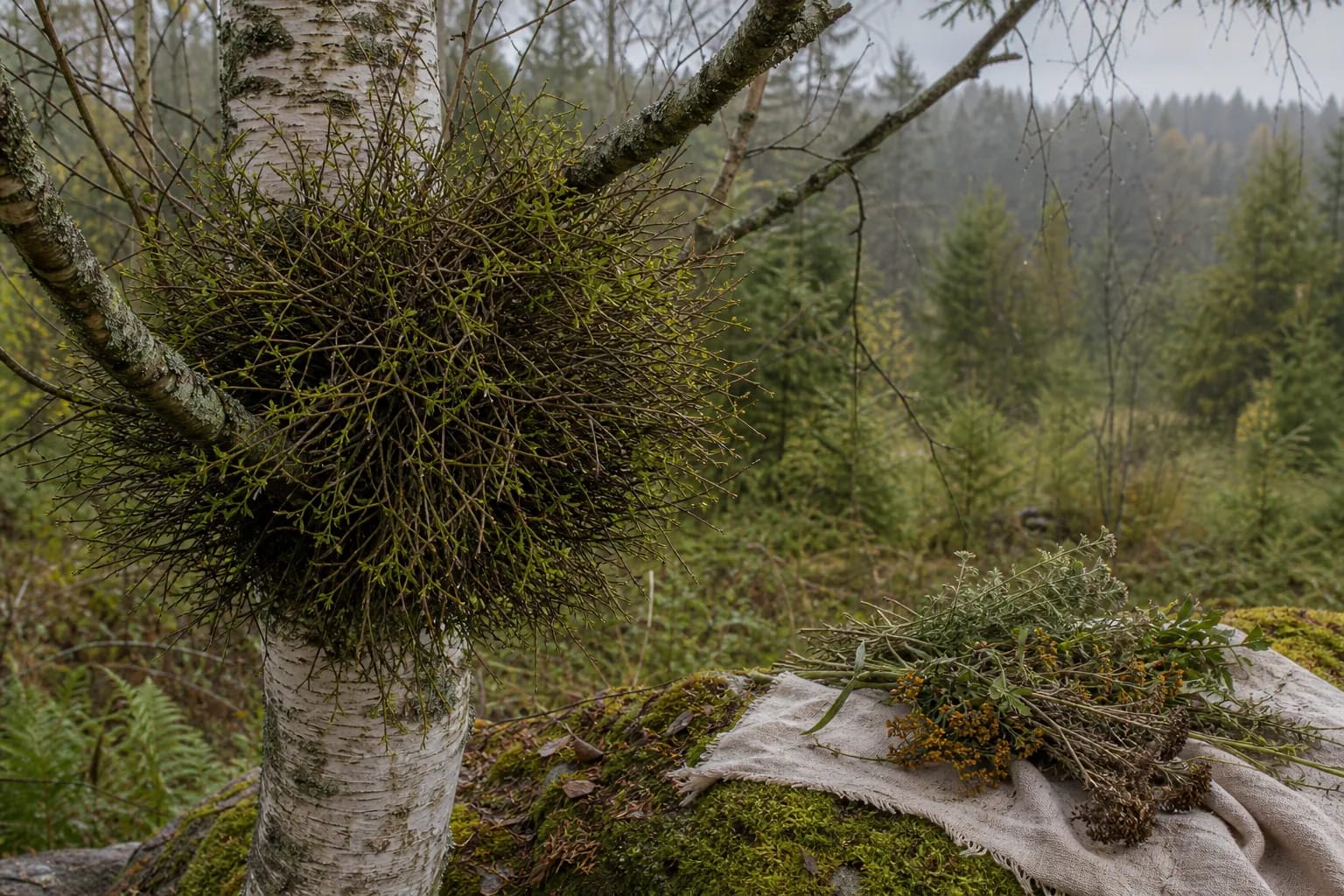
Because of that unusualness they easily enter folk imagination. When an unexplained form appears in nature, it can be linked with laumės, witches, healing, protection, or dangerous power.
Laumės, witches, and strange growth
Names such as laumė's broom or witch's broom show that the tree anomaly was understood not only botanically. It looked like a sign or tool left by a mythic being.
Such names do not prove one clear ancient cult. They show a living folkloric way of explaining a strange natural form through familiar mythic names.
Mistletoe, protection, and healing
In many European traditions mistletoe is connected with healing, protection, and its special growth on a tree. In a Lithuanian context it calls for a cautious interpretation: as a plant of folk medicine and belief, not as a single unambiguous pagan symbol.
Its liminal position matters: mistletoe grows in a tree but is not the tree itself, stays green in winter, and has no roots in the ground. In folk medicine and belief it was used for healing and protection and regarded as guarding against lightning, disease, and evil forces. This in-between position, neither tree nor not-tree, lets people speak of unusual, protective, or dangerous power.
How should this symbol be read today?
Witches’ broom and mistletoe show how unusual plant growth can prompt folklore explanations. They are different natural phenomena, although both are found among tree branches.
The best reading explains the symbol through trees, laumės, witch imagery, folk medicine, and liminal growth. Then it becomes a cautiously grounded but interesting sign of folklore.