- Category
- Spring and Life Symbols
- Domain
- Easter, spring, life, rebirth, solar signs, family rites
- Source status
- well attested
margutis, Easter egg, dyed egg, scratched margutis, wax-decorated margutis
What does the margutis mean?
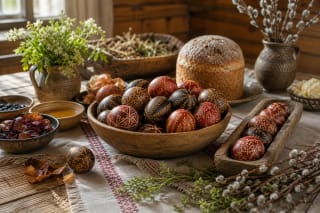
The margutis is one of the clearest Lithuanian spring symbols. The egg by itself means enclosed, not-yet-opened life, and the decorated margutis intensifies that meaning through color, pattern, and ritual use.
In the Easter context, the margutis speaks of rebirth, health, luck, and a new yearly cycle. It is not only an ornament, but also a gift, a game object, a blessing, and a sign of family togetherness.
Patterns, colors, and solar signs
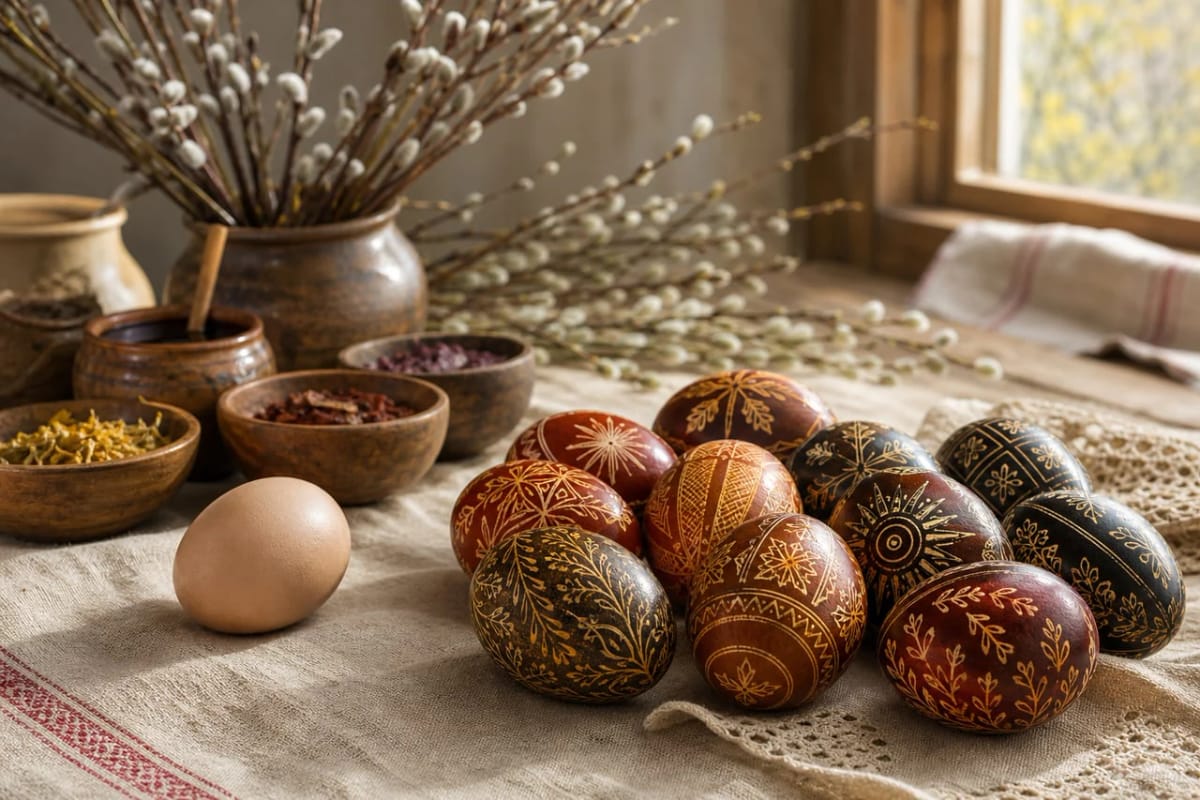
Lithuanian margučiai are often decorated with sunburst motifs, small stars, plant, geometric, and life patterns. Such signs should not be interpreted mechanically, but their general direction is clear: light, growth, order, and protection.
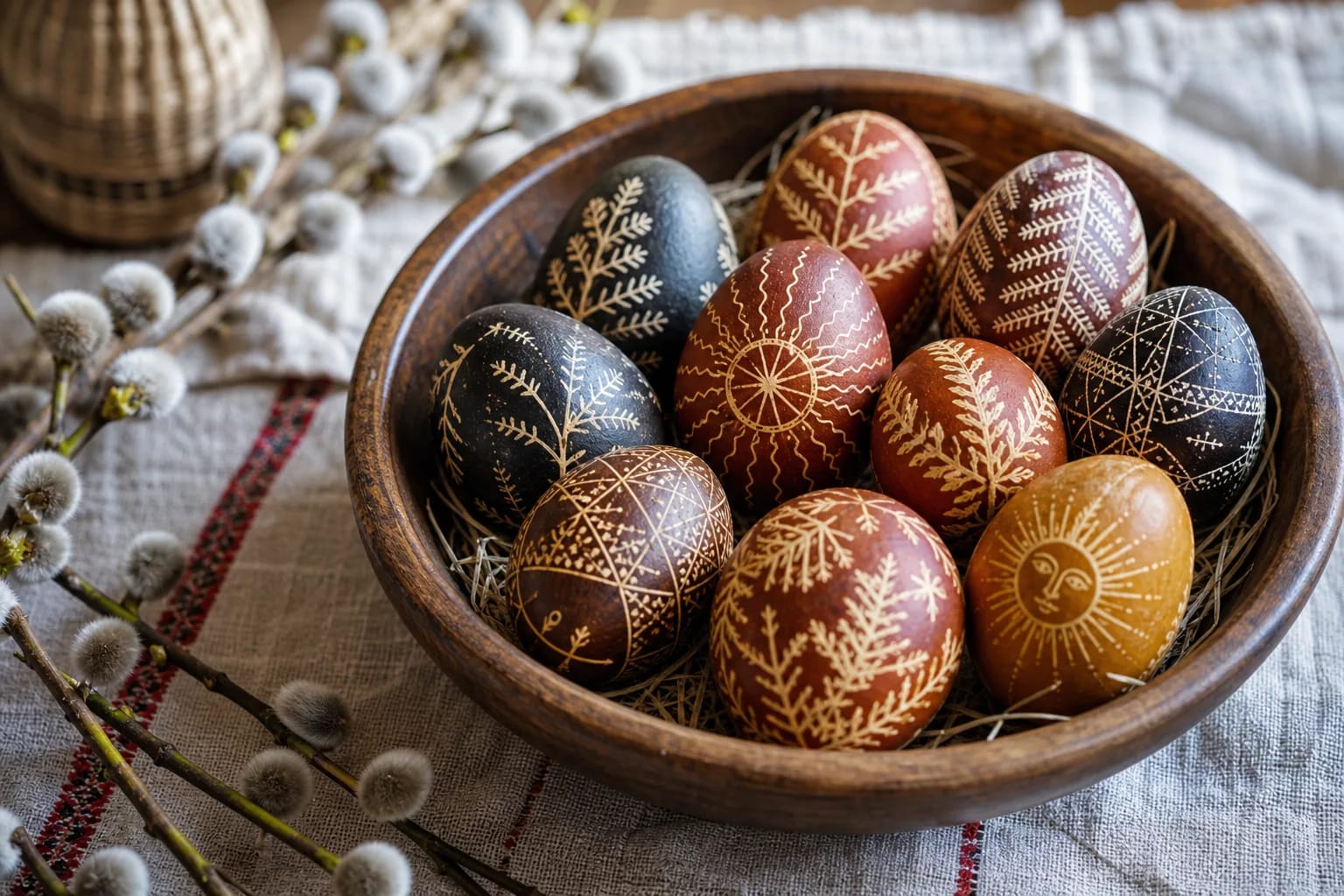
The two main decorating techniques are wax-resist decorating, where the pattern is drawn with hot wax before the egg is dyed, and scratching, where the pattern is scratched with a sharp tool from an already dyed egg. Both turn the egg into a small ornamented world where household handwork, waiting for spring, and old folk-art signs meet. In wider mythology, the egg is also connected with the origin of the world: in more than one people's cosmogony, the world hatches from an egg.
Margučiai also had ritual use: they were given to Easter singers and egg collectors, placed on relatives' graves, rolled, tapped, and sometimes the first margutis was kept as protection against misfortune. In this way the egg joins the worlds of the living and the dead through spring rebirth.
Tapping, rolling, and giving
Tapping and rolling margučiai are not only children's games. They test strength, luck, and the power of life in symbolic form. The rolling egg recalls moving spring and the renewal of the world.
A margutis given as a gift becomes a wish. Its meaning arises through relationship: it is decorated, carried, given, kept, or eaten within the festive circle.
How should the margutis be read today?
Today the margutis is often presented as a folk-art object. Its spring symbolism also includes enclosed life, a world marked by pattern, solar signs, and family rite.
The strongest interpretation joins Easter, the bird's egg, the sun wheel, ornament, and practical customs.