- Category
- House roof and protection symbols
- Domain
- Lėkiai, roof ridge, little horses, birds, household protection, wooden architecture, Lithuania Minor
- Source status
- well attested
lėkis, roof horse heads, little horses, little birds, ridge ornament
What are lėkiai?
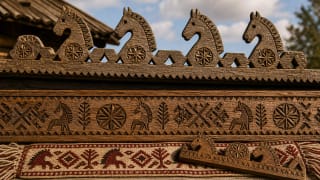
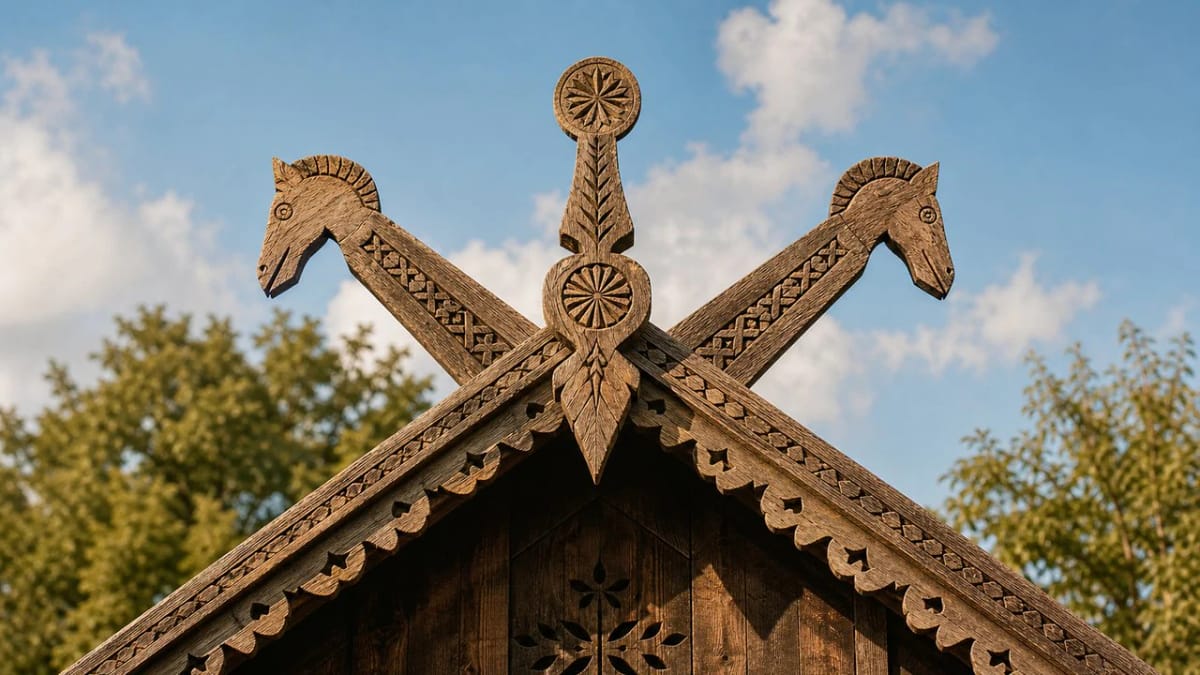
Lėkiai are ornaments on the roof ridge of a wooden house, fixed at the ends of a gabled roof, on a gable board, or at the ridge peak. The Encyclopedia of Lithuania notes that they were called little horses, little birds, horse heads, and by other names.
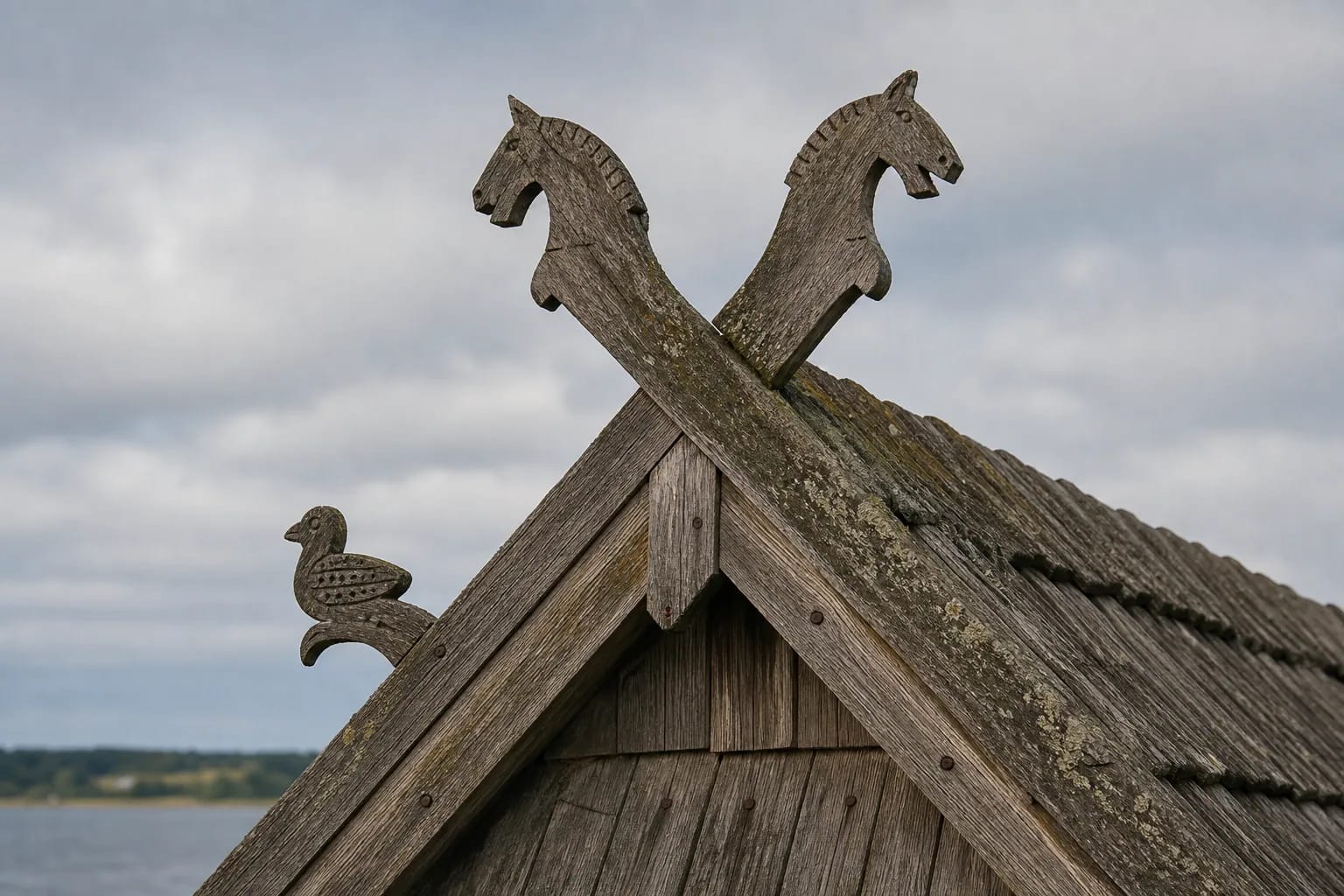
They are architectural ornament, but also a sign of the household boundary. They stand at the very top, where the house meets the sky.
Little horses, birds, and protection
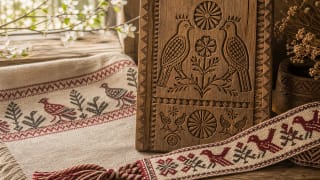
Lėkiai could take plant, bird, animal, human, or geometric forms. The earliest paired lėkiai were often made of symmetrical horns, horse heads, or bird-shaped boards.
The Encyclopedia of Lithuania explicitly mentions the belief that lėkiai in the shape of little horses or birds protected the home from evil. This is a very important source for symbolic interpretation.
Lithuania Minor and the coast
The most complex lėkiai were made in Lithuania Minor and along the Baltic coast. This connects the topic with lagoon-region wooden architecture, weathervanes, and krikštai.
For that reason the lėkiai page works well together with Curonian Lagoon weathervanes and the krikštai of Lithuania Minor.
The roof ridge as symbolic boundary
The ridge is the highest line of the house. When it is marked with horses or birds, the house gains a protective, heavenly, and living form.
Lėkiai are one of the best examples of a Lithuanian symbol that is not on paper but built into the architectural structure itself.