
Spring
Jurgines: St George's Day
April 23, St George's Day
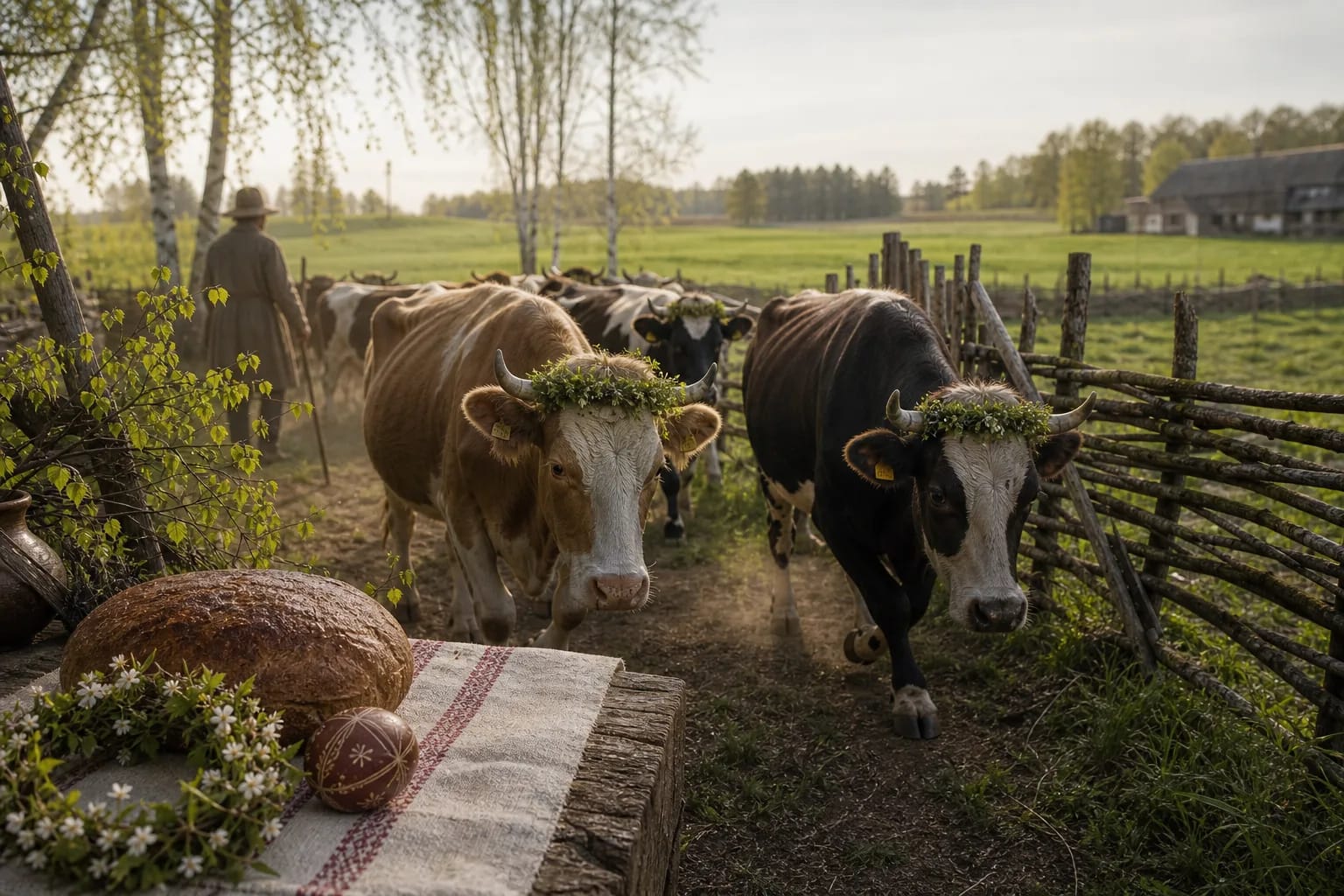
Jurgines is an important spring farmers' feast, observed on April 23, St George's Day. It marks the beginning of the grazing season, when animals are first driven into the fields and St George, guardian of earth and livestock, is imagined as unlocking the ground for spring.
Tradition context
- When
- April 23, St George's Day
- Season
- Spring
- Themes
- St George, first pasturing, guardian of the earth, shepherds, harvest, spring rites
Jurgines is the April 23 spring feast when St George, guardian of fields and livestock, symbolically unlocks the earth. Livestock are driven to pasture for the first time, protective rites are performed, and people ask for a good harvest.
What Are Jurgines and When Are They Celebrated?
Jurgines is a spring farmers' feast observed on April 23, St George's Day. It was one of the key days of the old village calendar, marking the start of the livestock grazing season and the arrival of active farm work. VLE notes that Jurgines, also called Jore, is known among many European peoples as the feast of first pasturing and spring work; on its morning the animals were driven through a bonfire or smoke, and most of the old Jurgines customs died out in the late 19th and early 20th centuries.
In Lithuanian tradition St George is considered guardian of earth, fields, livestock, horses, and shepherds. Jurgines is therefore not only a church saint's day but a deeply agrarian rite asking for protection and good harvest.
What Does Unlocking the Earth Mean?
One of the central ideas of Jurgines is the unlocking of the earth. Tradition says that St George unlocks the ground, releases plant juices, and wakes nature after winter. In some places, people did not start ploughing before Jurgines.
This image connects Jurgines with the broader spring-awakening tradition, including Jore. Unlocking the earth means that the real time of growth and work has begun, and nature opens its force to people and animals.
First Pasturing and Protection
The main Jurgines action is the first driving of animals to pasture. After winter in the byre, cows, horses, and other livestock are taken into the fields, beginning a new grazing season.
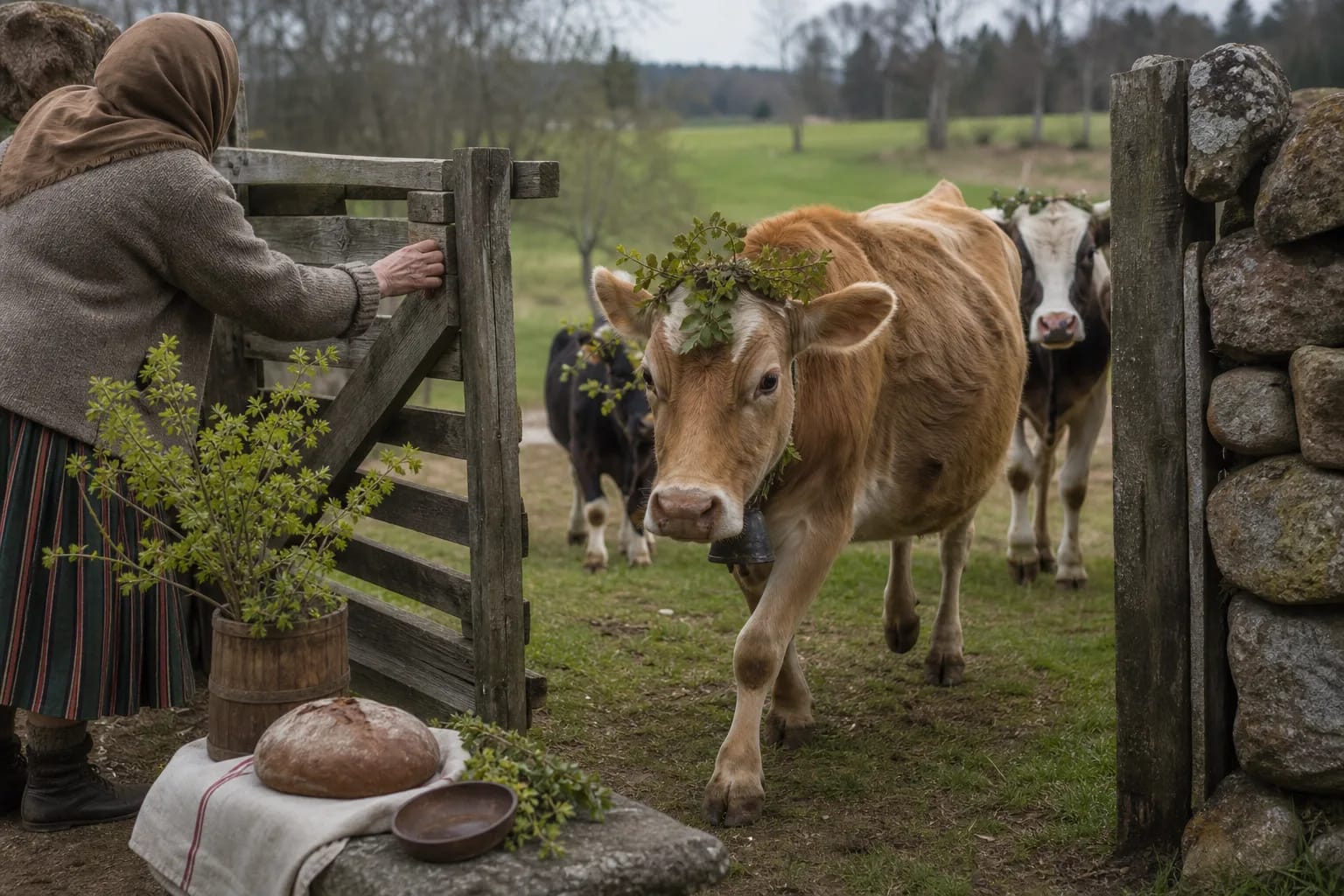
The moment was accompanied by protective actions: blessed twigs or herbs were tied to animals, grain was scattered through the gate, and holy water was sprinkled. These acts were meant to guard the herd from illness, the evil eye, and wolves all season.
Shepherd Customs and Ritual Food
Jurgines was important for shepherds. They were given bread and eggs so they would be hardworking and protect the animals well. The first grazing morning had its own customs and luck beliefs.
Ritual bread was baked and eggs were boiled for the day. As at Easter, the egg symbolized life and fertility. The food was shared with children, shepherds, and sometimes symbolically with the first animal driven out.
How Jurgines Relates to Jore
Jurgines and Jore are very close. Jurgines is the Christian St George's Day, while Jore is the older layer of spring greenery awakening. Both belong to the same late-April turning, when nature begins to grow again.
The two names emphasize different sides: Jurgines stresses farming, livestock, and the saintly guardian; Jore stresses greenery, natural force, and indigenous Baltic tradition. Together they show how Lithuanian spring feasts combine several cultural layers.
Marking Jurgines Today
Today Jurgines can be marked by noticing spring work and the awakening of nature: visit a farm, learn about pasturing, bake bread, or simply go into greening nature and observe first growth.
For a deeper experience, look for museum and community events that revive first-pasturing rites, hymns, and farming customs. They show how closely old Lithuanian culture was tied to earth and the yearly cycle.
Main Jurgines customs and meanings
Jurgines customs center on earth, livestock, and harvest. They show how the old Lithuanian village opened the agricultural and grazing season and asked nature for protection.
Driving livestock to pasture. On Jurgines animals are first driven into the fields after winter, opening the grazing season.
Unlocking the earth. It was believed that St George unlocks the earth, releases plant sap, and awakens nature; in some places ploughing did not begin before this day.
Protective rites for animals. Blessed Palm Sunday twigs or herbs were tied to animals, grain was scattered through gates, and holy water sprinkled as livestock passed out.
Ritual bread and eggs. Special bread was baked and eggs boiled. The egg was an important Jurgines food given to children and shepherds.
Honoring shepherds. Shepherds received bread and eggs so they would be diligent and protect the herd.
Circling farmstead and fields. The homestead or fields were ritually walked around, asking St George for protection from misfortune, illness, and wolves.
Hymns and prayers. In church and at home people sang hymns and prayed for a good harvest, healthy animals, and protection through the farming season.
Spring signs in nature. People believed grass snakes and other creatures awoke around Jurgines, making the day a clear sign of spring's arrival.
Where to experience it
Where to experience Jurgines in Lithuania?
Jurgines lives most strongly in village and farming culture. Today it can be encountered in museums, ethnocultural education, and communities that revive first-pasturing and earth-honoring rites.
Lithuanian Ethnography Museum in Rumsiskes
A strong place to see village farming settings, livestock customs, and spring work traditions connected with Jurgines.
Ethnoculture Centers
Cultural centers organize spring farming education, hymn evenings, and calendar-feast programs.
Rural Tourism and Farmsteads
Farmsteads can show the beginning of grazing, ritual bread baking, and the living rhythm of spring work.
Churches and Parishes
On St George's Day parishes hold services that traditionally ask protection for fields, livestock, and harvest.
Jurgines: songs, sutartines, and related pages
Jurgines extends the spring cycle and is closely tied to Jore. It also connects with Sekmines shepherd customs and songs of farming and pasturing.
Jurgines sources and useful pages
Jurgines: frequently asked questions
When are Jurgines celebrated?
Jurgines are celebrated on April 23, St George's Day. It is a spring farmers' feast marking the beginning of the grazing season.
Who is St George in Lithuanian tradition?
St George is regarded as guardian of earth, fields, livestock, horses, and shepherds. People believed he unlocks the earth and awakens spring nature.
What does unlocking the earth mean?
It means that St George releases the earth's force, plant sap, and spring growth. In some places ploughing did not begin before Jurgines.
Why are animals driven to pasture on Jurgines?
Livestock are first driven out after winter, opening the grazing season. The moment was accompanied by protective rites.
What rites protected the animals?
Blessed Palm Sunday twigs or herbs were tied to animals, grain scattered through gates, and holy water sprinkled to protect the herd from illness and wolves.
How are Jurgines connected with Jore?
Jurgines is the Christian St George's Day, while Jore is an older greenery-awakening layer. Both belong to the same late-April spring turning.
What food belongs to Jurgines?
Ritual bread was baked and eggs boiled. The egg symbolized life and fertility and was given to children and shepherds.
How can Jurgines be marked today?
Notice spring work, visit a farm, bake bread, or go into awakening nature. Museum and community events can show the older first-pasturing customs.