
Summer
Onines: St Anne's Day
July 26; in custom close to Jokubines on July 25
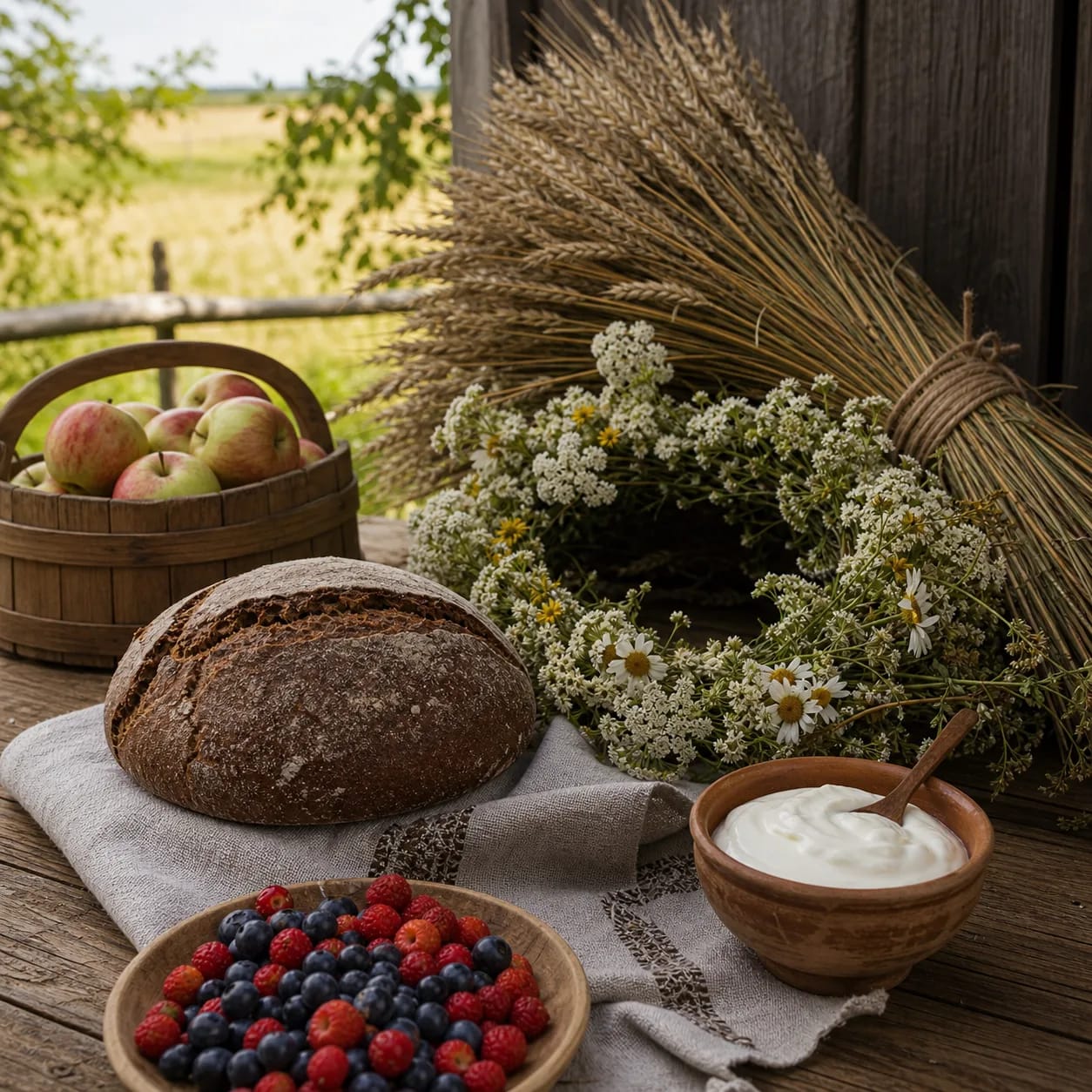
Onines is a feast of fresh bread and high summer. It stands beside Jokubines, when rye should already be cut, new bread appears on the table, cows give richer milk, berries are ripe, and fields move from one task to the next.
Tradition context
- When
- July 26; in custom close to Jokubines on July 25
- Season
- Summer
- Themes
- St Anne, Jokubines, end of rye harvest, new bread, cream, berries, first apples, cabbages, jievaras, harvest wreath, nuobaigos, pagynos
Onines on July 26 stands beside Jokubines in the Lithuanian calendar and marks high summer, new bread, and the end of rye harvest. It is linked with fresh rye bread, cream, berries, first apples, cabbage care, the field sign jievaras, nuobaigos in eastern Aukstaitija, and pagynos in Dzukija.
When Are Onines Celebrated?
Onines are celebrated on July 26, but in folk practice they are hard to separate from Jokubines on July 25. Klimka stresses that some Lithuanian localities gave greater weight to Jokubines, others to Onines, and both were linked with black rye bread.
This pairing matters. Jokubines emphasizes the boundary of cutting rye, while Onines emphasizes new bread, milk, berries, and summer plenty. Onines carries the focus here, but Jokubines remains essential to the feast's meaning.
New Bread, Cream, and Berries
Imbrasiene writes that by St Anne's feast there was fresh bread, berries were ripe, and fresh potatoes could be dug. In Dzukija people said St Anne was the lady of bread.
Klimka explains the fullness of Onines sayings: cows grazing aftermath gave richer milk, the bread was fresh, and berries were ripe. This is not a display of excess but relief after hard rye work.
The End of Rye Harvest
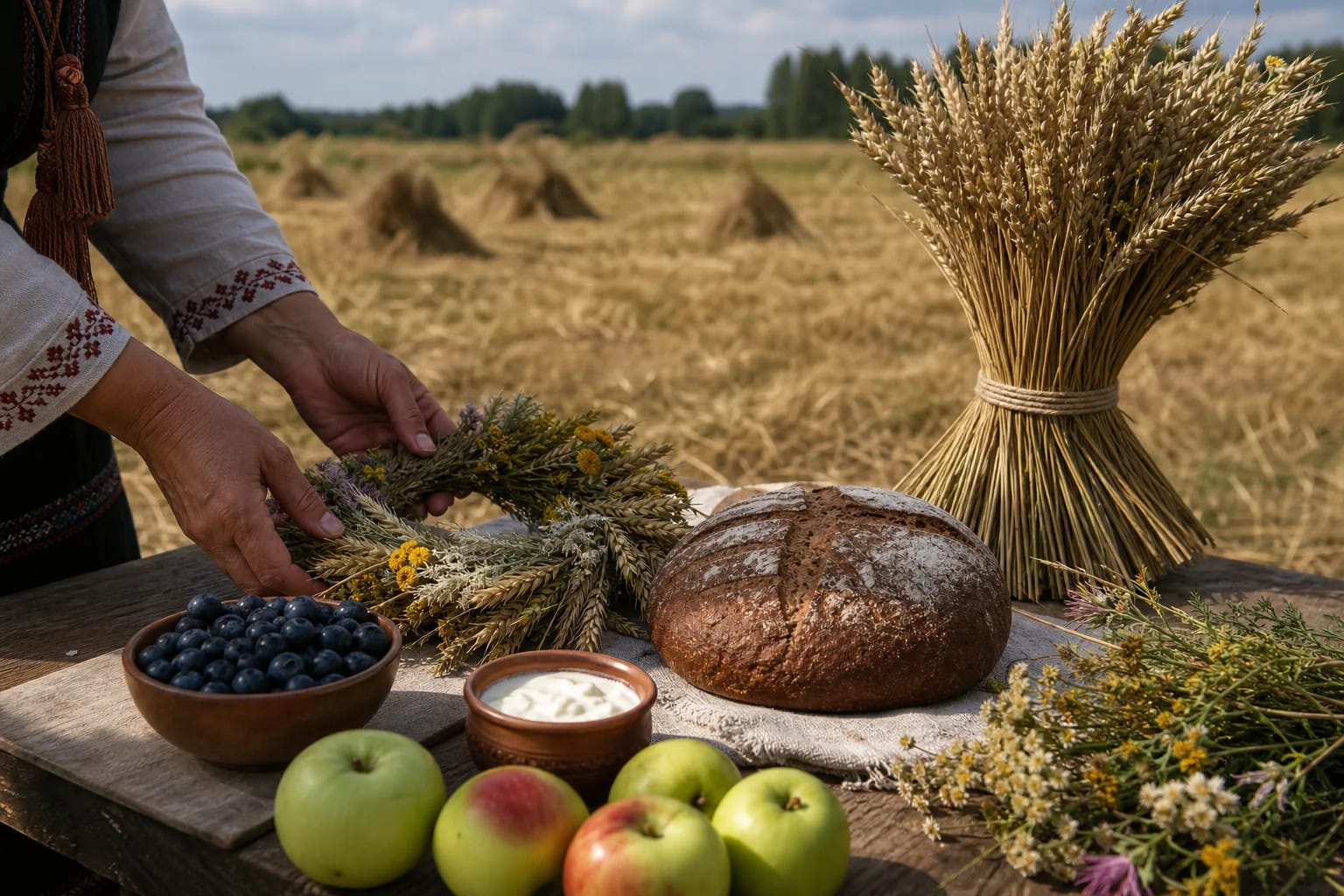
In Klimka's description, the usual rye-harvest time lasted from Skaplierine to Onines or Jokubines. When rye was cut with sickles or scythes, the work took about nine days and required a work party.
Delay was dangerous because overripe rye sheds grain. Jokubines and Onines therefore act as a calendar boundary reminding people that household bread depends on timely work.
Jievaras, Nuobaigos, and Pagynos
The end of rye harvest had regional names. In eastern Aukstaitija it was called nuobaigos, in Dzukija pagynos. These are not only names but different local accents of the ending rites.
The last handful of rye was left in the field and braided into jievaras, a plait-like sign whose top was bent toward the ground. Later, in some places, the harvest wreath became common, brought to the hosts and hung in the good corner.
Harvest Feast and Water
After the wreath was presented, merriment began. Helpers sat down to food, and young people could tease, play, and splash one another with water. Such play comes after work, not before it.
The harvest feast taught community order: rye must be cut together, and once it is finished, people give thanks together, share food, and acknowledge both the hosts and the helpers.
Apples, Cabbages, and Summer Signs
Onines already shows signs of the second half of summer. Klimka says St Anne “baptizes apples”: the first Alyviniai or Saldiniai apples could be tasted. In the garden, cabbages were inspected and their heads pressed by hand.
Nature signs also shift: the skylark grows quiet over the fields, frogs no longer croak as in spring, and grasshoppers begin evening chirping. These small details show Onines as summer maturity rather than its early joy.
Main Onines customs and meanings
Onines customs are tied to the end of rye harvest, new bread, summer abundance, and harvest-ending rites. This is not only a name-day meal: the field, bread oven, sheaf, wreath, cabbage bed, and shared work table all speak here.
July 26. Onines are observed on July 26, the day after Jokubines, with which they often form one rye-harvest threshold.
New bread. By Onines there was already fresh bread, so the feast was called a time of bread and fullness.
Bread with cream. In Dzukija and elsewhere sayings call St Anne the lady of bread, because new bread with cream could be eaten.
Summer abundance. By Onines berries were ripe, fresh potatoes could be dug, and the first summer apples began to fall.
Checking cabbages. Klimka mentions inspecting cabbages on Onines and pressing their heads with hands so they would form better.
Jievaras. The last handful of rye was left uncut, braided like a plait, bent to the earth, and pressed with a stone.
Regional names. Rye-harvest endings were called nuobaigos in eastern Aukstaitija and pagynos in Dzukija.
The harvest wreath. Later, helpers brought the hosts a wreath woven of rye ears and white flowers, hung in the good corner.
Where to experience it
Where to experience Onines in Lithuania?
Onines is experienced at church feasts, in the rye field, and in the home yard. It is best understood by seeing cut rye, shocks, the harvest wreath, and new bread on a linen tablecloth.
Onines Church Feasts and Fairs
In many Lithuanian churches, St Anne's feast was accompanied by fairs or large annual markets.
The Rye Field
Rye-harvest endings, jievaras, the harvest wreath, and shocks belong to the field where the work of bread is completed.
The Home Table
Onines meaning is clearest on the table: new rye bread, cream, berries, and first summer fruit.
The Garden
Cabbages are inspected and their heads pressed, showing how the feast joins rye field and everyday garden.
Onines: songs, sutartines, and related pages
Onines connects with bread, rye, weaving, and Zoline. The end of rye harvest leads toward ripening abundance, and new bread leads back to the center of the Lithuanian table.
Black Rye Bread
Onines new bread shows why the rye loaf is the center of the Lithuanian table.
Grain, Rye, and Seeds
Rye-harvest endings and jievaras belong to broader grain symbolism.
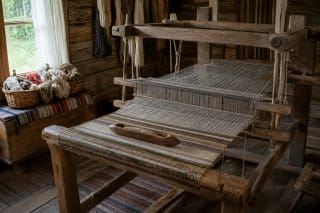
Weaving
After rye harvest, shearing and later textile work connect the feast with cloth-making.
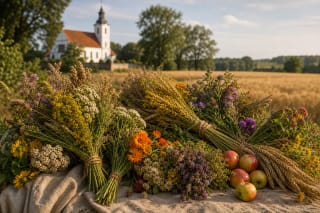
Zoline
A later ripening and harvest feast toward which Onines leads.
Onines sources and useful pages
Onines: frequently asked questions
When are Onines celebrated?
Onines are celebrated on July 26. In custom they are very close to Jokubines on July 25 because both relate to the end of rye harvest.
Why are Onines called a new-bread feast?
By this time new rye bread was available. Imbrasiene and Klimka connect Onines with fresh bread, cream, berries, and summer abundance.
How do Jokubines and Onines differ?
Jokubines more clearly marks the boundary of cutting rye, while Onines emphasizes new bread, milk, berries, and the fullness of harvest ending. Different localities could stress one or the other.
What is jievaras?
Jievaras is the last uncut handful of rye, braided like a plait, bent to the earth, and held down with a stone. It is a sign of harvest ending and the life cycle.
What regional names were used for rye-harvest ending?
In eastern Aukstaitija it was called nuobaigos, in Dzukija pagynos. These names show local forms of rye-harvest customs.
What was the harvest wreath for?
Helpers brought the hosts a wreath of rye ears and white flowers. It was hung in the good corner; in some places it was later blessed at Zoline and its grain used for seed.
What foods belong to Onines time?
The records mention new rye bread, cream, berries, fresh potatoes, and first summer apples. These are seasonal foods rather than one mandatory dish.
Why were cabbages checked on Onines?
Klimka mentions inspecting cabbages and pressing their heads by hand so they would form better, showing concern for the coming garden harvest.
Are Onines only a name day?
No. The name-day layer matters, but ethnographic tradition also treats Onines as a feast of rye-harvest ending, new bread, and summer abundance.