
Spring
Jore: Spring Greenery Festival
Usually the last weekend of April
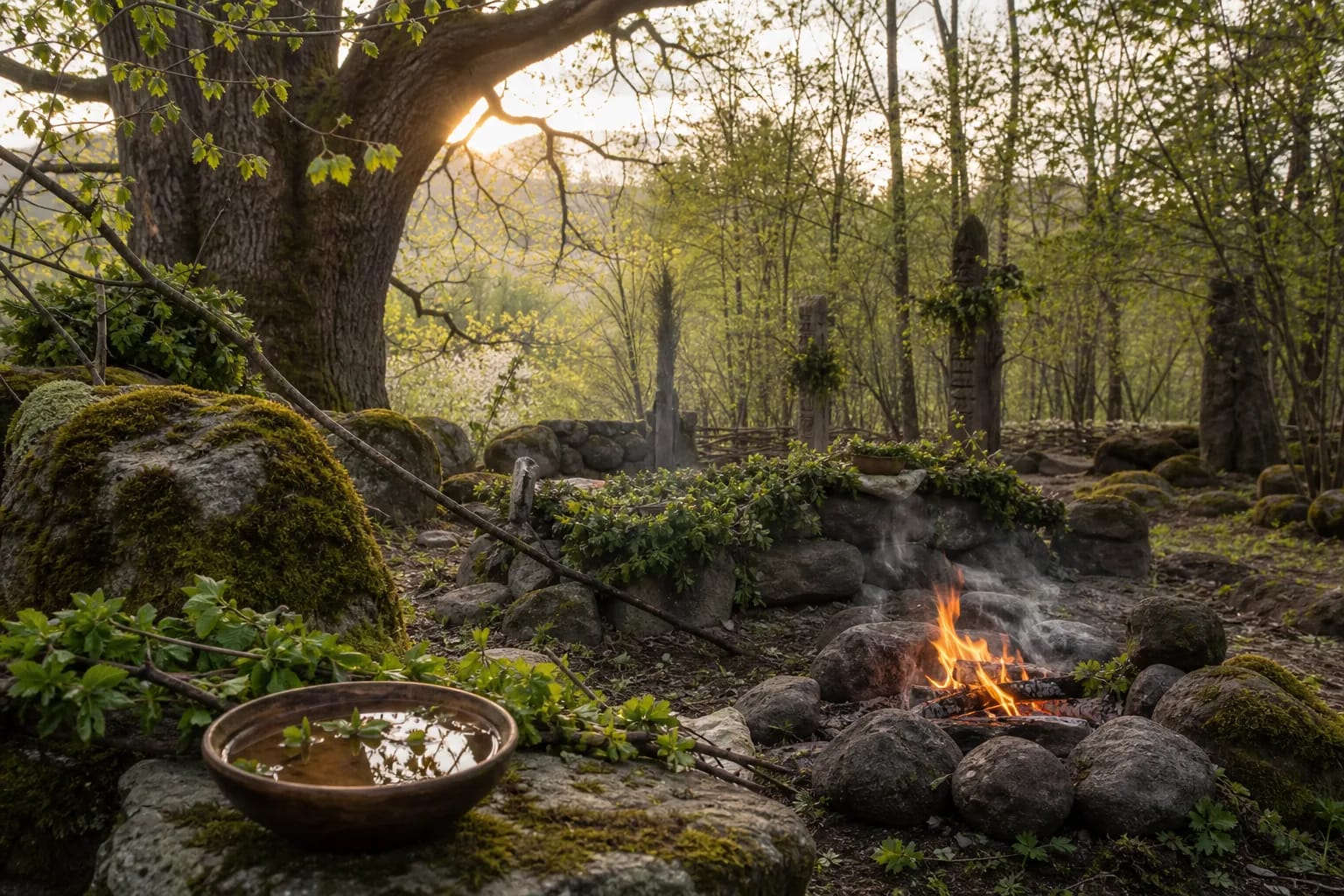
Jore is a feast of spring greenery and the awakening of nature. It is less widely known than Jonines, but it is important for the Lithuanian year cycle because it speaks about the first wave of life after winter.
Tradition context
- When
- Usually the last weekend of April
- Season
- Spring
- Themes
- Spring greenery, awakening nature, Perkunas, fire, water, ancestors, community
Jore is a Lithuanian spring greenery festival marking the awakening of nature, the first force of growth, the light of Perkunas, community gathering, and the continuity of living tradition.
What Is Jore in Lithuania?
Jore is a spring greenery festival marking the awakening of nature and the first wave of growth. The name is associated with greening, so Jore speaks about life force appearing again in earth, trees, and everyday human life after winter.
Jore is closely connected with Jurgines, St George's Day on April 23. In older tradition Jore is the force of greenery and spring awakening; in the Christian calendar the same time is marked by St George, protector of farmers and livestock. VLE calls Jore the old Baltic name for Jurgines, a feast of first pasturing and the beginning of spring work, celebrated by both Balts and Eastern Slavs already before Christianity and later identified with St George's Day.
It is not a broadly commercial holiday. Jore lives mainly in ethnocultural, folklore, and indigenous Baltic-tradition communities. For readers seeking more than popular dates, it offers a deeper understanding of the year cycle.
When Does Jore Take Place?
Jore is most often celebrated on the last weekend of April, when spring greenery is clearly visible but summer has not begun. Buds open, the earth warms, and people spend more time outdoors again.
Unlike Jonines, Jore does not have one date everyone recognizes automatically. The state of nature and the community's decision matter more. Event dates may vary, but the meaning remains the same: greeting the return of life.
Jore in Kulionys and Romuva Communities
The clearest contemporary Jore tradition is connected with Kulionys in the Moletai district. Programs mention decorating the ritual place with first greenery, rites at Perkunas' shrine, chants, sutartines, bonfires, craft presentations, lectures, shared food, and a procession to the hillfort.
Kulionys Jore is not only a concert. It is a multi-part experience in which the community prepares the space, walks to the ritual place, remembers ancestors, offers to the fire, chants, dances, tastes stew, and greets the spring turning.
First Greenery, Fire, Water, and Perkunas' Light
First greenery is the main sign of Jore. Branches, leaves, buds, and herbs show that life returns visibly, not abstractly. In Jore it matters not only to talk about spring but to touch, carry, decorate, and observe it.
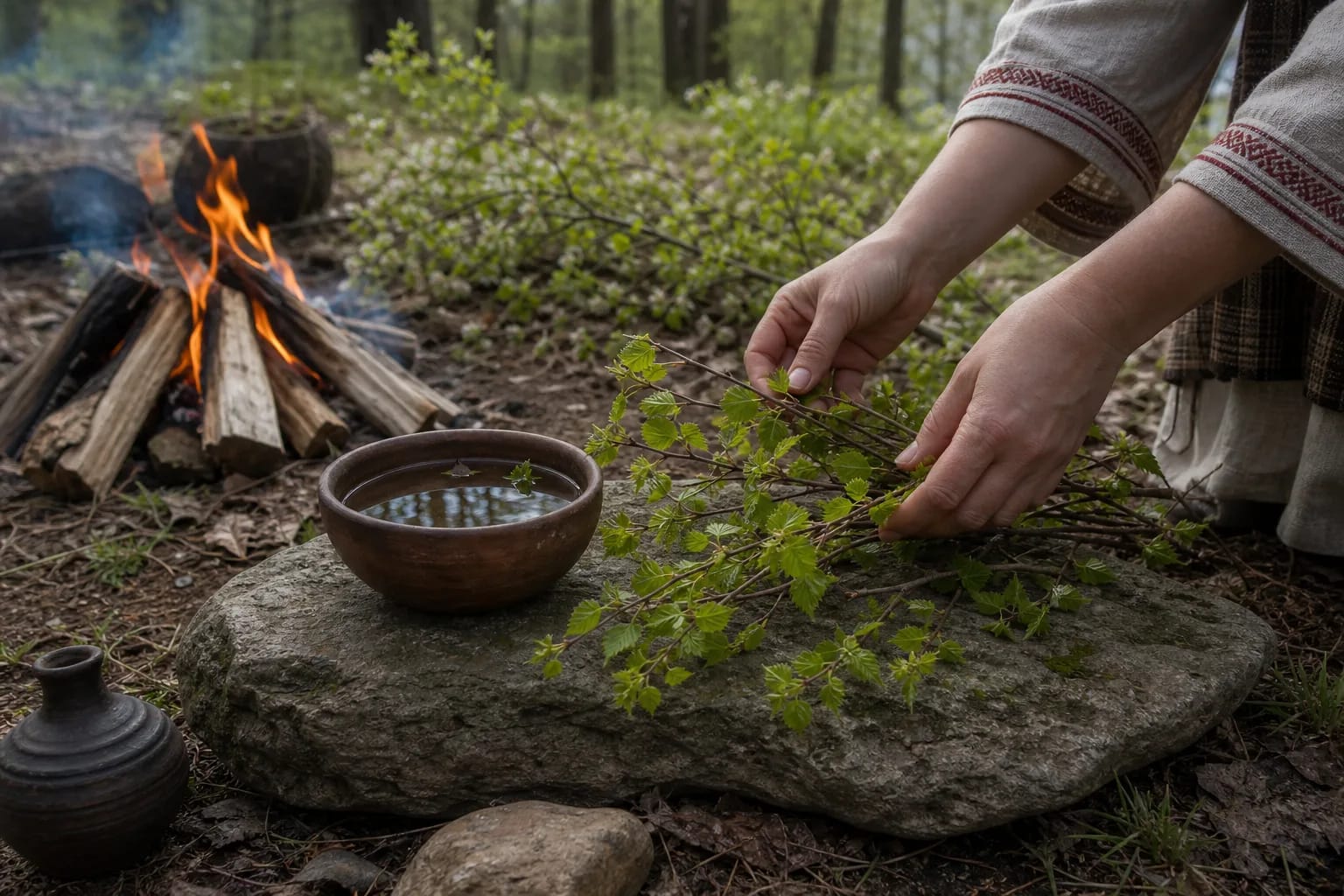
Fire in Jore is linked with light and the power of Perkunas. Water, stone, and earth complete the image because the feast speaks about renewal in all nature. This makes Jore a good way to explain Baltic worldview simply and vividly.
How Jore Differs from Easter, Rasos, and Jonines
Easter is more often associated with a combination of family, Christian tradition, and spring symbols. Rasos and Jonines mark the fullness of the summer solstice. Jore comes earlier: it speaks not of summer's peak but of the first burst of green.
Because of this place in the year, Jore can become a bridge between spring songs, nature observation, ethnocultural events, and later summer feasts. It shows that Lithuanian traditions are not isolated dates but a cycle.
Marking Jore Away from Kulionys
Jore can be marked simply: go to a forest or field, notice first greenery, bring home a branch, sing a spring song, light a candle, prepare shared food, and consciously greet the new time of growth.
Avoid making it feel artificial. Jore is strongest when the actions are real: seeing a bud, hearing a bird, touching the earth, meeting people, and giving thanks for returning life.
Main Jore customs and meanings
Jore customs are connected with first greenery, fire, water, the light of Perkunas, ancestor memory, and the community's return to nature. The clearest contemporary center of Jore is Kulionys in the Moletai district.
Decorating the ritual place with first greenery. Green branches, buds, and herbs mark the return of spring force.
Fire rites. Fire is tied to light, the power of Perkunas, the community center, and the start of a new cycle.
Honoring water, stone, and earth. Jore stresses the relationship of all parts of nature, not only one symbol.
A festive procession and communal walk to the ritual place. The procession lets people experience the feast as a crossing into another state.
Chants, sutartines, circle dances, and games. Voice and movement embody the rhythm of spring.
Ancestor remembrance. Jore speaks not only about plants but about a living bond with those who carried the tradition before.
Festive stew, bread, gira, or shared food. Food becomes a sign of fellowship and sharing.
The greeting “Gyvo Zalio.” It expresses the Jore mood: life, greenery, and growth.
Where to experience it
Where to experience Jore in Lithuania?
Jore is not as mass-oriented as Jonines, so it is best found where the tradition is deliberately cultivated: Kulionys, museum spaces, Romuva events, and ethnocultural communities.
Kulionys, Moletai District
The most important contemporary Jore place, connected with Moletai museum spaces, the observatory of heavenly bodies, the hillfort, and Romuva community.
Ethnoculture Centers
Look for workshops, lectures, spring-song evenings, and programs on greenery and calendar feasts.
Romuva and Folklore Communities
Jore is often cultivated by people for whom indigenous culture, Baltic worldview, ritual, and communal chanting matter.
Nature Near Home
If there is no event, Jore can be experienced through a simple walk in nature, first greenery, song, and a deliberate greeting to spring.
Jore: songs, sutartines, and related pages
Jore naturally connects with spring songs, sutartines, greenery imagery, and communal chanting. It helps reveal the broader field of spring traditions.
Jore sources and useful pages
Jore: frequently asked questions
What is Jore?
Jore is a Lithuanian spring greenery festival marking the awakening of nature, the first force of growth, and the community's return outdoors after winter.
When is Jore celebrated in Lithuania?
Jore is most often celebrated on the last weekend of April, though the exact date may vary by event, community, and the state of nature.
Where is the best-known Jore celebration?
The best-known contemporary Jore tradition is connected with Kulionys in the Moletai district, museum spaces, the hillfort, and the Romuva community.
What are the main Jore customs?
Important customs include honoring first greenery, decorating the ritual place, fire rites, chants, sutartines, procession, ancestor memory, shared food, and spring greetings.
What does the Jore greeting “Gyvo Zalio” mean?
It expresses the essence of Jore: life, greenness, growth, renewal, and a person's bond with spring force.
Is Jore a pagan festival?
Jore is connected with indigenous Baltic tradition and Romuva practice, but today it can also be understood more broadly as an ethnocultural festival of spring greenery and nature awakening.
How does Jore differ from Jonines?
Jore is celebrated in spring and speaks about first greenery and the return of life. Jonines is celebrated at the summer solstice and marks the fullness of summer.
Are Jore and Jurgines the same?
They are very close. Jurgines is St George's Day on April 23, linked with first pasturing and spring work. Jore is the older greenery layer of the same spring turning, so the names are related.
How can Jore be marked at home or with family?
Go into nature, watch buds, bring home greenery, sing a spring song, light a candle, prepare shared food, and greet the new growing season.