
Autumn
Velines: All Souls in Lithuania
November 1-2
Velines is the remembrance of the dead, observed on November 2, immediately after All Saints' Day on November 1. During these days Lithuanians visit graves, light candles, and remember the departed in silence, making the beginning of November a time of recollection.
Tradition context
- When
- November 1-2
- Season
- Autumn
- Themes
- Honoring the dead, All Saints' Day, candles, visiting graves, remembrance of souls
Velines is the Lithuanian remembrance of the dead observed around November 1-2. On All Saints' Day and Velines, people visit family graves, light candles, and quietly remember those who have departed.
What Is Velines and When Is It Observed?
Velines is the day of honoring the dead, observed on November 2. It is prepared for during All Saints' Day on November 1, so in practice the beginning of November becomes one time of remembrance.
On these days Lithuanians visit graves, light candles, and remember the departed. Velines is one of the quietest and most serious feasts of the year. VLE notes that the older Lithuanian remembrance feast was Ilges in late October and early November; after Christianization it became known as Velines. Communal prayer for the dead right after All Saints was introduced in 998 by Odilo, the Benedictine abbot of Cluny, and spread throughout the Catholic Church in the 13th century.
All Saints' Day and Velines
All Saints' Day on November 1 is a church feast honoring all saints, known and unknown. In Lithuania it is a public holiday.
Velines on November 2 is dedicated to all the dead: prayers are said for relatives and their graves are visited. In practice the two days merge into one remembrance period, and cemeteries are already visited on the evening of November 1.
Why Candles Are Lit
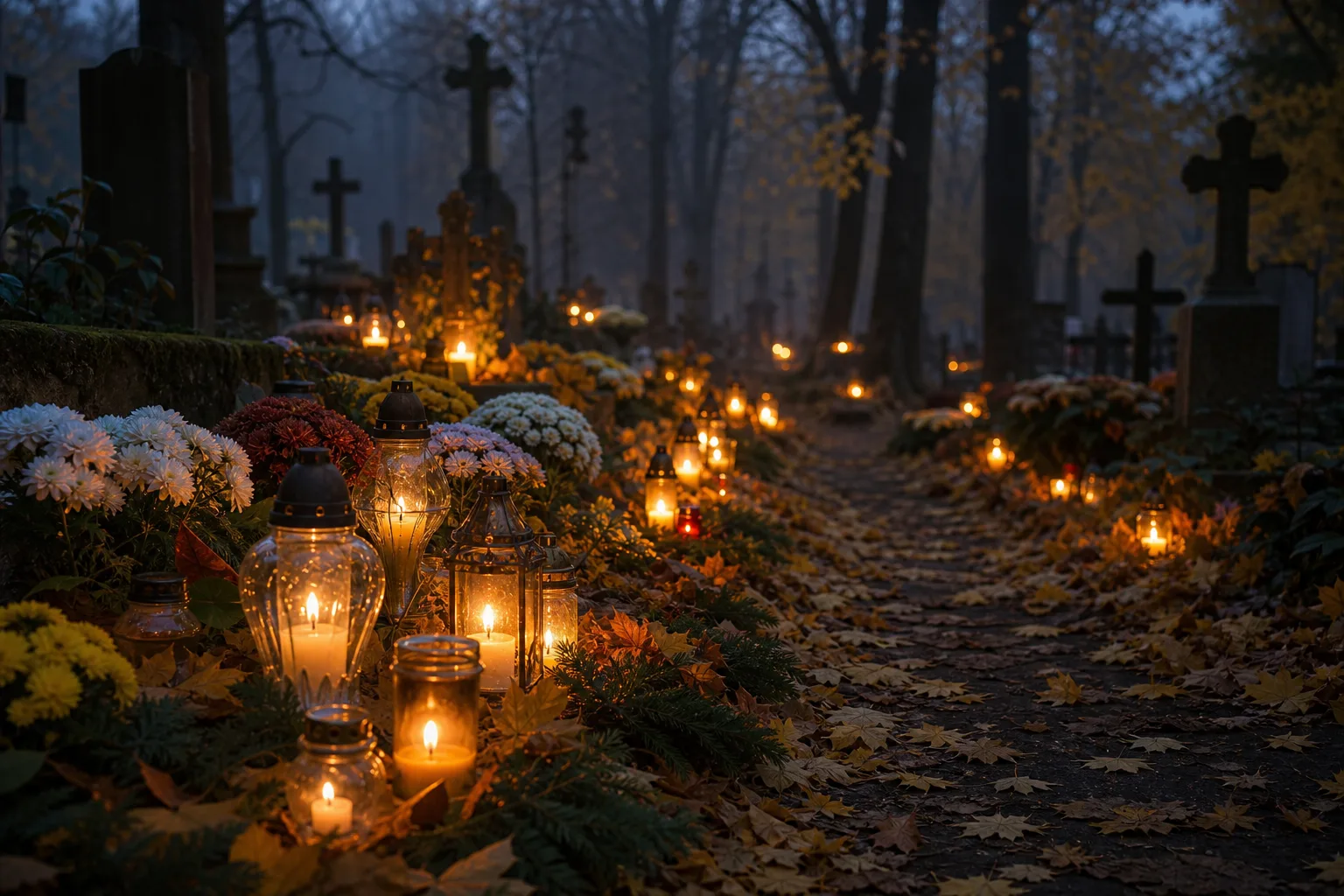
The candle is the main symbol of Velines. Its flame means memory, light, and hope. People believed fire helps the souls and shows that the departed are not forgotten.
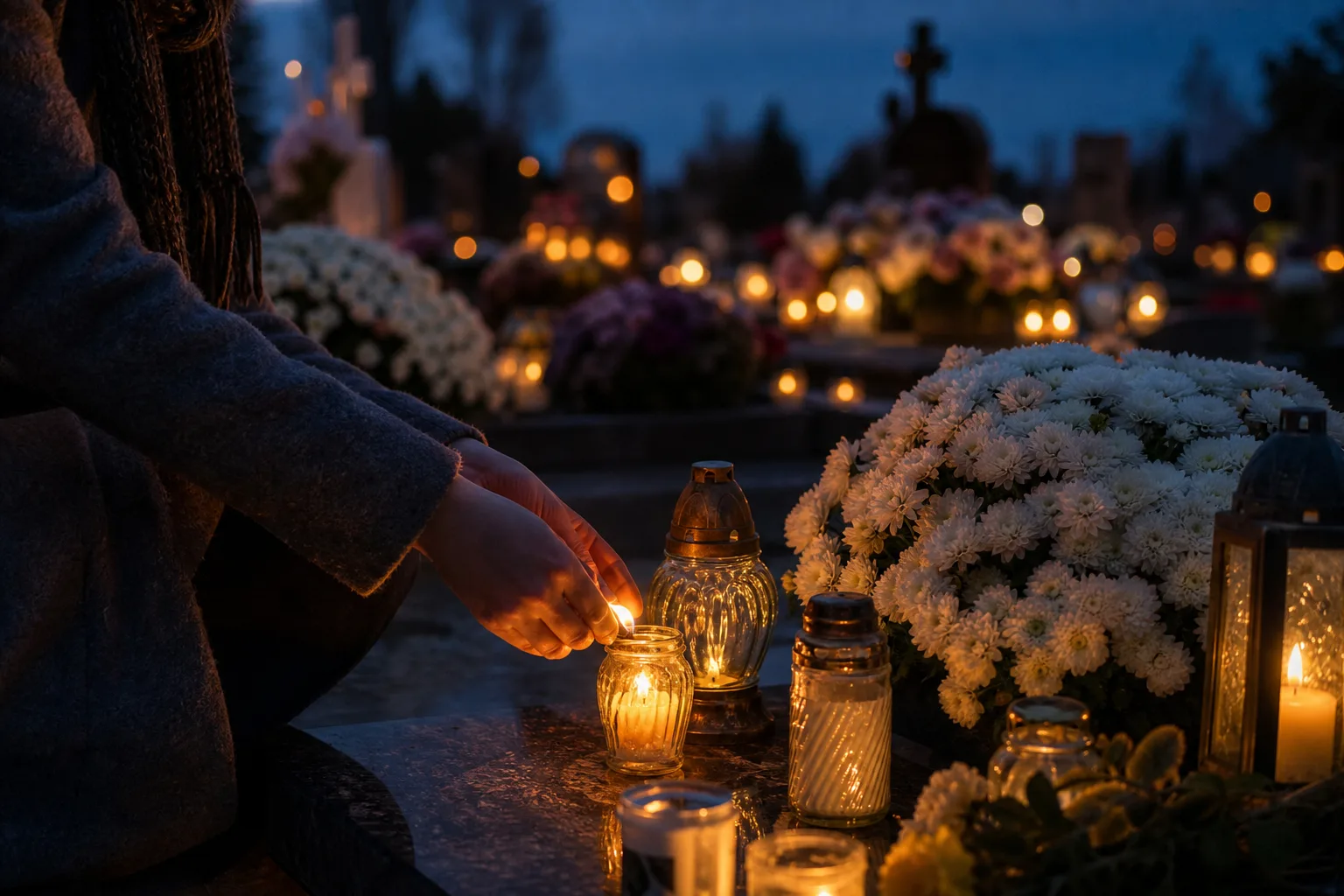
Candlelit cemeteries create a powerful and moving sight. Candles are lit not only on relatives' graves but also at abandoned and nameless graves so that no dead person remains without remembrance.
Older Remembrance of Souls
Velines has deep pre-Christian roots. In older Lithuanian belief, souls were thought to visit the living in autumn, so ancestors needed to be honored and fed. This was part of the old time of souls.
From this came customs of leaving food for souls or an empty place at the table. Later these practices merged with Christian remembrance, so Velines carries both older and church layers.
Velines as Family Memory
Velines is not only grief but also memory and family continuity. At graves or at home, people remember departed relatives and tell stories about their lives, passing memory to younger generations.
Such remembrance strengthens the bond between generations. Velines reminds people that ancestors remain part of family history and that respect for the dead is an important Lithuanian cultural value.
Marking Velines Today
Velines can be marked simply by visiting family graves, cleaning them, and lighting a candle. If a grave is far away, a candle can be lit at home or at a memorial place while remembering the departed in silence.
It is also a time to meet family and share memories. Velines invites people to pause in the tense end of the year, honor ancestors, and feel the link between past and present.
Main Velines customs and meanings
Velines customs center on memory, light, and the bond with ancestors. They show how Lithuanians honor the dead and how older remembrance of souls merged with Christian practice.
Visiting and cleaning graves. Before Velines, family graves are tidied and decorated with flowers and wreaths; in early November relatives' graves are visited across Lithuania.
Lighting candles. Candles are lit on graves. Flame symbolizes memory, light, and hope, and candlelit cemeteries are the strongest image of Velines.
Prayer for the dead. People attend church, Masses are held, and families remember the departed by name and in silence.
Older feeding of souls. People once believed that souls visited the living at Velines, so food such as bread, porridge, or drink was left for them.
An empty place at the table. In villages a place with a plate could be left at dinner for the souls of the dead, showing ancestors remained part of the family.
Words and stories of memory. Families remember the departed and tell stories about their lives, passing memory to younger generations.
A time of quiet. Velines is a serious period for thinking about life, death, family, and continuity.
Honoring soldiers and historic graves. People also visit common, military, and historic cemeteries, lighting candles at abandoned or nameless graves so no one is forgotten.
Where to experience it
Where to experience Velines in Lithuania?
Velines is observed in cemeteries and churches throughout Lithuania. Candlelit cemeteries create the strongest image, with a special atmosphere in historic and military burial grounds.
Family Cemeteries
The most important Velines place is the cemetery where relatives' graves are cleaned, decorated, and lit with candles.
Historic and Military Cemeteries
Historic and military cemeteries have a special atmosphere on Velines, and candles are lit at common and nameless graves.
Churches Across Lithuania
Masses for the dead are held in churches, joining grave visiting with prayer.
Homes and Memorial Places
Velines can also be marked at home by lighting a candle, remembering the departed, and sharing their stories.
Velines sources and useful pages
Velines: frequently asked questions
When is Velines observed?
Velines is observed on November 2, immediately after All Saints' Day on November 1. In practice graves are already visited on the evening of November 1.
How do All Saints' Day and Velines differ?
All Saints' Day honors all saints and is a public holiday. Velines is dedicated to all the dead.
What does the Velines candle symbolize?
The candle flame means memory, light, and hope. It shows that the departed are not forgotten.
What are older Velines customs?
Older belief held that souls visit the living in autumn. Food was left for them, and an empty place might be kept at dinner.
Why are graves visited at Velines?
Grave visiting is the main custom. Graves are cleaned, decorated with flowers and wreaths, and candles are lit to honor the dead.
Is Velines pagan or Christian?
It has deep pre-Christian roots in remembrance of souls, later merging with Christian All Souls' Day.
How can Velines be marked today?
Visit family graves, clean them, and light a candle. If the grave is far away, light a candle at home and remember the departed in silence.