- When / context
- After a child's birth, as the name is established in the family, civil register, and—where relevant—religious community
- Tradition area
- Life cycle
- Themes
- Vardynos, naming a child, old Lithuanian names, compound names, baptismal names, family memory, name days, national revival, Soviet civil ritual
The word vardynos covers several very different phenomena: a poorly documented pre-Christian past, the long history of names associated with baptism and family memory, and a civil ceremony created by Soviet authorities in the twentieth century. Christianity, multilingual administrations, the national revival, literature, migration, and individual families all reshaped Lithuania's stock of personal names. A name is therefore best understood not as a code that determines fate but as a meeting point of language, belief, kinship, politics, and personal identity.
What Does Vardynos Actually Mean?
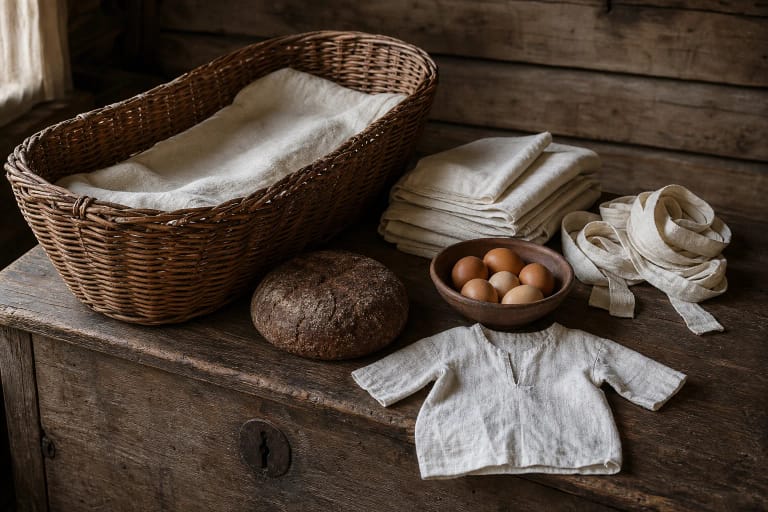
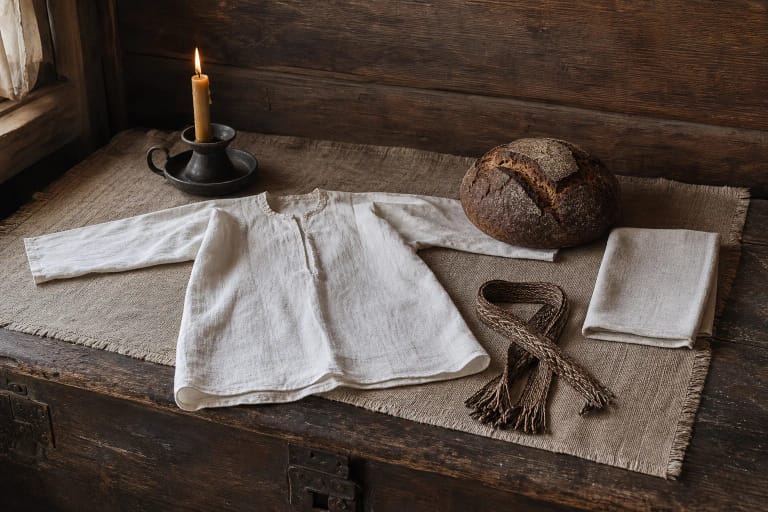
In its broadest sense, vardynos is a celebration at which a baby receives a name. Lithuanian history, however, applies the term to different events. The Universal Lithuanian Encyclopedia discusses scholarly attempts to infer possible pre-Christian actions from later written evidence and folk baptism customs. In the 1960s, the same word was adopted for something quite different: a civil ceremony designed by Soviet institutions to compete with church baptism. A family today may also use vardynos for a secular welcome it has created itself.
These three layers do not form one uninterrupted tradition. No participant left a detailed contemporary description of a pre-Christian Lithuanian naming ceremony. The Soviet event, by contrast, was scripted and documented, but its organizers deliberately reworked recognizable features of baptism celebrations. A present-day family ceremony can be deeply meaningful; it is simply more honest to call it contemporary creation than an exact reconstruction of a Baltic rite.
What Can Language Tell Us About Old Lithuanian Names?
Before Lithuania's Christianization in the late fourteenth and early fifteenth centuries, Lithuanians were generally identified by a single personal name. Linguists divide the old stock into compound names formed from two elements and single-element names or shortened forms. Mindaugas, Tautvydas, and Vaišnoras illustrate the compound pattern, while the Universal Lithuanian Encyclopedia lists Jaunutis, Laibenis, and Traidenis among single-element names. Historical documents preserve only part of the stock, often in the spelling of a foreign-language chancery, so reconstructing form and origin requires historical linguistics.
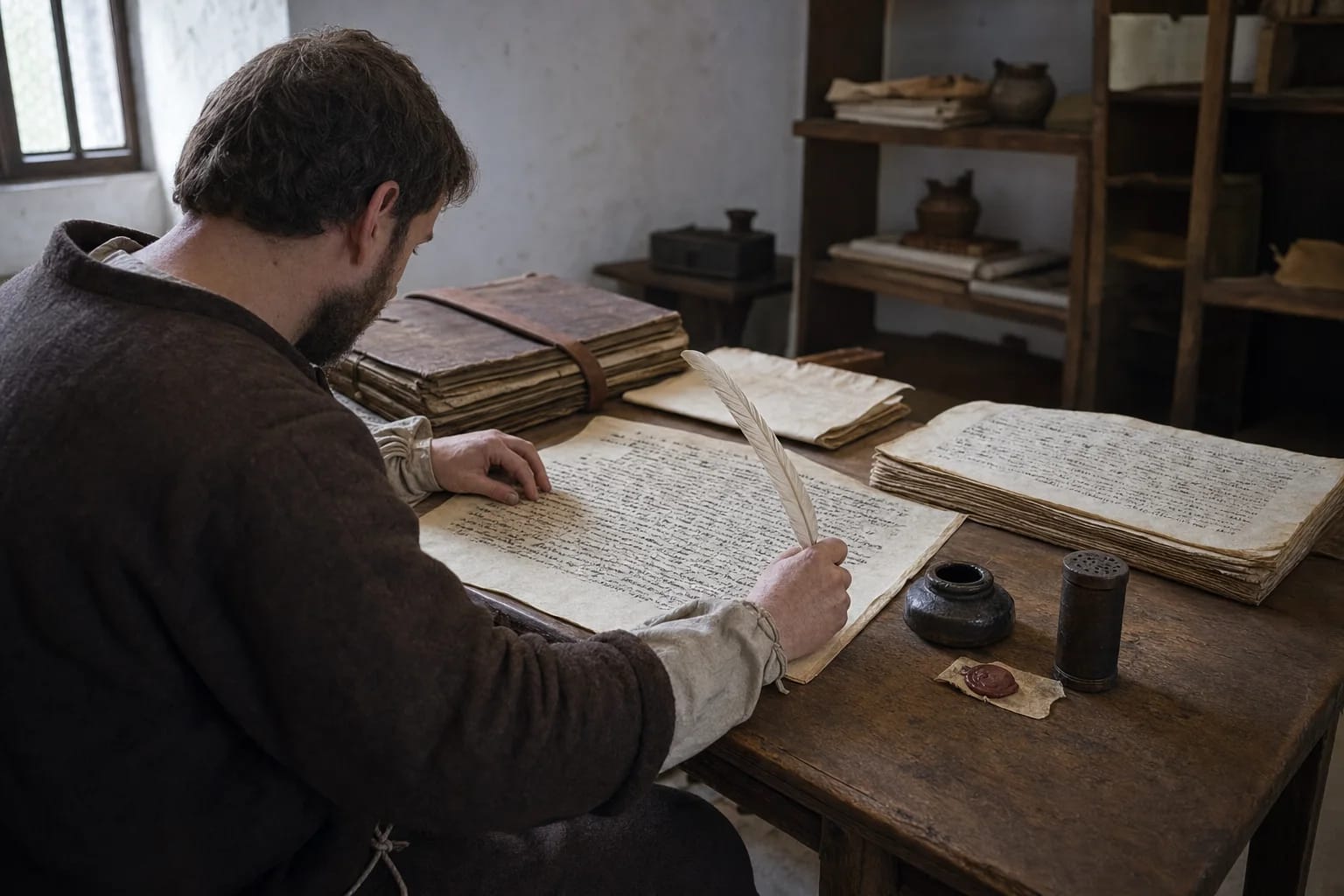
Popular writing often turns an old name into a compact blessing: each element is translated as though it were an unchanged modern word, and the result is presented as the bearer's destined character. The interpretation may sound attractive but need not be linguistically sound. Elements changed over centuries and had variants, while a name's first task was to identify a person. A reliable name dictionary can explain formation and origin; it cannot predict a child's personality or future.
The old personal name was not yet a surname in the modern sense. During the fifteenth and sixteenth centuries it was increasingly supplemented by patronymics, nicknames, descriptions of origin, and other identifiers. Some later became hereditary surnames, including formations with Lithuanian suffixes such as -aitis, -onis, -ūnas, and -ėnas, alongside forms used by non-Lithuanian chanceries. An ancient name may therefore survive inside a family surname without proving that the family consciously maintained one naming ritual throughout the intervening centuries.
How Did Christianization Change Lithuania's Names?
Christian names reached Lithuania before the state's official conversion, but they became the principal system of church naming after the late fourteenth and early fifteenth centuries. Saints' names of Hebrew, Greek, Latin, and Germanic origin often arrived through Polish, East Slavic, or German and developed local Lithuanian forms. Jonas, Jurgis, Povilas, Ona, and Marija are therefore part of Lithuanian cultural history even though their etymological origins are not Baltic.
The old stock did not vanish after a single decree. In early documents one person could appear under an inherited name and a baptismal name; over time the baptismal name settled into the first position of formal identification. The Universal Lithuanian Encyclopedia summarizes that Lithuanians were baptized with Christian names from the seventeenth through the nineteenth centuries. An everyday dialect form, a Latin, Polish, German, or Russian entry in a register, and the later standardized Lithuanian form could nevertheless differ.
Confession is an essential boundary. Roman Catholic, Evangelical Lutheran, Evangelical Reformed, and Orthodox calendars, church discipline, and administrative languages were not identical. Jewish, Karaim, and Tatar naming traditions are not regional variants of Catholic baptism customs at all. This page concentrates on the Lithuanian-language name stock and sources from the predominantly Catholic countryside; other Lithuanian communities deserve accounts grounded in their own records.
Who Chose a Child's Name?
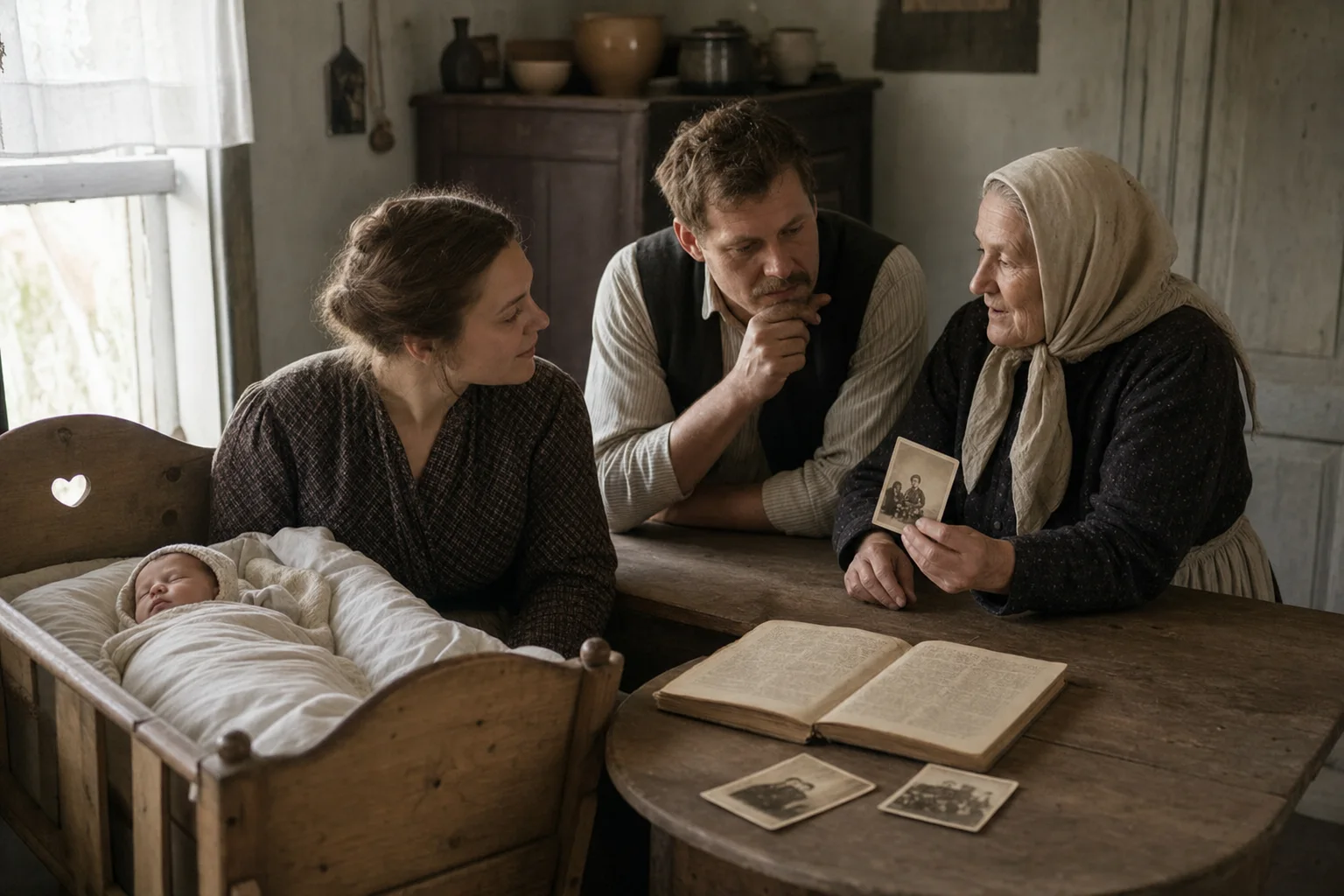
Accounts of the late nineteenth- and twentieth-century countryside usually place the decision within the family, but the motives varied. Stasys Yla's synthesis of family traditions records names inherited from a father or grandparent and choices associated with the saint commemorated around the child's birth. Elsewhere parents chose a name they simply liked, or considered suggestions from godparents or a priest. These are possible motives, not a rule followed for every Lithuanian child.
Baptismal registers show what was written in a particular place, though not always the conversation that led to the choice. Nerija Bartkutė's study of Skaistgiris parish found that old Lithuanian names and combinations with baptismal names became more visible alongside Christian names in 1940–1945. In 1995–2000, some children received a second church name that did not necessarily enter their civil documents. This is a valuable case study from one parish in the Joniškis area, not a national statistic.
A repeated name may preserve the memory of a deceased relative, while another family may avoid it and choose a fresh beginning. In one household repetition signaled respect; in another it recalled a painful fate. Such decisions often survive in family memory rather than an ethnographic map. The best evidence for an individual's naming story therefore combines the actual register entry with relatives' testimony instead of relying only on a generic list of 'Lithuanian customs.'
Two Names, an Everyday Name, and a Baptismal Name
A pair of names could accommodate several expectations: one might be national or selected by the family and the other Christian. Twentieth-century parish evidence includes Vytautas, Kęstutis, Algirdas, Birutė, and Aldona in combinations with baptismal names. Yet 'two names' can describe different situations: both recorded in the civil act, both entered in the parish book, or one official name and another used only in a religious setting.
Everyday speech also employed shortened, affectionate, and local dialect forms. They marked intimacy, age, or social relationship but were not necessarily separate official names. Written records are not transparent mirrors either: a priest or clerk could render the same name in a different language and according to another administration's conventions. Genealogists should therefore look for contextual equivalents such as Jonas, Jan, Joannes, or Ivan according to place, date, and confession before assuming that every spelling represents a different person.
The National Revival and Newly Lithuanian Names
Lithuania's name stock expanded rapidly in the twentieth century. Historical rulers' and other old names—including Vytautas, Algirdas, Kęstutis, and Vytenis—returned to wider use. Names connected with literature and the developing national story spread alongside them. The Universal Lithuanian Encyclopedia distinguishes newer mythological names such as Jūratė, Milda, and Laima; literary names such as Gražina and Šarūnas; names derived from places or ethnic terms such as Neringa, Nemunas, and Aistė; and names formed from common words, including Audrius, Miglė, and Svajonė.
That classification corrects a persistent misconception: a Lithuanian-sounding name is not automatically attested in pre-Christian Lithuania. Some names are old, some have been reconstructed from historical forms, and others originated in literature or modern name formation. Newness does not make a name less valuable. Jūratė and Neringa have become recognizable parts of Lithuanian culture over several generations, but their histories are more interesting when told accurately.
National and religious choices did not always compete. A family could give an old Lithuanian name together with a Christian baptismal name, combining national identity and confession. Others chose an international name, a local shortened form, or a new construction. Urbanization, education, print culture, literature, politics, and individual taste all shaped fashions, so a simple division between 'genuinely Lithuanian' and 'foreign' names obscures the history.
A Name Day Is Not a Naming Ceremony
Vardinės, varduvės, or a name day commemorates the saint associated with a person's name. The Universal Lithuanian Encyclopedia notes that the practice became widespread in Lithuanian villages in the late nineteenth and first half of the twentieth century. People bearing common Christian names such as Jonas, Ona, Petras, Povilas, Antanas, and Juozas were especially likely to be celebrated, with hospitality offered on the day or the nearest Sunday. Jonas's name day merged closely with the midsummer festival, but not every name day became a village-wide occasion.
Vardynos gives a baby a name; vardinės recurs annually after the person has been named. As birthdays became the principal personal celebration, name days receded in many families, though greetings remain familiar. Calendars may assign more than one date to the same name, making family habit and local custom more useful than a claim that one date is universally mandatory.
Soviet Vardynos: An Invented Alternative to Baptism
In the early 1960s, Soviet authorities began introducing ceremonial civil vardynos in Lithuania. They were staged in cultural centers, local council offices, or civil registry offices, often for several families at once. Parents, babies, grandparents, and ceremonial 'name parents' took part; a local official presented birth certificates, while workplaces might provide gifts. The terminology and selected actions borrowed recognizable features of baptism celebrations, but religious content was replaced with civic and ideological language.
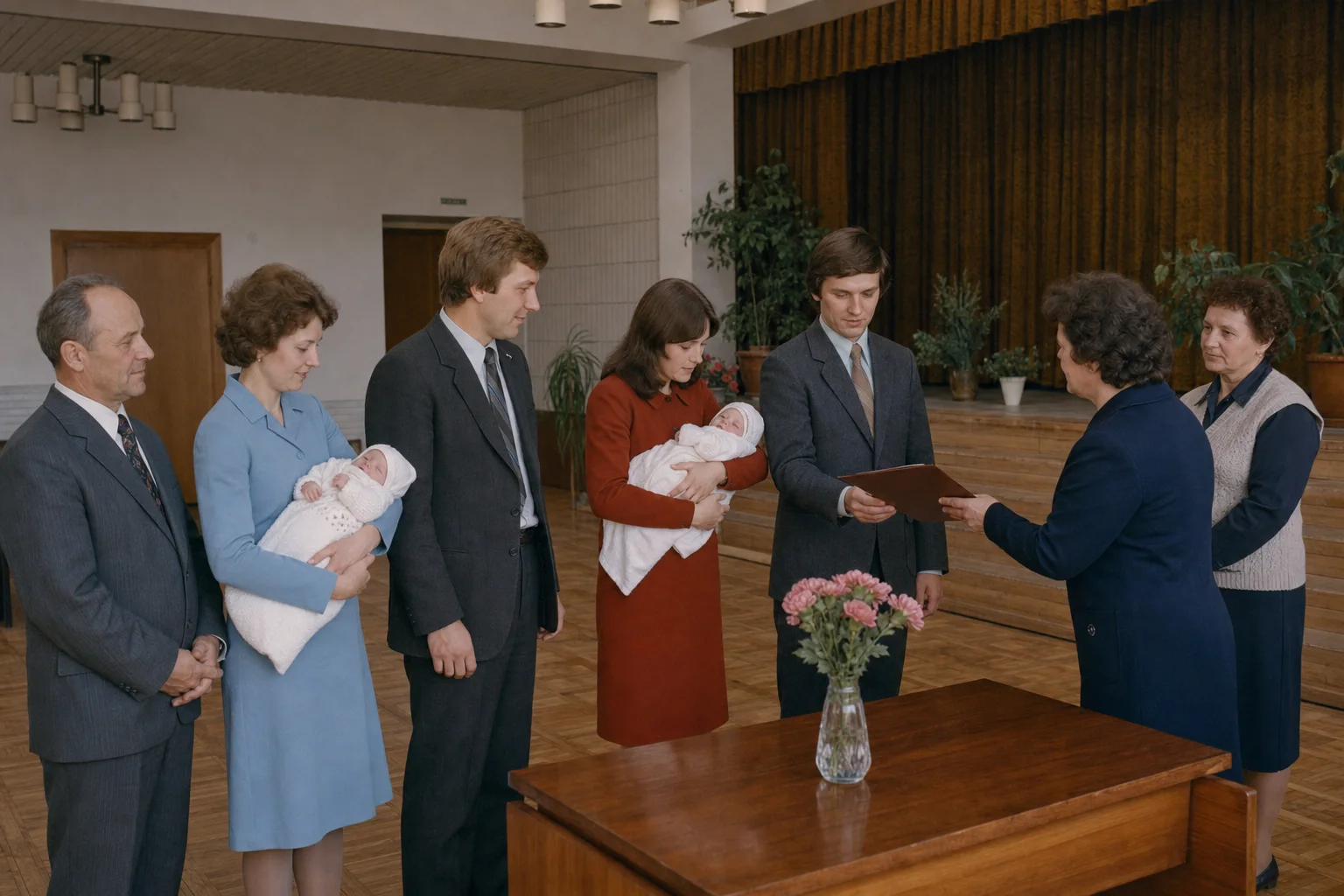
Ethnologist Rasa Paukštytė-Šaknienė stresses that ceremonial vardynos was not the same act as the legal registration of a birth. State institutions initiated the event, which remained a formality for many families; some children were baptized privately as well. Her study records cases from the 1970s in which parents did not receive documents without participating in the ceremony. That evidence points to pressure by an authoritarian state, not the voluntary adoption of a new national tradition.
The ceremony was neither implemented identically across Lithuania nor experienced by every household. Local officials, employers, place of residence, and the family's religious commitment affected whether the event was elaborate, perfunctory, or effectively compulsory. The institutional form faded rapidly after the restoration of independence. A family photograph showing ribbons, flowers, and a cultural-center stage is therefore evidence of one household's Soviet-era circumstances as well as its private memory.
How Can a Family Preserve a Name's History Today?
A living naming tradition is not a closed list of ancient names. The State Commission of the Lithuanian Language maintains a resource explaining names' origin, structure, variants, and use, while current linguistic research shows that speakers continue to form new compound names from Lithuanian resources. Christian and other international names that have long adapted to Lithuanian coexist with them. Cultural value is not measured by imagined linguistic purity.
A family can mark a naming by reading an ancestor's letter, explaining the choice, recording the grandparents' voices, or creating a book for the child. Believers may place the story within their community's baptismal rite; a secular family may design its own welcome. Either approach should respect the future person: a name is part of the child's identity, not permission to impose a supposed personality or destiny.
Anyone wishing to revive vardynos should begin by asking which history they mean. Medieval name history, a nineteenth-century baptism celebration, a Soviet civil ceremony, and a contemporary secular welcome are four different subjects. A reconstruction that identifies its sources can be creative and meaningful. Claiming that every chosen action has been performed 'since pagan times' only conceals the real and much more varied history.