- When / context
- The first days or weeks after birth; timing varied by period and confession
- Tradition area
- Life cycle
- Themes
- Baptism, godparents, spiritual kinship, baptismal clothing, gifts, feast, songs
Lithuanian baptism celebrations joined the church rite with a child's admission into family, neighborhood, and parish relationships. Godparents' duties, gifts, food, and beliefs varied by period, region, confession, and household means.
What Did a Baptism Celebration Mean to the Community?
In Christian practice baptism admits a person into the Church, but Lithuanian ethnological research also reveals the celebration as a social act. The child received a publicly recognized name, and parents, godparents, relatives, and neighbors confirmed new relationships with one another. The event therefore extended far beyond the font: it began at home while the baby was dressed, continued on the journey and in church, and resumed at the family table.
Most detailed accounts concern rural life from the late nineteenth century through the first half of the twentieth. There are also earlier records from Lithuania Minor and parish registers, as well as later family memories. It is therefore more accurate to speak of a field of customs than of an unchanging ancient ceremony. Timing, the number of sponsors, gifts, and the scale of the meal depended on confession, place, period, household wealth, and family habit.
When Was a Child Baptized?
In historical village society families often tried to arrange baptism soon after birth. The religious importance of baptism and high infant mortality both encouraged urgency. Yet there was no single permanent deadline: late nineteenth-century testimony often records early baptism, timing lengthened during the twentieth century, and in more recent practice a celebration might be postponed for the mother's recovery, relatives' travel, or family plans.
Sources sometimes mention a week or several weeks after birth, but such figures summarize a time and place rather than establish a universal rule. Church order and local habit also differed among Roman Catholic, Evangelical Lutheran, and Evangelical Reformed communities. Anyone arranging a baptism today should follow the guidance of their own community; ethnographic evidence explains historical practice rather than prescribing the sacrament.
How Godparents Were Chosen
Kūmai—the godparents, regionally also called podžiai and podės—were the principal actors in the celebration. Families chose relatives, neighbors, or trusted acquaintances, and an invitation was considered an honor. The preferred sponsors were people regarded as decent, hardworking, sober, and able to help. Closeness was not the only consideration: a prosperous or respected pair could also strengthen the family's social network.
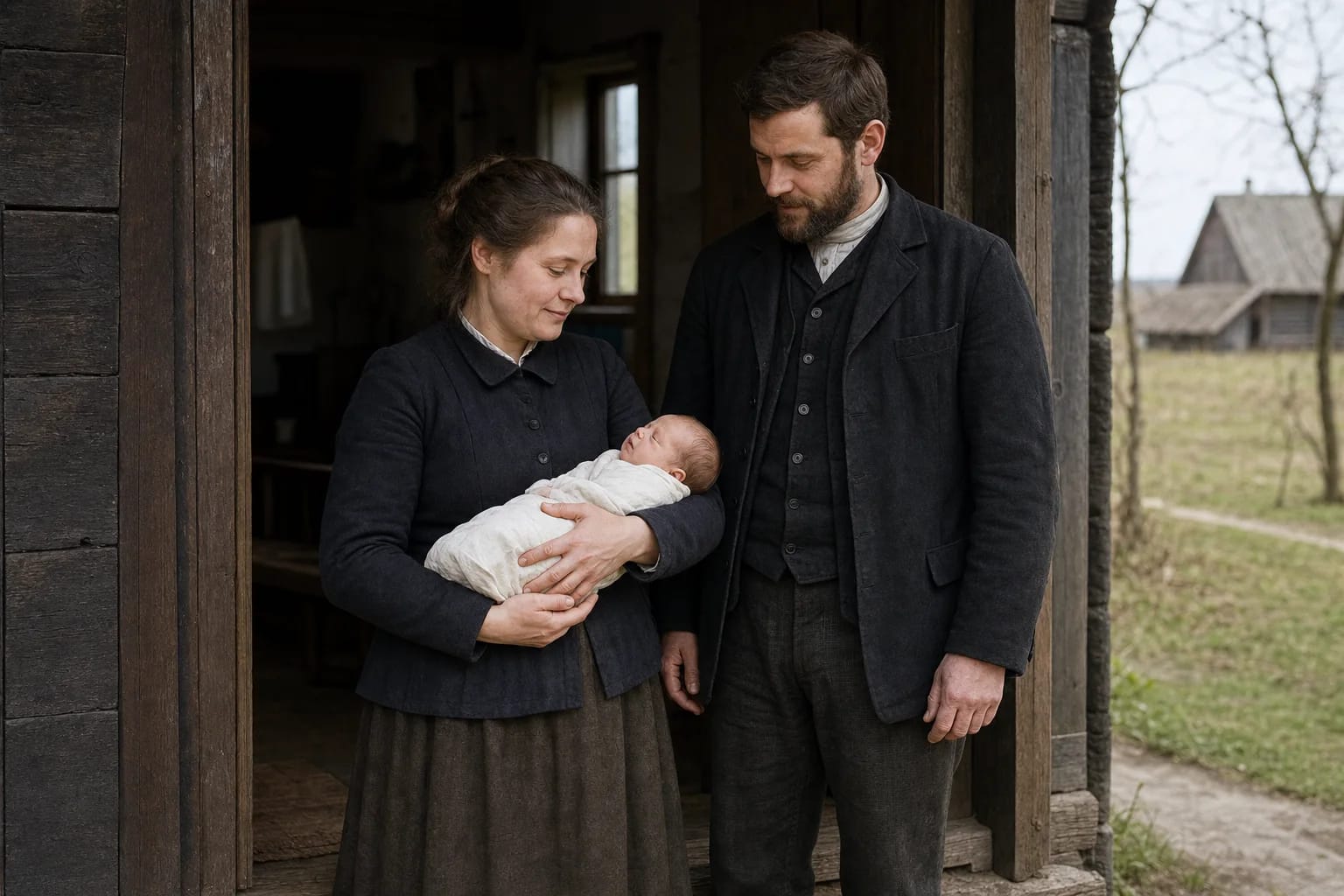
The belief that a godchild might resemble the sponsors explains many rules about their behavior. They were not supposed to quarrel, arrive late, or act stingily; their composure, generosity, and bearing were associated with the child's future. This is not a biological claim but a traditional way of emphasizing responsibility: a person who accepted the name of kūmas or kūma was expected to model good conduct beyond the day of the feast.
Spiritual Kinship and a Lasting Duty
Ethnographic evidence describes godparenthood as a distinctive form of spiritual kinship. Godparents were expected to take an interest in the child, visit at important moments, and offer gifts, advice, or practical help. If the parents died or the household faced hardship, the sponsors were expected to care for the child. This was a moral expectation enforced by community opinion, not the same thing as automatic legal guardianship today.
The relationship could be marked at First Communion, Lutheran confirmation, birthdays, school graduation, and marriage. Older descriptions also place godparents in a godchild's funeral arrangements: a godmother might provide clothing and a godfather a small coffin. Elsewhere they were invited to act in key wedding roles. Not every family maintained all these duties, but in western Lithuanian fieldwork most respondents understood the bond as lasting until adulthood, marriage, or throughout life.
One Pair or a Large Circle of Godparents?
The number of sponsors reveals clear historical and confessional differences. After the Council of Trent, Catholic church discipline established the model of one godfather and one godmother. A study of eighteenth-century baptismal registers in the Vilnius deanery shows that this pair already predominated for children born both within and outside marriage, although exceptions occurred.
Sources from Lithuania Minor reveal another scale. Seventeenth-century accounts commonly mention three to five sponsors, with substantially more possible by permission. Around the turn of the twentieth century, wealthier peasants on the coast and in northern Lithuania sometimes invited five or six, and more rarely as many as ten. The principal pair written into a church register did not necessarily represent everyone whom a family treated as a sponsor. A larger circle brought prestige and connections, but it also increased the cost of gifts and hospitality.
The Church Journey and Protective Beliefs
Before departure the baby was dressed and handed to the sponsors by the birth attendant or an older woman, often with wishes for the child's future. In parts of Dzūkija, a godmother was said to adjust the clothing while resting a foot on a stone so that the child would be strong. After the return, godparents could be seated close together so the child's teeth would not grow far apart. Such acts expressed a belief that adult behavior at a threshold moment could shape a newborn's qualities.
Before baptism, a baby was considered especially vulnerable in some communities. Nineteenth-century descriptions from Klaipėda and Priekulė mention a hymnal or a page of sacred text near the cradle, a light left burning, and nappies not dried outside; these acts were associated with protection from Laumė or Apmainė. Testimony from Žemaitija, Dzūkija, and other areas records different measures. They are local historical beliefs, not medical knowledge or infant-care advice.
Baptismal Shirts, Sashes, and Other Gifts
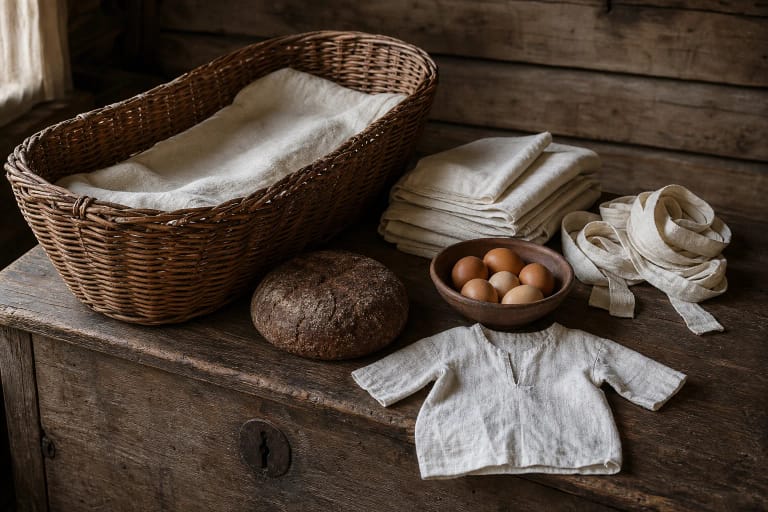
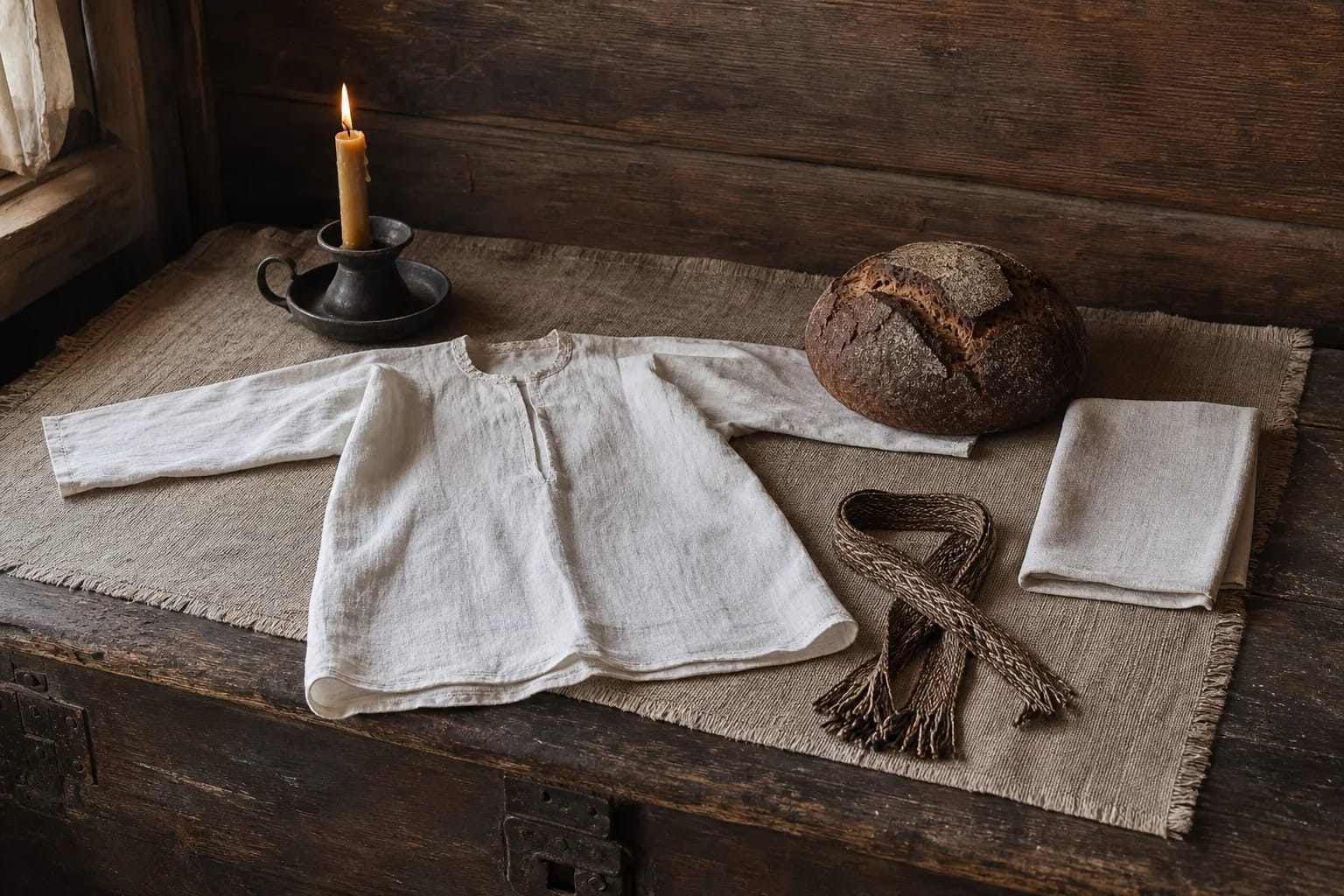
In early twentieth-century evidence, the godmother often gave a white baptismal shirt or supplied the cloth. Some boys' garments had blue details and girls' garments pink ones, but this color division was neither timeless nor universal. The shirt could be kept as a family relic, passed to another child, or remade for First Communion. Lending it outside the family might be viewed unfavorably.
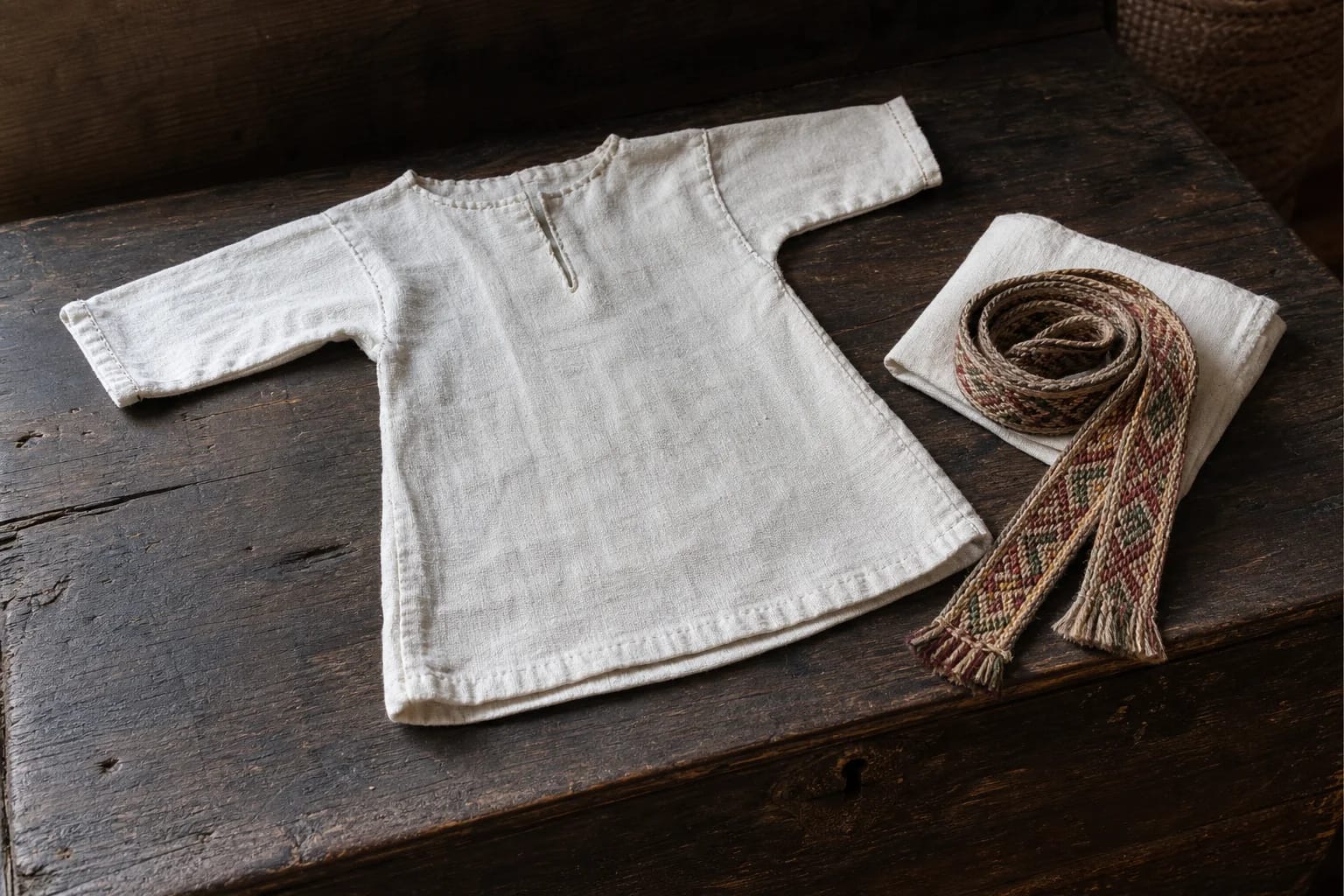
An early twentieth-century custom recorded around Prienai involved a sash given by the godmother, worn for baptism, and preserved until death, sometimes even placed in the coffin. The godfather might pay the priest, place money in the basin after the baby was washed, or bring sweets and drink. Wealth and local fashion affected the value of gifts, so the modern idea that a sponsor must buy one expensive object does not represent the full historical tradition.
Kūmų Pietūs, Cake, and Lėlės Koja
The return from church opened the feast, whose scale depended on the household's means. Sources mention a ring-shaped kūmų pyragas in Aukštaitija and buckwheat krikšto košelė in Dzūkija. In older Žemaitian evidence, a godmother might bring ham, a goose or cockerel, butter, curd, cake, and honey spirits for kūmų pietūs. In recent fieldwork the abundant sponsors' meal had largely receded, although the godmother's cake remained a recognizable expectation.
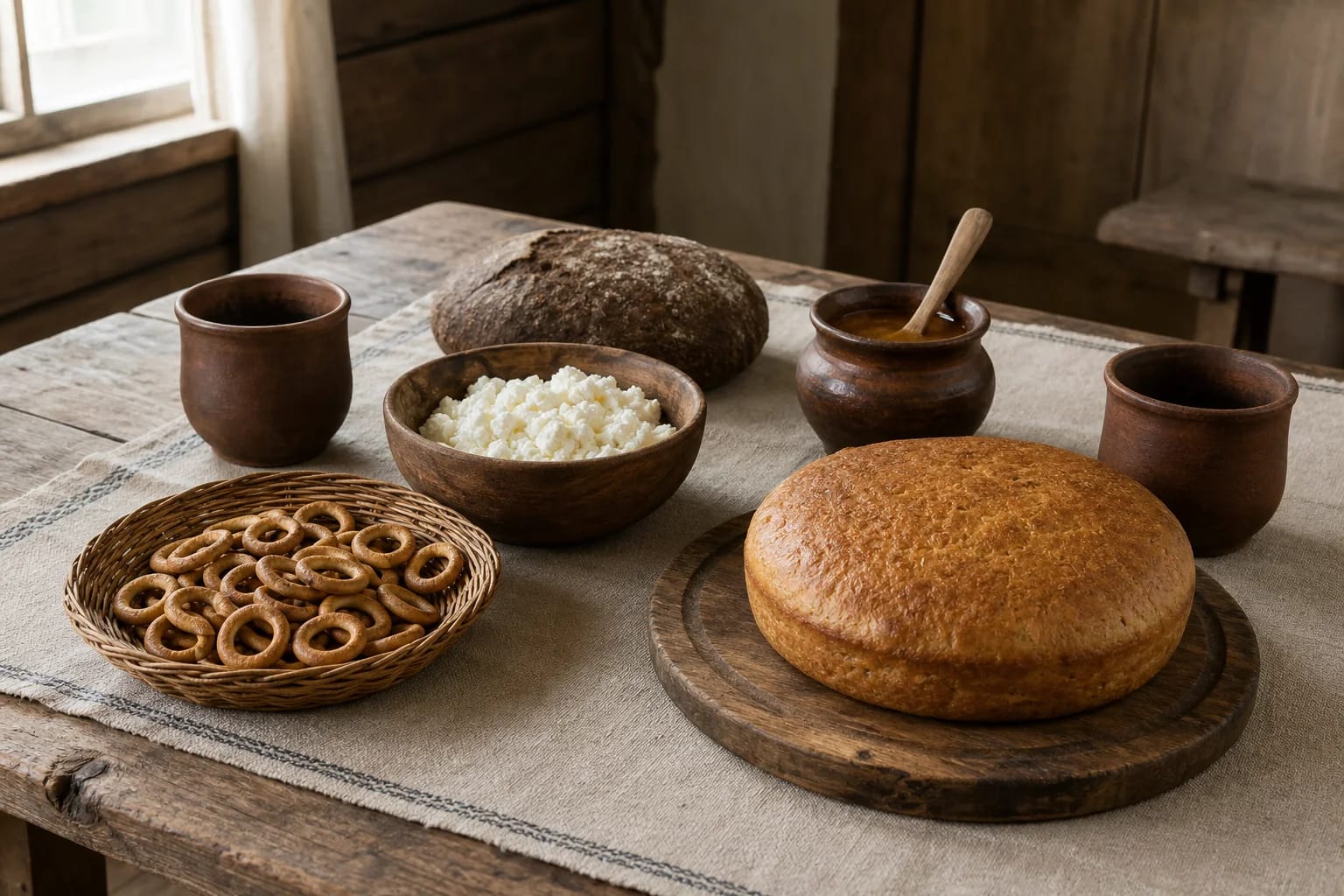
Lėlės koja was not the name of one fixed recipe. Depending on locality, it could mean provisions brought by the sponsors, a symbolic ransom, food set aside for people who remained at home, or the contribution of someone serving as a godparent for the first time. That instability is itself part of the history. Attempts by authorities in Lithuania Minor to curb excessively expensive feasts also expose a social cost: the pursuit of prestige could burden a household with limited means.
Baptism Songs, Humor, and the Birth Attendant
Baptism songs accompanied more than the meal. Their subjects included inviting the sponsors, dressing the godchild, traveling to church, bending over the cradle, lifting the baby, and requesting gifts. Later tradition featured more humorous songs about the sponsors' closeness, generosity, or stinginess. Short improvised verses might welcome their return, ask for cake, and jokingly test whether they had fulfilled their role.
The traditional birth attendant was an important mediator between childbirth and the early baptism celebration: she cared for mother and baby, welcomed the sponsors, and directed some domestic actions. During the first half of the twentieth century, as medical midwifery displaced the older village role, some of her ritual actions became party games. Bobutės košė, the stealing of men's hats, or a noisy mock procession for the old woman document change, but they should not be reconstructed as the sole authentic script.
What Survived, and How Should the Customs Be Presented Today?
Choosing godparents, using a baptismal candle and white garment, sharing a family meal, taking photographs, and expecting the sponsors to maintain a relationship with the child remain familiar. Other forms—multiple pairs, ritual ransoms, particular dishes, and games centered on the birth attendant—have disappeared, survive in individual families, or have been reinvented by event hosts. A standardized ceremony copied online can obscure the regional diversity found in the evidence.
A responsible account separates three layers: the official rite of a particular church, a historical custom recorded by ethnographers, and a festive act created by a family today. In Catholic liturgy, godparents help the parents foster the child's faith and must meet church requirements. Ethnographic kūmystė adds a wider social memory to that role, but it does not turn every older belief into a modern rule.