
Winter
Grabnycios: Candlemas in Lithuania
February 2
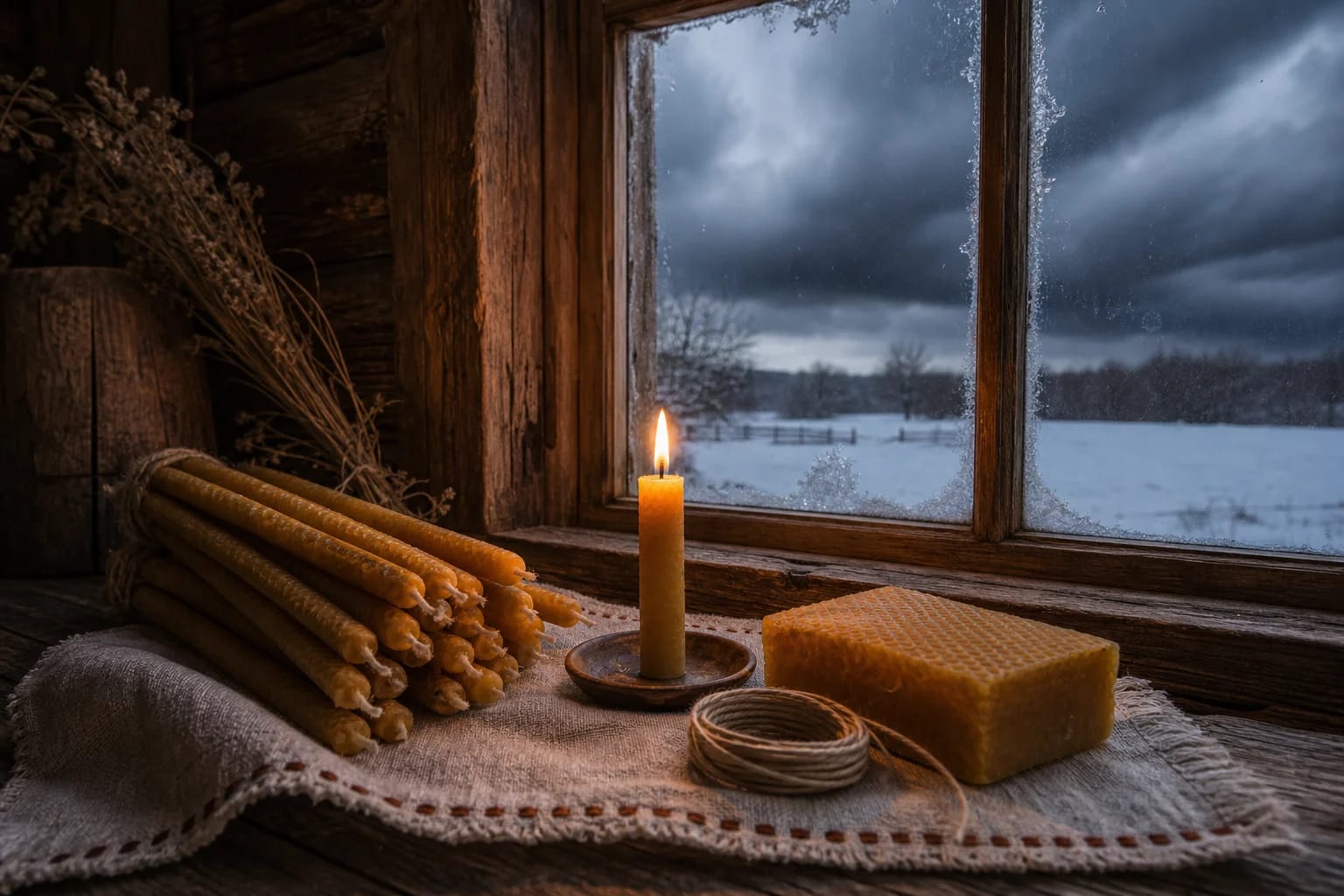
Grabnycios is a candle feast at the winter threshold. A wax candle blessed in church on February 2 is brought home not as decoration but as a serious protective sign: against storm, illness, fear of death, and darkness.
Tradition context
- When
- February 2
- Season
- Winter
- Themes
- Blessed candles, grauduline candle, Thunder Day, storm protection, the sick and dying, weather signs
Grabnycios on February 2 is linked in Lithuanian tradition with blessed wax candles called graudulines. They were kept at home, lit during storms, beside the sick or dying, and used for the protection of houses and beehives, while the day's weather was read for spring, crops, hay, and summer thunderstorms.
What Are Grabnycios and When Are They Observed?
Grabnycios are observed on February 2. In the Catholic Church this is the feast of the Presentation of Christ, remembering Jesus being brought to the temple forty days after birth. In Lithuania, wax candles are blessed that day according to the Roman rite. According to VLE, the solemn celebration of Candlemas was first mentioned in Jerusalem in 386 by the pilgrim Egeria in her travel account; by the 5th century it was already known in Rome, and the current name 'Presentation of Christ' was officially established in Pope Paul VI's 1969 missal.
In folk tradition February 2 is also called Thunder Day. This does not erase the distinction between church and older meanings, but it explains why the candle became so important: it protects from thunder, fire, illness, and the threshold of death.
What Is a Grauduline Candle?
A grauduline is a candle blessed on Grabnycios, usually made of wax. It was not an everyday light. Such a candle was saved for special times: when a storm came near the farmstead, when someone was gravely ill, when a person was dying, or when the family prayed for the dead.
VLE stresses that the blessed candle is placed in the hands of a dying person. EKGT and Alkas.lt show wider folk use: the candle is lit near the sick, at wakes, on death anniversaries, or when a child sleeps restlessly or has nightmares.
Why Was the Candle Lit During Storms?
Fear of thunderstorms in the old village was concrete: lightning could set fire to a wooden house, threshing barn, hay, or cowshed. The grauduline, also called the Thunder candle, was lit when storm clouds approached and set by a window or stove.
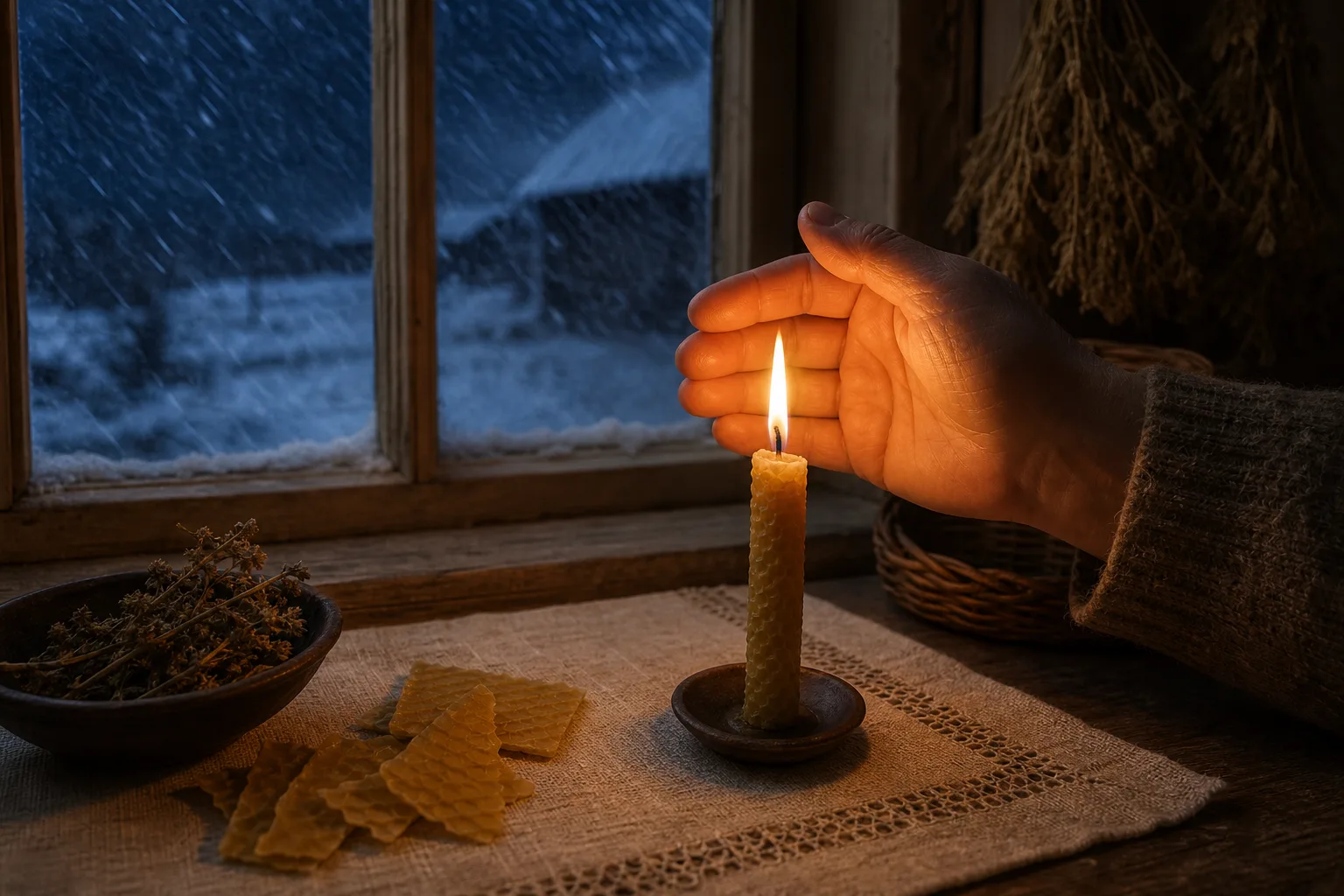
The action was not just practical lighting. The candle gathered the family, recalled prayer, and expressed a request for safety. Today lightning rods and caution protect homes, but the meaning of the grauduline shows how people sought a way to face dangerous natural time.
Candle for House, Hive, and Farm
Alkas.lt gives a house-building custom: when beginning to build a house, a piece of grauduline is hidden in the first log-crown joint together with blessed herbs. The candle's protection was placed into the very beginning of the house.
In beekeeping customs, pieces of grauduline were also put into a new hive, crossed as a protective sign. The same principle appears: bee swarm, house, and human body are all fragile centers of life needing protection.
Grabnycios Weather and Harvest Signs
From the weather on Grabnycios people predicted spring and summer. A sunny day could mean good flax but poorer grain, early spring, and a stormier summer. Wind delayed spring, while snow on roofs promised lush meadows and hay.
Long icicles in some places suggested early barley, but children were warned not to break icicles because flax might lodge. These signs tie the feast to a farmer's eye: even on candle day, he watches roof, snow, wind, and the coming field.
Remembering Grabnycios Today
Grabnycios can be marked simply: keep one blessed, or at least deliberately set aside, beeswax candle at home and light it for prayer, remembrance, or anxiety rather than using it as decoration.
Learning to dip or roll wax candles also fits the day. Then the feast becomes not only a calendar date but material work: wax, linen wick, flame, and the understanding that a small flame could mean great protection in a Lithuanian home.
Main Grabnycios customs and meanings
Grabnycios customs join the Christian feast of the Presentation of Christ with the folk image of Thunder Day. The central object is the grauduline candle: kept at home, used at life's boundaries, and remembered when a thunderstorm approaches.
Blessing candles. On February 2 wax candles are blessed in church and kept at home throughout the year.
The grauduline candle. The blessed Grabnycios candle is called grauduline; it is lit during storms, near the sick or dying, and at wakes.
Storm protection. When thunderclouds approached, the grauduline was lit and placed by the window, on the stove ledge, or in another safe household spot.
Peace for the sick and children. EKGT notes that the candle was used near a sick person, especially when a priest was brought, and also when a child slept restlessly or had frightening dreams.
Protection in house building. Alkas.lt mentions hiding a piece of grauduline in the first crown joint of a house together with blessed herbs.
Beekeepers' signs. Beekeepers put crossed pieces of grauduline in a new hive, asking protection for the swarm.
The name Thunder Day. In folk speech Grabnycios was also called Perkuno diena, Thunder Day, because the candle was first of all linked with fear of thunderstorms, fire, and sudden misfortune.
Weather and harvest signs. Sun, wind, snow on roofs, and icicles were read for signs about spring, flax, grain, hay, and summer thunderstorms.
Where to experience it
Where to experience Grabnycios in Lithuania?
Grabnycios can be experienced where the candle is blessed and where it is later kept: in church, at home, and in candle-making education that explains why beeswax had such strong protective meaning.
Churches on February 2
Wax candles are blessed on Grabnycios. This is the main place from which the grauduline is brought home.
The Home
The grauduline is kept at home and lit at boundary moments: during storms, near the sick or dying, or in prayer for the dead.
Candle-Making Workshops
Ethnoculture and craft workshops teach dipping or rolling beeswax candles and explain how the craft connects with protective customs.
Grabnycios: songs, sutartines, and related pages
Grabnycios stands beside Pusiauzemis and Agotines, and its candle theme connects with candle-making, Perkunas imagery, and the light of Velines.
Pusiauzemis
A nearby midwinter threshold with overlapping early-February signs in some places.
Candle Making
The beeswax candle craft that explains the material and meaning of the grauduline.
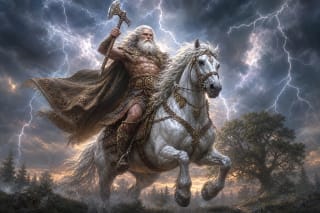
Perkunas
The thunder-god image tied in folk tradition to Grabnycios protection during storms.
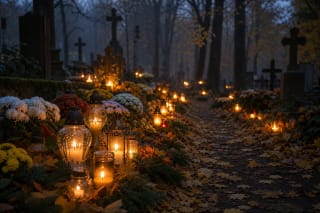
Velines
Another Lithuanian feast where candle flame becomes a sign of memory and boundary time.
Grabnycios sources and useful pages
Grabnycios: frequently asked questions
When are Grabnyčios observed?
Grabnyčios are observed on February 2. In Catholic tradition this is the Presentation of Christ, and in Lithuanian customs the day is linked with blessed candles.
When and why is a Grabnyčios candle used?
A graudulinė is a wax candle blessed on Grabnyčios. It is kept at home and lit during storms, near the sick or dying, at wakes, or at other boundary moments.
Why were Grabnyčios called Thunder Day?
In folk tradition the feast is linked with protection from thunder, lightning, and fire. That is why the graudulinė candle is lit when a storm approaches.
Where was the Grabnyčios candle kept?
It was kept at home as a special, non-everyday candle. The important thing was to have it available when illness, death, storm, or strong anxiety entered the home.
Was the graudulinė used only inside the home?
No. Accounts mention placing a piece in the joint of a new house's first logs or in a new beehive as a protective sign.
What weather signs were read on Grabnyčios?
People watched the sun, wind, snow on roofs, and icicles. From these they judged the earliness of spring, flax, grain, meadows, fodder, and summer storms.
Are Grabnyčios and Pusiaužiemis the same?
No, though signs overlap in some places. Pusiaužiemis is usually linked with January 25, while Grabnyčios is February 2 and centers on the blessed candle.
How do Grabnyčios differ from Agotinės?
Grabnyčios centers on the blessed candle and protection from storm, illness, and death thresholds. Agotinės centers on blessed bread and the theme of Gabija, household fire.
How can Grabnyčios be marked today?
Bring home a blessed candle, learn to make beeswax candles, or keep one candle at home for prayer, remembrance, and difficult moments.