
Spring
Ash Wednesday in Lithuania
Wednesday after Uzgavenes; first day of Lent
Ash Wednesday is one of the clearest breaks in the year cycle: yesterday noisy Uzgavenes, today ashes, fasting, and clean-washed dishes. Lithuanian tradition treated it not as a small appendix to Uzgavenes but as a serious threshold into Lent.

Tradition context
- When
- Wednesday after Uzgavenes; first day of Lent
- Season
- Spring
- Themes
- Ashes, Lent, fasting, cleaning dishes, washing teeth, work taboos, Kanapinskas and Lasininis
Ash Wednesday, or Pelene, is the Wednesday after Uzgavenes and the first day of Lent. Lithuanian customs mark a sharp turn from the rich meat-eating season into fasting: ashes are blessed, greasy dishes are cleaned, lean food is eaten, and in some places playful Uzgavenes endings still linger.
What Is Ash Wednesday?
Ash Wednesday, also called Pelene, Pelenija, Papeline, or Papelcius, is the Wednesday after Uzgavenes. VLE describes it as the first day of Lent, when ashes are blessed and sprinkled or used to mark the forehead.
In church meaning, ashes recall mortality, repentance, and purification. In folk practice the same sign entered household order, food discipline, and work that was better avoided that day. According to VLE, Ash Wednesday began to be observed in Rome in the 6th century; from the 10th century the custom of blessing ashes became established, and from the 12th century the ashes of the previous year's verbos (palms) were used.
Why Wash Dishes After Uzgavenes?
In Imbrasiene's material, Ash Wednesday morning means scrubbing tables, pots, dishes, and spoons so that not even the smell of Uzgavenes grease remains. It is a concrete transition: the meat-eating season has ended and Lenten restraint begins.
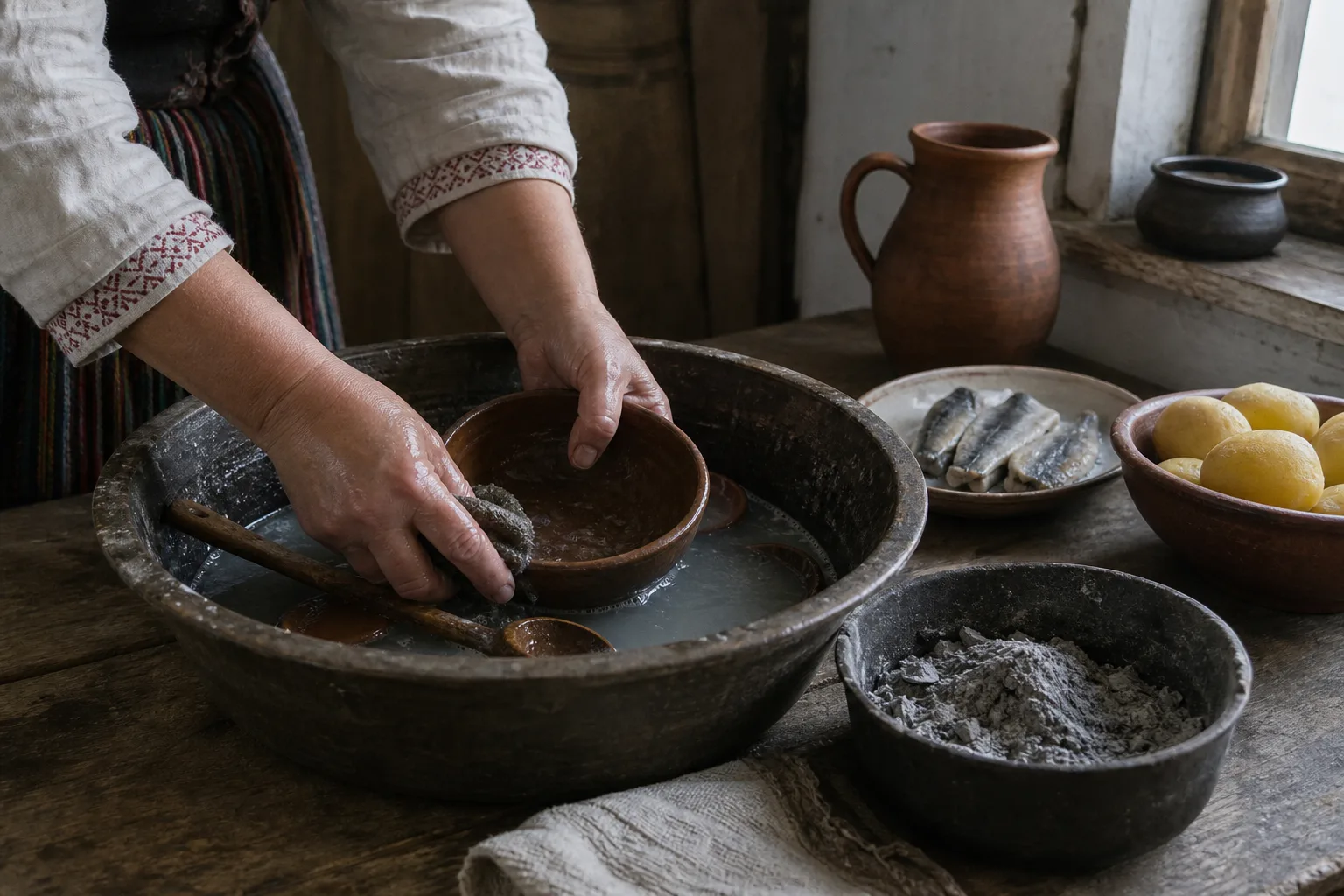
The custom shows why Ash Wednesday is not only a liturgical date. The change had to be visible in the kitchen, on the table, and even in dishes: yesterday fat pancakes or meat, today groats, herring, potatoes, or an empty stomach.
Fasting and Washing Teeth
Ash Wednesday was considered the start of strict fasting, almost as serious as Kucios. In some places people slept longer after Uzgavenes and ate lean food; children might be taught fasting through promises of future luck or finds.
In eastern Lithuania a playful custom was called washing teeth. Men rode to town for blessed ashes but also brought back herring or a small drink. The seriousness of Lent still carried a sly Uzgavenes shadow.
Which Work Was Avoided on Pelene?
Ash Wednesday was not a work-prohibition feast in the way major church solemnities were, yet in the nineteenth century women in some places avoided spinning, sewing, washing linen, baking bread, and pouring water on the earthen floor.
The bans were explained through very practical fears: meat might get worms in summer, oxen drool, fleas multiply, or bread mold. Some blessed ashes were also saved for cabbages so worms would not eat them.
Why Uzgavenes Still Appears
Ash Wednesday is a boundary, so traces of the previous day naturally remain. Jucevicius in the early nineteenth century mentions ash bags or bone necklaces attached to clothing to remind people that the meat-eating time was over.
Other records include Sene Kuniske, blukvilkiai, water and ash games, and the Kupiskis fight between Kanapinskas and Lasininis. In Pelene, lean Kanapinskas finally wins: Lent takes the year's rhythm from the rich meat season.
Ash Wednesday Today
Today Ash Wednesday can be simple: take part in the ash rite, eat more moderately, clean the kitchen after Uzgavenes, and deliberately begin the quieter time of Lent.
The ethnographic value of the day is not only in prohibitions. It teaches transition: after noise comes quiet, after excess comes measure, after masks come ashes. That rhythm lets the year cycle breathe.
Main Ash Wednesday customs and meanings
Ash Wednesday customs join church repentance with very ordinary household order. Ashes recall human mortality, and grease is washed from the kitchen to show that the meat-eating season is over. In some places this seriousness still mixed with the last jokes of Uzgavenes.
The ash rite. In church ashes are blessed and placed on the head or forehead, recalling human mortality and repentance.
Beginning of Lent. Ash Wednesday is the first day of Lent, linked with seriousness, restraint, and strict fasting.
Lean food. After Uzgavenes abundance people ate leaner foods: groats, herring, potatoes, or sometimes no food at all.
Cleaning dishes. In the morning tables, pots, dishes, and spoons were scrubbed so no Uzgavenes grease smell remained.
Washing teeth. In eastern Lithuania, men playfully rode to town for ashes and “to wash teeth,” bringing back herring or a small drink.
Avoiding work. In the nineteenth century women in some places avoided spinning, sewing, washing linen, baking bread, or pouring water on the floor, fearing summer losses.
Ashes for cabbages. Some blessed ashes were saved to sprinkle on growing cabbages so worms would not attack them.
Leftovers of Uzgavenes. Jucevicius and later recorders mention ash bags, bone necklaces, Sene Kuniske, pulling the blukis, and Kanapinskas defeating Lasininis.
Where to experience it
Where to experience Ash Wednesday in Lithuania?
Ash Wednesday can be experienced in church, where the ash rite is performed, and at home, where older custom emphasized a fasting table, clean dishes, and a quieter Lenten rhythm.
Church
The ash-sprinkling or marking rite is performed on Ash Wednesday to begin Lent.
Home Kitchen
Older custom stressed cleaning dishes, tables, and spoons of Uzgavenes grease and setting a leaner table.
Ash Wednesday: songs, sutartines, and related pages
Ash Wednesday comes immediately after Uzgavenes and opens the road to Easter. Its table and fasting mood connect with simple herring and potato dishes.



Ash Wednesday sources and useful pages
Ash Wednesday: frequently asked questions
When is Ash Wednesday?
Ash Wednesday is the Wednesday after Uzgavenes. It has no fixed date because it depends on the date of Easter.
What do ashes mean on Ash Wednesday?
In church tradition ashes recall human mortality, repentance, and purification. They are blessed and sprinkled on the head or used to mark the forehead.
Why does Ash Wednesday begin Lent?
It is the first day of Lent, marking the move from the rich meat-eating season into restraint, repentance, and preparation for Easter.
Why were dishes scrubbed that day?
Folk custom called for cleaning dishes, tables, and spoons so no Uzgavenes grease remained. The kitchen had to show that fasting had begun.
What is washing teeth?
In eastern Lithuania this was a sly Ash Wednesday custom: men rode for ashes and stopped in town, bringing back herring or a small drink after Uzgavenes.
What work was avoided on Pelene?
In some places people did not spin, sew, wash linen, bake bread, or pour water on the floor, believing such work could cause summer losses.
How were blessed ashes used on the farm?
Some blessed ashes were saved to sprinkle on cabbages so worms would not attack them, showing how a church sign entered farm protection beliefs.
Did Uzgavenes customs continue into Ash Wednesday?
In some places yes. Records mention ash bags, bone necklaces, dragging the blukis, water and ash games, and Kanapinskas defeating Lasininis.
How can Ash Wednesday be marked today?
Attend the ash rite, eat simply, clean the kitchen after Uzgavenes, and begin Lent with a deliberate sign of restraint and seriousness.