- When / context
- During the warm season, often first held at Pentecost; late nineteenth to mid-twentieth century
- Tradition area
- Life cycle
- Themes
- Geguzine, geguzynai, zaliumai, zaliumbalai, youth dances, birch gates, national revival, associations
The geguzine was an outdoor youth gathering that spread through Lithuania from the late nineteenth century, bringing dance, music, courtship, voluntary associations, and the public culture of the national revival together.
What Was a Geguzine, and Where Did the Name Come From?
The Universal Lithuanian Encyclopedia defines the geguzine as an outdoor youth entertainment. Geguzynai was another name, while northern Lithuania used zaliumai and zaliumbalai, the latter related to Latvian zalumballe. The encyclopedia considers geguzine probably a Lithuanian rendering of Polish majowka, an outing into nature. The vocabulary points not to an isolated archaic relic but to Lithuania's modern exchanges with neighboring cultures.
A dance geguzine should not be confused with geguzines pamaldos, the Catholic May devotions to the Virgin Mary. Nor was the social event limited to May. It took place through the warm season; a village often held its first one at Pentecost, when birches had leafed out. Some villages organized two or three in a summer. A season, rather than one mandatory calendar date, best describes it.
A Late Nineteenth-Century Innovation, Not Pagan Antiquity
The most reliable concise chronology begins in the late nineteenth century. Schools first organized geguzines, the form spread during the Lithuanian national revival, associations adopted it after 1905, and town and village youth often ran it themselves in the 1920s and 1930s. This matters because online accounts sometimes present the geguzine as a direct survival of pre-Christian greenery rites. Birch decoration is well documented, but it cannot prove an unchanging thousand-year-old festival.
A comparatively recent form was no less Lithuanian. The geguzine became a place where rural leisure modernized: public organization, an admission fee or collection, a defined arena, several musicians, and stewards created a setting different from a private vakarone in a farmhouse. Young people made the form their own, while associations used it for broader cultural, educational, and national purposes.
How Was a Geguzine Ground Laid Out?
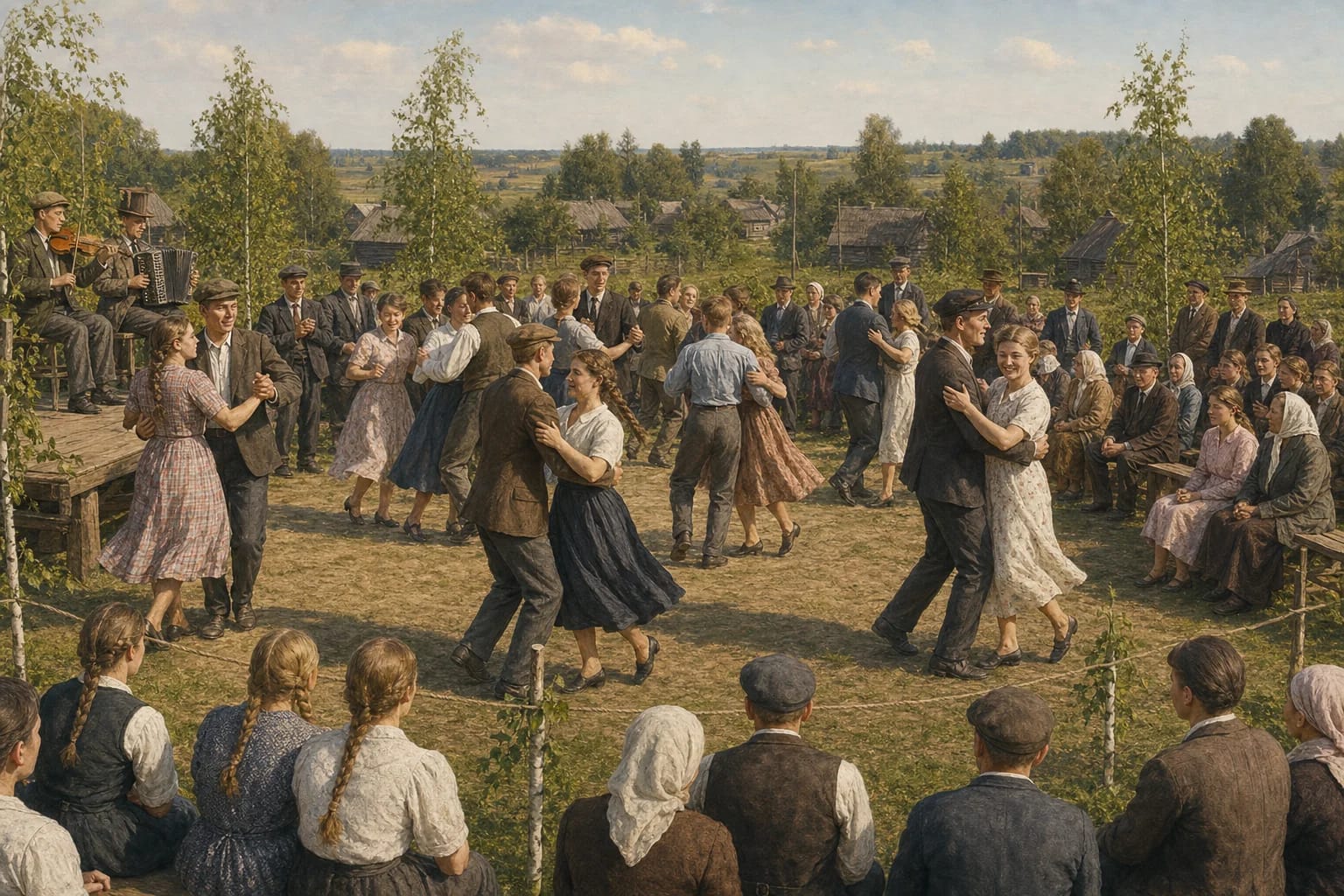
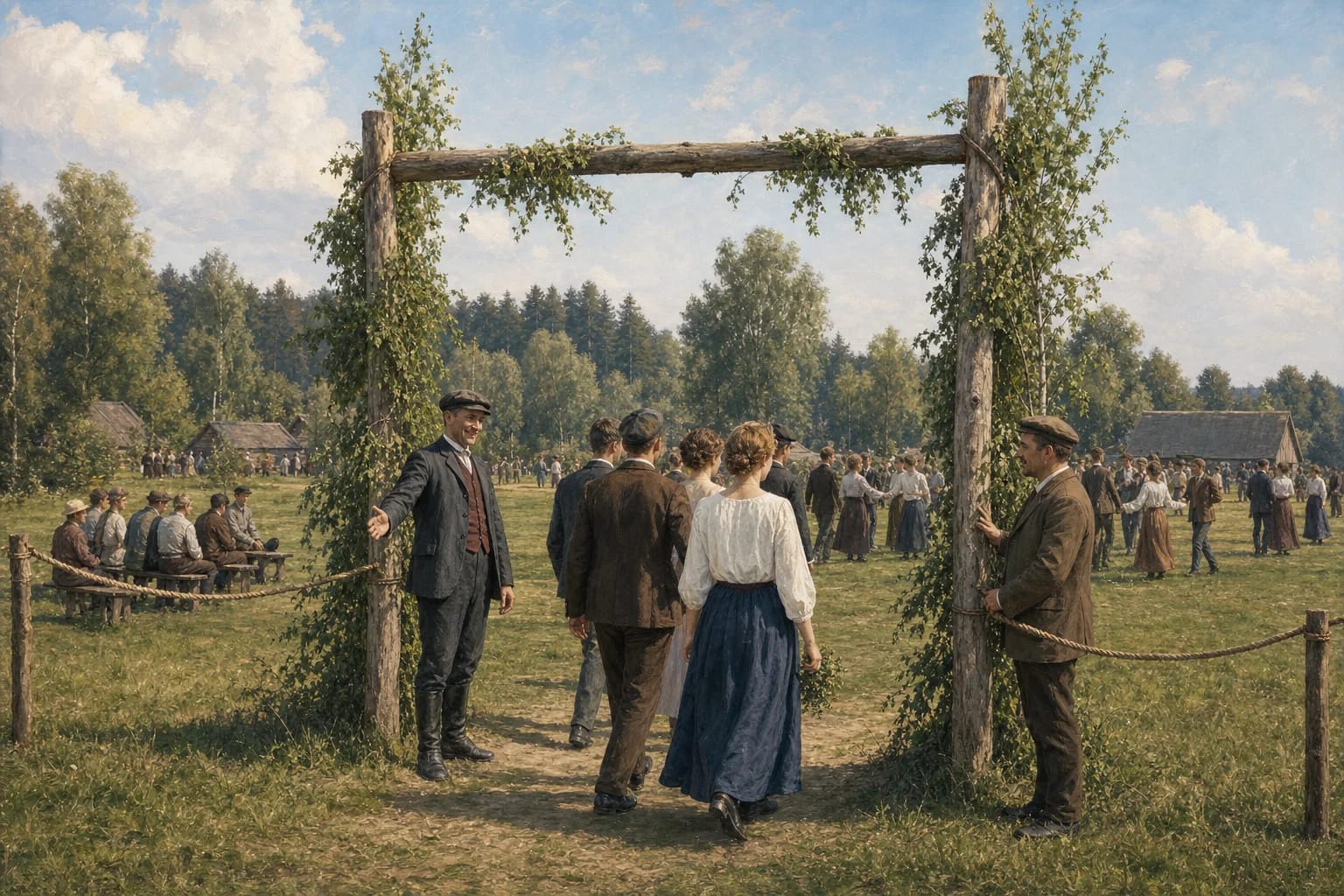
The venue was visible and temporarily transformed. A natural clearing or yard needed a level dance floor, space for a musicians' platform, and benches for onlookers. Rain could move the event into a barn, so calling every geguzine a woodland festival is too narrow. Marking the ground separated the event from its surroundings and helped control admission, particularly when organizers charged a fee.
Decoration had documented regional variants. In Zemaitija cut birch saplings were planted in the ground; in Suvalkija they encircled the clearing. Elsewhere posts linked by rope or wire carried birch branches, colored paper, and Lithuanian tricolor pennants. Northern Lithuania used inverted V- or U-shaped gates trimmed with birch. Combining all these forms in one picture would create a national composite that existed nowhere.
Musicians, Dances, Rounds, and Games
Live music drove the event. A larger geguzine might employ several musicians who relieved one another and kept dancing going for hours, sometimes until dawn. Instruments reflected local practice and period: violin, accordion, and ensemble combinations changed. Partner dancing stood alongside songs, rounds, and games, and some events featured amateur theater.
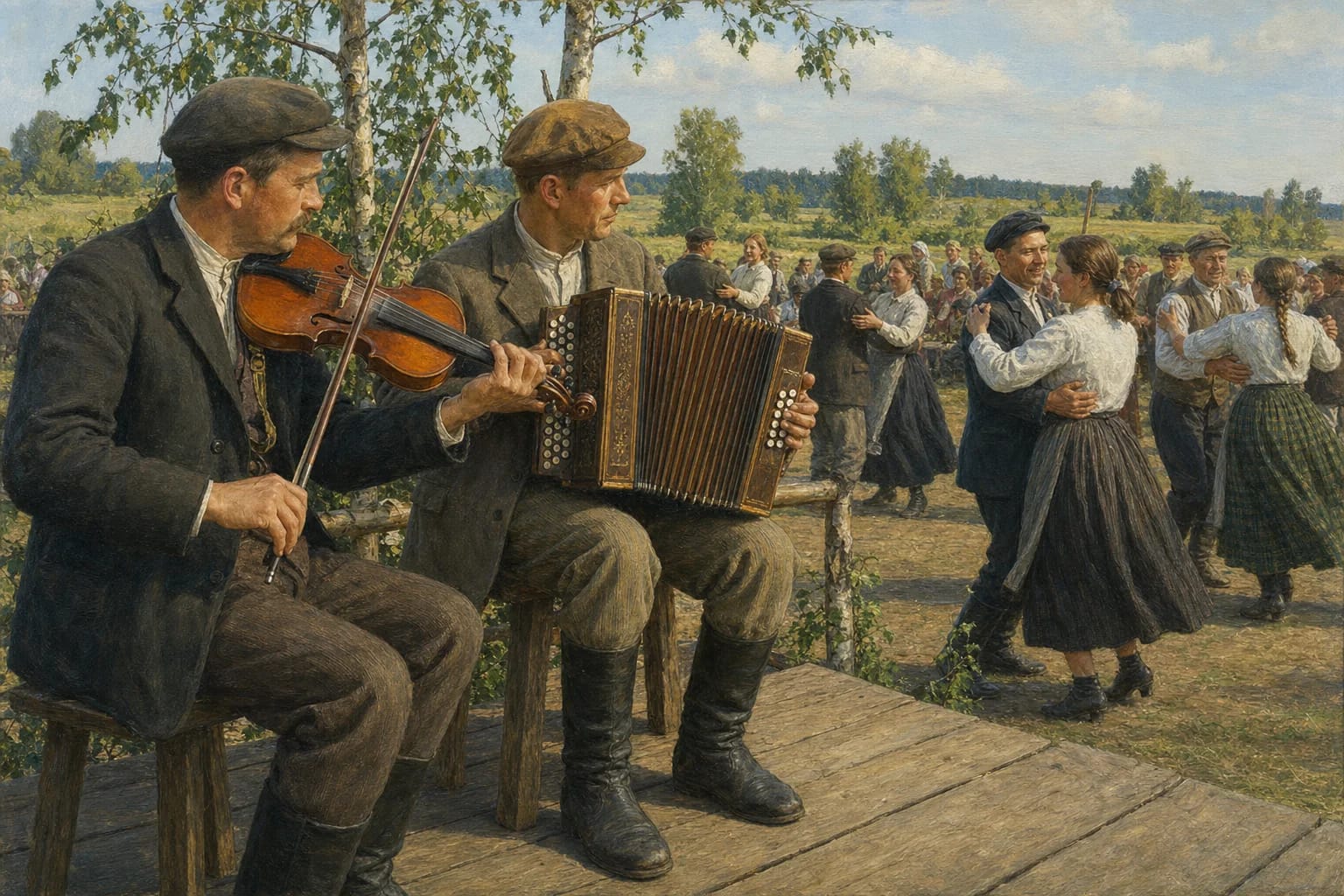
The dance ground taught more than steps. A participant had to invite a partner, accept or decline, wait a turn, follow the musician's tempo, and respect the event's rules. A wider district could see who danced with whom, so the geguzine expanded opportunities to meet while increasing scrutiny of reputation. The repertoire should not be reduced to a timeless list of folk dances: early twentieth-century and interwar youth also adopted current dance fashions.
Who Organized the Geguzine, and What Did Admission Pay For?
Schools and voluntary associations drove many early geguzines. Local youth later learned to secure a venue, hire musicians, prepare the ground, set out benches, appoint stewards, and collect enough money to cover expenses. Sources do not give one fee rule. Sometimes all participants paid, sometimes only young men did, while an association's event could use different financing and ticket arrangements.
Payment changed a participant's standing. The encyclopedia notes that collecting admission could give hosts and visitors equal rights. That differed from a private home gathering where the householder had greater control. Yet formal equality did not erase social difference: travel, cash, clothing, permission from an employer or parents, and local reputation still determined who could really attend.
A Space for Youth Mobility and Acquaintance
A large geguzine drew youth from several villages, and the encyclopedia records gatherings numbering in the hundreds. This dramatically widened social networks. It also notes an unusual degree of mobility for young women: they could attend geguzines in neighboring villages without a personal invitation or chaperone and without automatically provoking gossip. This was not unlimited freedom, but a public, organized event gave more legitimate movement than a private gathering of uncertain reputation.
An acquaintance might become friendship or lead toward marriage, but the geguzine was not a matchmaking rite. A couple spoke and danced for themselves there, while formal family negotiations came later through preliminary inquiries, a matchmaker's visits, and engagement. The distinction reveals modernization: beside a marriage path controlled by families and a piršlys, spaces grew in which young people could first choose or at least know one another better.
Associations, National Revival, and Public Programming
An association's geguzine could offer much more than dance. Songs, theater, athletic contests, speeches, and a patriotic program might appear. During the national revival, public Lithuanian speech, music, and symbols carried political meaning. Tricolor pennants in some decorations tie those events particularly clearly to twentieth-century state culture, not to vague antiquity.
The organizational world was diverse. Schools, Catholic youth associations, national groups, sports clubs, and other local societies could impose different programs and standards of conduct. Confessional settings affected timing, music, views of alcohol, and the limits of Sunday entertainment. One association's rules or one photograph cannot define every Lithuanian geguzine; organizer, place, and date all belong in the description.
Stewards, Village Rivalry, and the Uncomfortable Side of the Story
A large crowd required stewards. They monitored admission, collected payment, maintained order, and helped resolve disputes. Even so, the encyclopedia records conflicts between youth from different villages. Travel into another group's territory, rivalry over partners, local solidarity, and alcohol could sharpen tensions. A romantic story in which a whole countryside dances peacefully until dawn would conceal this social reality.
Gender and wealth also produced unequal power. Public space increased young women's mobility, but their reputations remained closely watched; admission and suitable clothing could exclude poorer participants. A modern revival need not turn exclusion or masculine conflict into folkloric entertainment. The historical principle of stewardship is better carried forward through clear rules for safety, consent, accessibility, and respect.
Why Did the Traditional Geguzine Fade, and What Can It Mean Today?
By the mid-twentieth century, song and sports celebrations, festivals, and culture-house dances displaced traditional geguzines. War, occupations, suppression of associations, collectivization, rural migration, and new entertainment also broke the old organizing networks. Some communities retained the word or the idea of summer dancing outdoors, but music, organizers, and meaning changed.
A contemporary geguzine can be a living interpretation when it names its period honestly. Organizers might choose one region's layout, play a documented interwar repertoire, explain a particular association's program, and create a safe public dance. They need not invent pagan origins or combine every region's symbol into one decoration. The geguzine's real achievement was modern Lithuanian youth learning to organize a public cultural event themselves.